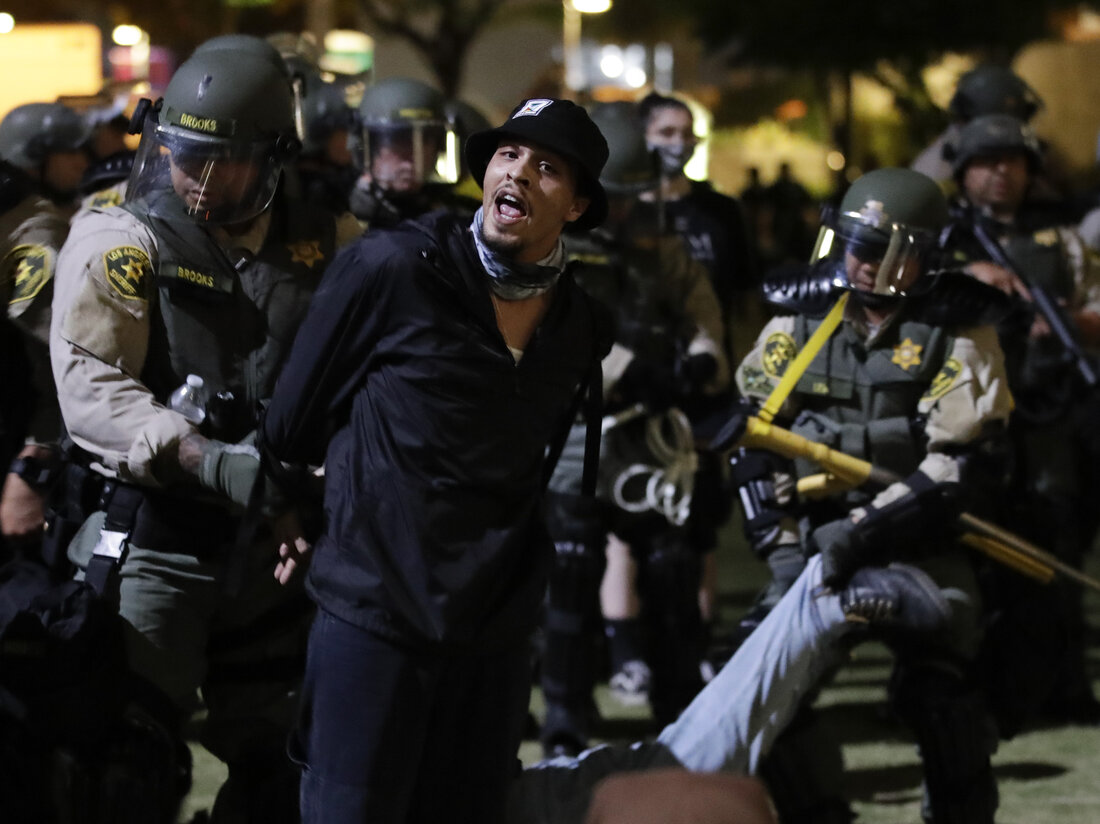
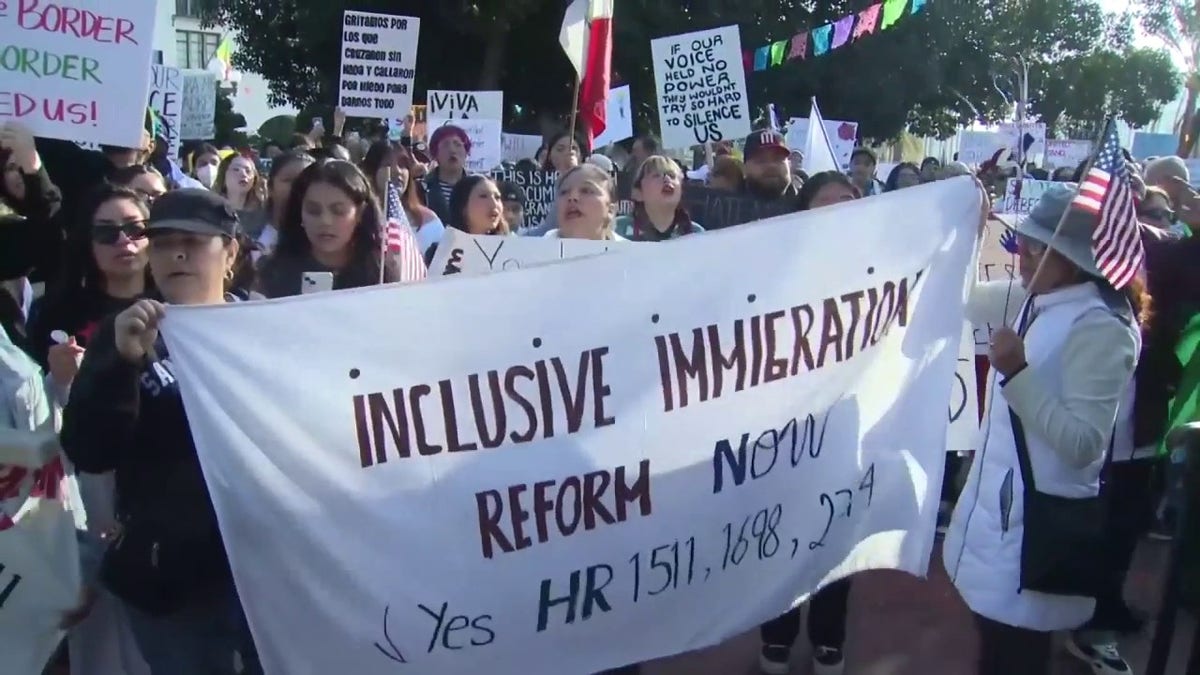
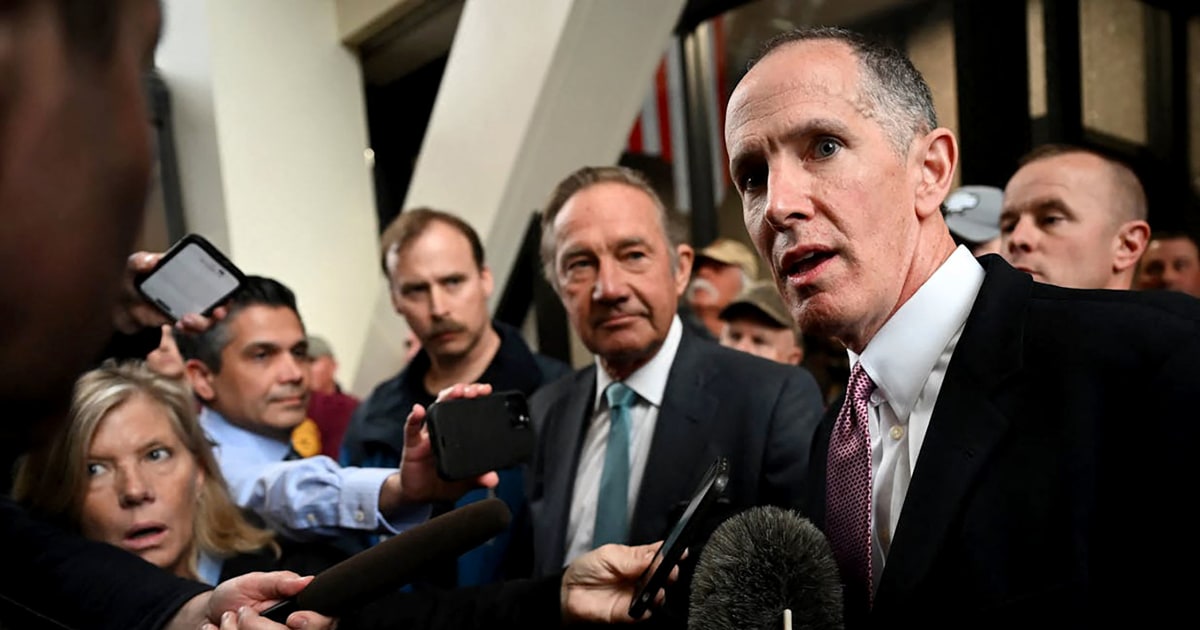
Judge Halts ICE Crowd Control Tactics in Minneapolis Protests

About the People Mentioned
Perplexity
**Perplexity AI** is an American software company founded in August 2022 by engineers Aravind Srinivas (CEO), Denis Yarats (CTO), Johnny Ho (Chief Strategy Officer), and Andy Konwinski, specializing in an AI-powered web search engine that delivers synthesized responses with real-time citations from internet sources.[1][2][3] The founders drew from experiences at OpenAI, Meta, Quora, and Databricks to address limitations in traditional search and early AI chatbots like ChatGPT, which often lacked verifiable sources.[1][2][3] Perplexity launched its flagship conversational "answer engine" on December 7, 2022, initially as a free public beta using OpenAI's GPT-3.5 and Microsoft Bing, later incorporating proprietary models based on Mistral-7B and LLaMA-2.[1][2][4] It pivoted from an earlier tool, Bird SQL, after Twitter's API changes in February 2023, focusing on direct answers over links.[1][2] Key achievements include rapid growth: 2 million monthly active users by March 2023, 10 million by January 2024, and 780 million queries processed monthly by 2025.[1][2][5] Funding milestones propelled valuations from $1 billion in April 2024 (after $165 million raised) to $14 billion in June 2025 ($500 million round), reaching $20 billion by September 2025.[3] Backed by investors like Jeff Bezos, Nvidia, and Shopify's Tobi Lutke, it introduced mobile apps, a Pro subscription, Chrome extension, and a publishers' revenue-sharing program in July 2024.[1][3][4] Recent events underscore ambition: In January 2025, Perplexity proposed merging with TikTok's U.S. operations ahead of a ban; in August 2025, it bid $34.5 billion for Google Chrome to address antitrust issues.[3] Today, Perplexity remains a leading AI search disruptor, blending LLMs like GPT-4, Claude, and Mistral for personalized, ad-free research, challenging Google with over 10 million users and unicorn status in under two years.[2][3][4][5] (Word count: 298)
About the Organizations Mentioned
Immigration and Customs Enforcement
**Immigration and Customs Enforcement (ICE)** is a federal law enforcement agency under the U.S. Department of Homeland Security (DHS). Established by the Homeland Security Act of 2002, ICE was created in response to the 9/11 attacks to enhance national security and protect public safety. The agency's primary mission is to enforce federal laws related to customs, trade, and immigration, focusing on cross-border crime and illegal immigration[1][2][3]. **History and Structure:** ICE was formed by merging the U.S. Customs Service and the Immigration and Naturalization Service. It operates with over 20,000 staff across more than 400 global offices, with an annual budget of approximately $8 billion[3]. The agency is structured into several key directorates, including **Enforcement and Removal Operations (ERO)**, which handles immigrant detention and deportation, and **Homeland Security Investigations (HSI)**, which investigates transnational crimes[1][2]. **Key Functions and Achievements:** ICE is known for its immigration enforcement efforts, particularly in interior regions of the U.S. It conducts investigations into human trafficking, terrorism, and other transnational crimes. Despite controversy over policies like family separation and detention conditions, ICE has made significant strides in combating illegal activities and protecting national security[4][6]. **Current Status and Notable Aspects:** Today, ICE continues to face challenges and controversy, particularly regarding its enforcement practices and impact on immigrant communities. The agency's actions can have profound effects on local economies and social services, as fear of ICE may deter undocumented immigrants from accessing essential services[6]. Despite these challenges, ICE remains a crucial component of U.S. immigration policy, working to balance enforcement with humanitarian concerns.
Trump Administration
The **Trump Administration** refers to the executive branch of the United States government under President Donald J. Trump, covering two non-consecutive periods: his first term from 2017 to 2021 and his second term beginning in 2025. As an organization, it is responsible for executing federal laws, shaping public policy, and managing national affairs during its tenure. During the **first Trump Administration (2017–2021)**, the administration pursued a wide-ranging agenda focused on immigration reform, economic nationalism, deregulation, judiciary appointments, and foreign policy shifts. Key actions included building and expanding the U.S.-Mexico border wall—completing 458 miles by January 2021—and implementing strict immigration policies such as travel bans from several predominantly Muslim countries and rescinding the DAPA amnesty program[2]. The administration withdrew the U.S. from the Trans-Pacific Partnership trade deal, renegotiated NAFTA into the USMCA, and signed the "Buy American and Hire American" executive order to prioritize American workers[1][3][5]. Judicially, Trump appointed three Supreme Court justices—Neil Gorsuch, Brett Kavanaugh, and Amy Coney Barrett—significantly influencing the federal judiciary with over 200 judicial appointments[5]. The administration also focused on military expansion, combating ISIS, addressing the opioid crisis, and responding to the COVID-19 pandemic with vaccine development support[5]. Foreign policy was marked by controversial decisions including troop withdrawals from northern Syria, reinforced support for Saudi Arabia, and tensions with Iran and North Korea[4]. The administration faced two impeachments: first in 2019 over Ukraine dealings and again in 2021 following the January Capitol riot; Trump was acquitted by the Senate both times[4][5]. After losing the 2020 election, Trump returned for a **second term starting in 2025**, continuing his policy priorities with new regulatory changes and political appointments[6][8]. The Trump Administration