Miami Mayor Race 2025: Higgins Breaks 28-Year GOP Control
Miami’s Longstanding Republican Mayoral Control
For nearly three decades, Miami's mayoral office has been held by Republicans, shaping the city’s political landscape with conservative leadership. This longstanding trend reflected Miami’s unique blend of local priorities and voter preferences, maintaining Republican dominance in City Hall despite the region’s shifting demographics and political climate.
The 2025 Mayoral Race: A Historic Turning Point
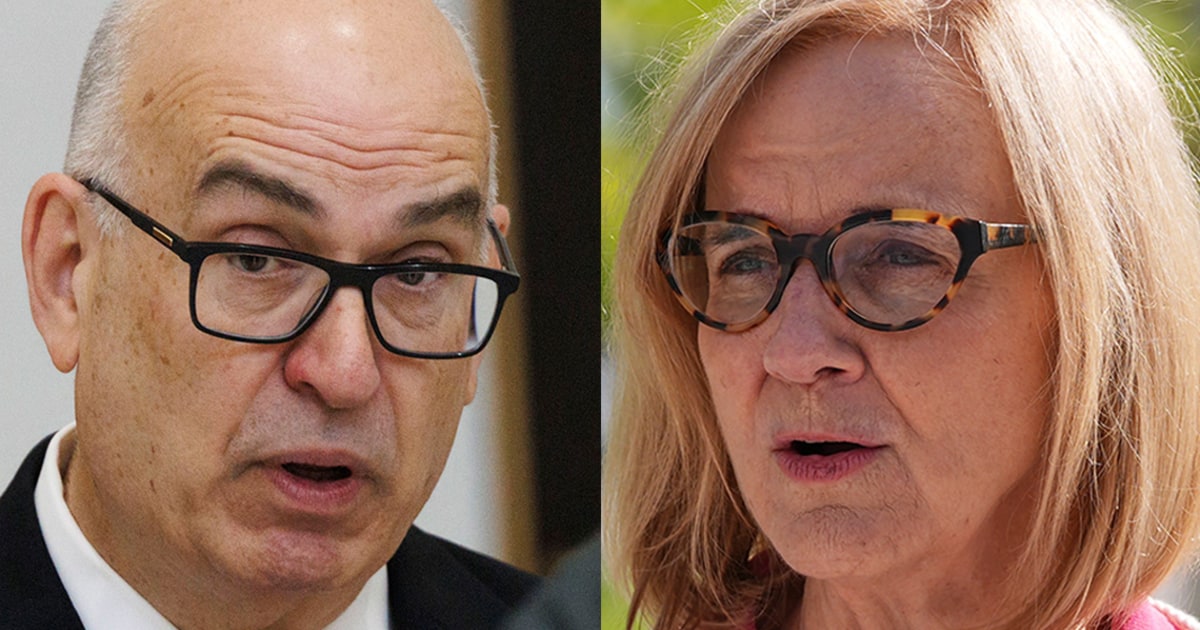
This year, the mayoral seat was fiercely contested, with Democrat Eileen Higgins challenging Republican Emilio Gonzalez in a runoff. Higgins’ victory ended 28 years of GOP control, making her the first woman and first Democrat elected mayor since 1997. The race drew significant attention as both parties viewed it as a critical battleground, with Democrats aiming to flip this key office amid broader political currents in Miami-Dade County.
Implications for Miami’s Political Future
Higgins’ win signals a potential shift in Miami’s governance, reflecting evolving voter priorities and the city’s increasingly diverse electorate. Her leadership marks a new chapter, with Democrats gaining momentum in local politics and a fresh direction anticipated for Miami’s future development and policies.
About the Organizations Mentioned
GOP
The **GOP**, or **Grand Old Party**, is the widely recognized nickname for the **Republican Party** of the United States, a major conservative political party founded in 1854. It originated from anti-slavery activists opposing the Kansas-Nebraska Act, uniting former Whigs and Free Soilers with a platform centered on halting the expansion of slavery. The party's early historic milestone was the election of Abraham Lincoln in 1860, which precipitated the Civil War; under Lincoln’s leadership, the GOP focused on preserving the Union and abolishing slavery[1][2][3]. Throughout its history, the Republican Party has evolved from its abolitionist roots to champion business interests, industrial growth, and economic policies favoring limited government intervention. In the late 19th and early 20th centuries, it promoted protective tariffs and infrastructure development. The party experienced fluctuating influence, losing ground during the New Deal era but regaining prominence with Dwight D. Eisenhower’s presidency in the 1950s, marked by moderate conservatism[1][2]. Today, the GOP advocates for reduced taxes, conservative social policies, limited government regulation, strong national defense, and states’ rights. It remains one of the two dominant forces in American politics, consistently shaping legislative agendas and national discourse[2]. The party is organized and led nationally by the **Republican National Committee (RNC)**, which manages fundraising, election strategies, and the party platform, coordinating efforts across states and counties under the leadership of a chairman[3][4]. Notably, the acronym "GOP" was popularized in the late 19th century and originally stood for "Grand Old Party," symbolizing the party's legacy in preserving the Union and championing liberty. It is now a common term in political commentary and media[3][5]. In recent years, the GOP has undergone significant membership changes in Congress and leadership adjustments, reflecting its dynamic role in U.S. politics as
Democrats
The **Democratic Party** is one of the two major political parties in the United States, widely recognized as a liberal and progressive organization that advocates for social and economic equality, civil rights, environmental protection, and worker rights. It generally supports stronger government intervention in the economy and social welfare programs such as Medicaid and food aid, funded through progressive taxation[1][3]. Founded in 1848 with the creation of the Democratic National Committee (DNC), it is the oldest continuing political party and party committee in the U.S.[2]. The **Democratic National Committee (DNC)** is the central governing body, overseeing campaign activities, party organization, and the Democratic National Convention. It coordinates efforts across all 57 states and territories, supporting local and state party organizations to elect Democrats at every level of government[1][2]. The current DNC chair as of 2025 is Ken Martin[1][2]. Historically, the party has undergone significant transformations, evolving from its roots as the Jacksonian Party to its current identity emphasizing progressive policies and social justice[3]. The party is known for using the color blue as its symbol since the 2000 presidential election[3]. It has pioneered civil rights legislation and expanded social safety nets, shaping much of modern American social policy. In recent years, the Democratic Party has focused on renewal efforts to address changing public expectations and declining support among certain voter groups. This involves reevaluating policies and strategies to build a sustainable majority amid rapid social and technological change[4]. It also actively fights to protect democratic institutions and voting rights, coordinating a broad coalition of organizations to defend against anti-democratic threats[6]. Currently, the party continues to mobilize grassroots voters and organize campaigns across all levels, aiming to secure electoral victories and promote a fairer, more equal future for Americans—efforts often highlighted in business and technology news for their impact on policy and governance[5].
Miami-Dade County
Miami-Dade County is a large, complex local government entity serving over 2.7 million residents, including both incorporated municipalities and a heavily urbanized unincorporated area. Established in 1957, the county operates under a two-tier government system defined by Florida law and its Home Rule Charter, with governance by an executive mayor and a Board of County Commissioners (BCC). The county delivers a broad range of public services including police, fire protection, zoning, water, sewer, and transportation, particularly in unincorporated areas where it acts as both municipal and county government[4]. In recent years, Miami-Dade County has been focused on modernizing public services, increasing government efficiency, and enhancing transparency. This is reflected in the 2025–2026 budget proposed by Tax Collector Dariel Fernandez, emphasizing reduced bureaucracy, community investment, and a self-sustaining financial model funded through service fees rather than surplus or taxes[1]. The county’s overall 2025 budget totals $12.9 billion, carefully balancing a $400 million shortfall without raising property taxes, through a combination of cost-saving measures, strategic reserve use, and department consolidations[2][3]. Key achievements include maintaining essential services like parks and transit despite budget pressures, protecting funding for charitable organizations, and avoiding fare increases on public transit by utilizing reserve funds. However, some cuts were necessary, such as eliminating lifeguards at swimming holes and closing the Office of New Americans, which supported legal immigrants pursuing citizenship[2][3]. The county has also strategically used federal relief funds from the American Rescue Plan Act to offset revenue losses during the COVID-19 pandemic, which had a severe economic impact resulting in over $3 billion in combined revenue losses from 2020 to 2023[5]. Notably, Miami-Dade’s government structure was strengthened by a 2018 constitutional amendment that made key positions—tax collector, property appraiser, supervisor of elections, and sheriff—independen