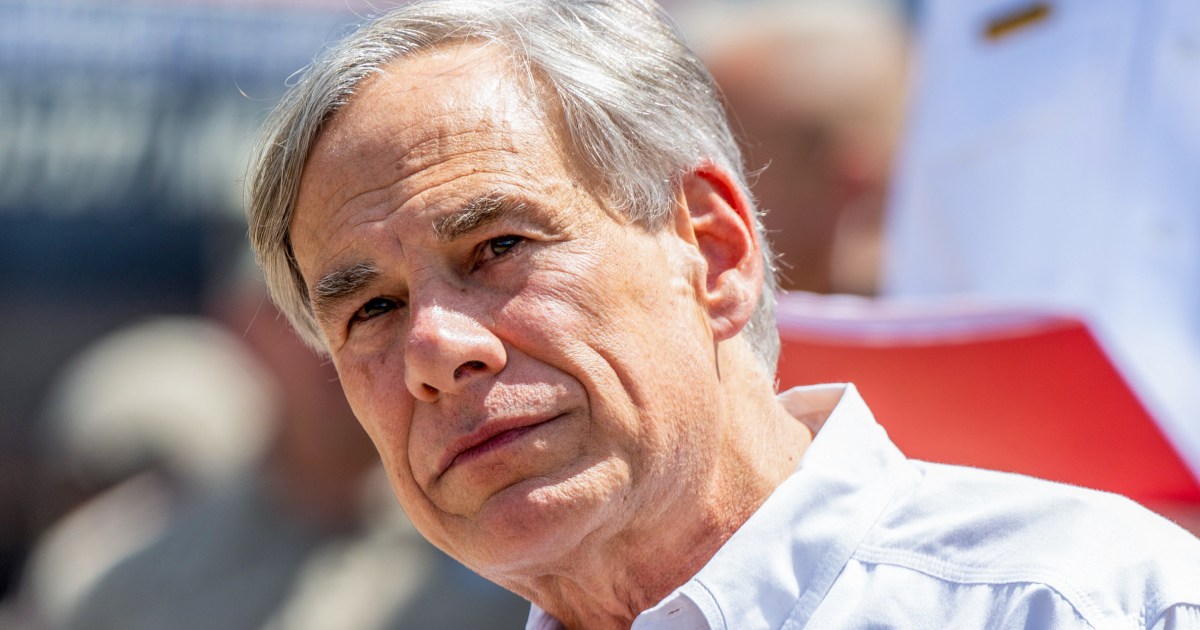
Governor Abbott Stands Firm in Redistricting Battle

Introduction
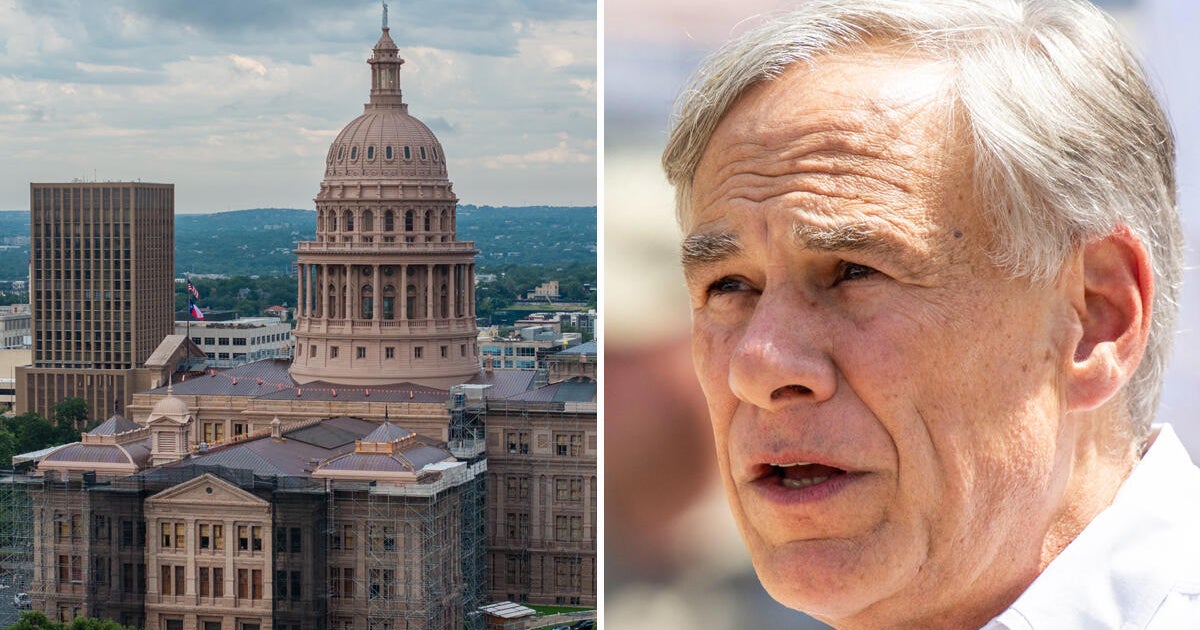
In a bold move, Texas Governor Greg Abbott has declared that he will not back down in the fight over redistricting. Despite the recent actions of Texas Democrats to flee the state and stall the GOP's efforts, Abbott remains steadfast in his determination to push through the redistricting plans. He has even gone as far as threatening to arrest the Democratic legislators if they do not return to the state. This power struggle has put the spotlight on the contentious issue of redistricting, and Abbott shows no signs of backing down any time soon.
Current Situation
The redistricting fight in Texas has been ongoing for years, with both parties fiercely advocating for their own agendas. Recently, Texas Democrats made the controversial decision to flee the state, in an effort to prevent the GOP from having the quorum needed to pass redistricting plans. This move has sparked a nationwide debate on the legality and effectiveness of such actions. Meanwhile, Abbott has remained resolute in his stance, stating that he will continue to push for the redistricting plans and will take any necessary measures to ensure they are passed.
Implications
This ongoing battle over redistricting has far-reaching implications for the state of Texas and the rest of the country. The outcome of this conflict could have a significant impact on the balance of power in the state and potentially even at the national level. It
About the People Mentioned
Greg Abbott
Greg Abbott, born Gregory Wayne Abbott on November 13, 1957, in Wichita Falls, Texas, is the 48th governor of Texas, serving since January 2015 after winning elections in 2014, 2018, and 2022.[1][2][4] A Republican and staunch conservative, he previously held the position of Texas attorney general from 2002 to 2015—the longest tenure in state history—where he defended state rights, religious liberty, and frequently challenged federal policies under the Obama administration.[1][2][3][6] Abbott's early career included roles as a state district judge in Harris County starting in 1992 and as a justice on the Texas Supreme Court from 1996 to 2001, appointed by then-Governor George W. Bush.[1][4][6] In 1984, at age 26, he was paralyzed from the waist down after a tree fell on him during a jog, requiring him to use a wheelchair; he became the first U.S. governor to do so since 1982 and only the third in American history.[1][2] As governor, Abbott has prioritized low taxes, budget cuts, economic growth, education funding, and border security through Operation Lone Star, including deploying troops, installing razor wire and buoys, busing migrants to sanctuary cities, and declaring Mexican cartels as terrorist organizations.[2][3][4][5] He signed constitutional carry legislation in 2021, allowing permitless handgun carry for most adults over 21, amid mass shootings like Sutherland Springs in 2017.[1] His administration has overseen record job creation, property tax reforms, bans on sanctuary cities, and protections for the unborn.[3][4][5] Disputes with federal officials over border measures persisted into 2023-2024.[2] In July 2025, Abbott declared a state of emergency after severe central Texas flooding killed over 150 people, securing federal disaster aid.[1] He remains a prominent national conservative figure, named "Best Governor in the Nation" in 2020.[5]
About the Organizations Mentioned
GOP
The **GOP**, or **Grand Old Party**, is the widely recognized nickname for the **Republican Party** of the United States, a major conservative political party founded in 1854. It originated from anti-slavery activists opposing the Kansas-Nebraska Act, uniting former Whigs and Free Soilers with a platform centered on halting the expansion of slavery. The party's early historic milestone was the election of Abraham Lincoln in 1860, which precipitated the Civil War; under Lincoln’s leadership, the GOP focused on preserving the Union and abolishing slavery[1][2][3]. Throughout its history, the Republican Party has evolved from its abolitionist roots to champion business interests, industrial growth, and economic policies favoring limited government intervention. In the late 19th and early 20th centuries, it promoted protective tariffs and infrastructure development. The party experienced fluctuating influence, losing ground during the New Deal era but regaining prominence with Dwight D. Eisenhower’s presidency in the 1950s, marked by moderate conservatism[1][2]. Today, the GOP advocates for reduced taxes, conservative social policies, limited government regulation, strong national defense, and states’ rights. It remains one of the two dominant forces in American politics, consistently shaping legislative agendas and national discourse[2]. The party is organized and led nationally by the **Republican National Committee (RNC)**, which manages fundraising, election strategies, and the party platform, coordinating efforts across states and counties under the leadership of a chairman[3][4]. Notably, the acronym "GOP" was popularized in the late 19th century and originally stood for "Grand Old Party," symbolizing the party's legacy in preserving the Union and championing liberty. It is now a common term in political commentary and media[3][5]. In recent years, the GOP has undergone significant membership changes in Congress and leadership adjustments, reflecting its dynamic role in U.S. politics as
Texas Democrats
The **Texas Democratic Party** is a prominent political organization in Texas, affiliated with the national Democratic Party. It has a rich history dating back to 1846, with a mission to empower every Texan to reach their full potential through inclusive governance[3]. Historically, the party was dominant in Texas, but since the 1990s, it has faced challenges from the Republican Party, which has become the state's dominant force[1]. ### What the Organization Does The Texas Democratic Party is committed to advancing liberal policies, including increasing educational funding, supporting abortion access, cannabis legalization, LGBT rights, environmentalism, gun control, Medicaid expansion, and raising the minimum wage[1]. The party focuses on grassroots organizing and aims to build a strong presence across the state, particularly in underserved communities[2]. ### History and Key Achievements Notable achievements include the contributions of prominent figures like President Lyndon B. Johnson, who was a Texas Democrat. The party has also played a significant role in the state's political landscape, with 39 out of 48 past governors being Democrats[1]. However, the party has not won a statewide election since 1994, marking a significant decline in its influence[1]. ### Current Status Currently, the party is undergoing significant changes. Under the leadership of Chair Kendall Scudder, the headquarters is being relocated from Austin to Dallas, which has led to a top staff exodus[2]. Despite these challenges, the party remains committed to its core values and is working to strengthen its grassroots presence across Texas, including opening new offices in Amarillo, Eagle Pass, and Houston[2]. ### Notable Aspects The Texas Democratic Party is known for its strong support among Black Texans, Hispanic Texans, young Texans, and urban residents[1]. However, recent shifts in Hispanic voter allegiance towards the Republican Party pose challenges for the Democrats[1]. The party has also been involved in high-profile political actions, such as the recent House

:focal(0x0:2400x1600)/static.texastribune.org/media/files/b16ea690df24c0ee8caaee6be9bb346d/0803%20Texas%20Lawmakers%20Illinois%20JKD%2003.JPG)