Trump's $5 Billion Defamation Lawsuit Against BBC Reshapes Media Coverage

Trump's Massive $5 Billion Lawsuit Against BBC
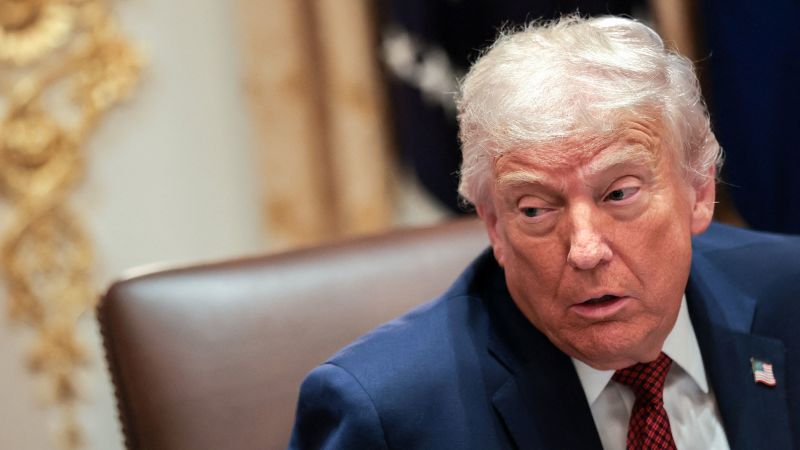
Former President Donald Trump has launched a staggering $5 billion defamation lawsuit against the BBC, targeting their Panorama documentary. The core accusation revolves around an allegedly misleading edit of his January 6, 2021, speech, which Trump claims distorted his words to portray him negatively. This bold legal move underscores his ongoing battle against media outlets he views as biased adversaries.
Allegations of Election Interference
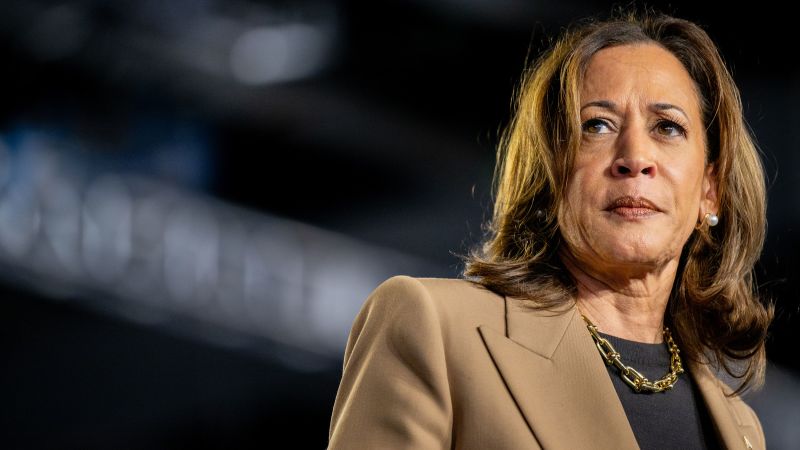
Trump asserts the BBC's broadcast aimed to sway the 2024 presidential race against Kamala Harris by manipulating footage from the Capitol events. He argues this selective editing fueled false narratives of incitement, damaging his reputation and campaign. Legal experts note such high-stakes suits often seek to deter future coverage, blending litigation with political strategy amid Trump's return to the spotlight.
Implications for Media and Politics
This case could redefine defamation thresholds for international broadcasters covering U.S. figures. As Trump positions himself for future influence, the lawsuit highlights tensions between free press and public figures' rights. Observers await court responses, predicting prolonged battles that amplify global media scrutiny on election narratives.
About the People Mentioned
Donald Trump
Donald John Trump, born June 14, 1946, in Queens, New York, is an American businessman, media personality, and politician. He graduated from the University of Pennsylvania’s Wharton School in 1968 with a degree in economics. In 1971, he took over his family’s real estate business, renaming it the Trump Organization, through which he expanded into building and managing skyscrapers, hotels, casinos, and golf courses. Trump gained widespread fame as the host of the reality TV show *The Apprentice* from 2004 to 2015, which helped establish his public persona as a successful entrepreneur. Trump entered politics as a Republican and was elected the 45th president of the United States, serving from 2017 to 2021. His presidency was marked by significant policy actions including tax cuts, deregulation, the appointment of three Supreme Court justices, renegotiation of trade agreements (notably replacing NAFTA with the USMCA), and a focus on immigration control including border wall expansion. He withdrew the U.S. from international agreements such as the Paris Climate Accord and the Iran nuclear deal, and engaged in a trade war with China. His administration’s response to the COVID-19 pandemic was criticized for downplaying the virus’s severity. Trump was impeached twice by the House of Representatives—first in 2019 for abuse of power and obstruction, and again in 2021 for incitement of insurrection—but was acquitted by the Senate both times. After losing the 2020 election to Joe Biden, Trump challenged the results, culminating in the January 6, 2021, Capitol riot. He remains a central figure in American politics, having won the 2024 presidential election and returned as the 47th president in 2025, continuing to promote policies aimed at economic growth, border security, and military strength[1][2][3][4].
Kamala Harris
Kamala Devi Harris was born on October 20, 1964, in Oakland, California, and served as the 49th Vice President of the United States from 2021 to 2025 under President Joe Biden.[1] She made history as the first woman, first Black American, and first South Asian American to hold the office of Vice President.[1][2] Harris began her legal career as a deputy district attorney in Oakland from 1990 to 1998, where she specialized in prosecuting gang violence, drug trafficking, and sexual abuse cases.[1] She rose through the ranks to become District Attorney of Oakland in 2004, where she became a national leader in LGBTQ+ rights and established innovative programs, including one that provided first-time drug offenders opportunities to earn high school diplomas and find employment—a program designated as a national model by the U.S. Department of Justice.[2][4] In 2010, Harris was elected Attorney General of California, becoming the first woman and first Black American to hold that position.[1] She served in this role until 2017, when she was elected to the U.S. Senate, becoming only the second Black woman ever elected to the Senate.[6] During her Senate tenure, she championed legislation on hunger relief, maternal health care, climate action, and infrastructure while serving on the Judiciary and Intelligence committees.[3] As Vice President, Harris worked on addressing migration from Latin America, protecting voting rights, and preserving access to abortion following the 2022 Supreme Court Dobbs decision.[1] She cast the decisive vote for the Inflation Reduction Act, the largest climate investment in history, and presided over the confirmation of Justice Ketanji Brown Jackson to the Supreme Court.[3][4] Harris visited 36 states and made 17 foreign trips to 21 countries, meeting with over 150 world leaders.[2] On July 21, 2024, Harris announced her presidential campaign after President Biden withdrew from the race.[4] She became the Democratic Party's nominee on August 5, 2024, making history as the first Black woman and first South Asian woman nominated for president by a major U.S. political party.[4] She was defeated by Donald Trump in the November 2024 election.
About the Organizations Mentioned
BBC
## Overview The British Broadcasting Corporation (BBC) is the world’s oldest and largest national broadcaster, serving as a cornerstone of public service media in the United Kingdom and beyond[1][2]. Headquartered in London, the BBC operates under a royal charter and is primarily funded by a television licence fee paid by UK households, ensuring its editorial independence from both government and commercial interests[1][2]. This model allows the BBC to fulfill its mission to “inform, educate, and entertain” with impartiality at its core[3]. ## History and Evolution The BBC was founded on October 18, 1922, as the British Broadcasting Company Ltd., evolving into a public corporation under royal charter on January 1, 1927[1][2]. Its first Director-General, John Reith, established principles of independence and public service that continue to guide the organization. The BBC launched its television service in 1936, pioneering broadcasting technology, and expanded globally with the BBC World Service in 1932, now broadcasting in 28 languages[1][2]. ## Key Achievements The BBC has been a trailblazer in broadcasting, introducing innovations such as regular television broadcasts, color TV, and digital platforms like BBC iPlayer[1][2]. It has earned a reputation for high-quality journalism, producing globally recognized programs in news, drama, and documentary. The BBC’s international arm, BBC Studios, commercializes content worldwide, while the BBC World Service remains a vital source of news in regions with limited press freedom[1]. The corporation has received numerous accolades, including the Queen’s Award for Enterprise for its international business achievements[1]. ## Current Status and Digital Transformation With over 21,000 employees, the BBC remains a dominant force in media, generating £5.4 billion in annual income, mostly from licence fees[2]. It operates multiple TV channels, radio stations, and a robust online presence, including BBC News Online and BBC.com[1