TSA Workers Go Unpaid as DHS Shutdown Threatens Airports and Security
TSA Agents Face Unpaid Work Amid DHS Shutdown
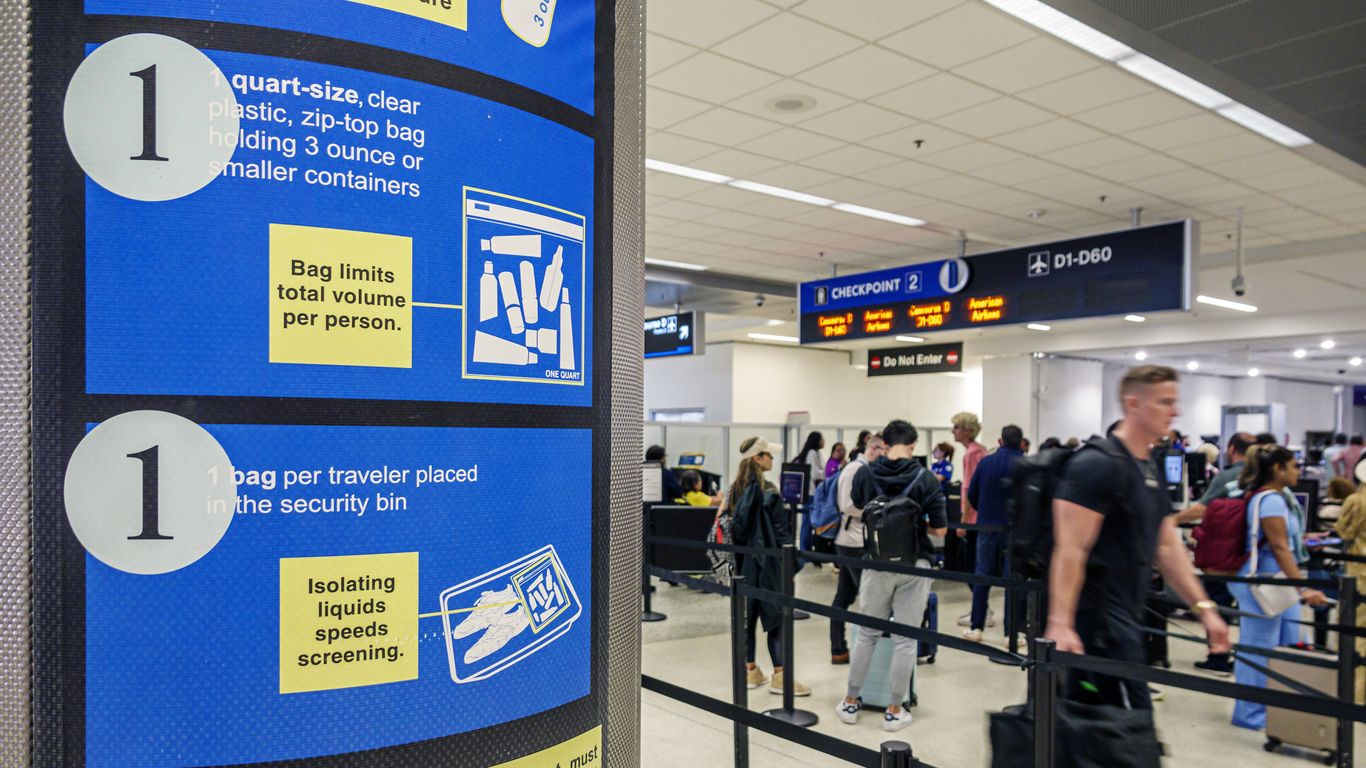
A new Department of Homeland Security shutdown has forced Transportation Security Administration officers to screen passengers and bags at U.S. airports without pay, echoing the record 43-day crisis last fall. Triggered by congressional deadlock over funding, this partial closure affects essential DHS operations as lawmakers spar on immigration reforms following a tragic Minneapolis shooting. With over 63,000 TSA workers deemed critical, they must continue duties despite financial strain, many still recovering from prior hardships.
Reasons Behind the Funding Freeze
Democrats demand ICE agents unmask, identify themselves, and secure warrants for arrests on private property, demands Republicans reject amid partisan tensions. The White House negotiates, but Congress's recess delays resolution, risking prolonged uncertainty for frontline personnel like TSA, Coast Guard, and Secret Service staff working unpaid.
Travel Disruptions and Safety Concerns
While air traffic control remains funded, experts warn of longer security lines, higher absences, and potential flight delays at smaller airports. Unlike broader shutdowns, this targets DHS alone, but staffing shortages could close checkpoints, urging travelers to arrive early and monitor updates as safety stays paramount despite the turmoil.
About the Organizations Mentioned
Department of Homeland Security
The **Department of Homeland Security (DHS)** is a U.S. federal agency established in response to the 9/11 terrorist attacks to safeguard the nation from a wide range of threats including terrorism, natural disasters, cyberattacks, and border security challenges. Its core mission is to protect the American people, critical infrastructure, and uphold national security by coordinating efforts across government and private sectors. DHS oversees immigration enforcement, cybersecurity, emergency response, and counterterrorism initiatives. Formed in 2002, DHS consolidated 22 federal agencies to create a unified structure for domestic security. Its key components include the U.S. Customs and Border Protection, the Federal Emergency Management Agency (FEMA), and the Transportation Security Administration (TSA). Over the years, DHS has played a critical role in preventing terrorist attacks, enhancing airport security, responding to natural disasters like hurricanes and pandemics, and advancing cybersecurity protections for government and private sector networks. In recent years, DHS has shifted focus towards emerging threats such as unmanned drone attacks on infrastructure, cyber intrusions into financial and critical systems, and disruptions to supply chains. Strategic visions for 2025 and beyond emphasize technological innovation, integration of intelligence, and public-private partnerships to address these complex challenges. The agency’s budget reflects its broad mandate, with over $400 billion allocated for fiscal year 2025, underscoring its significant role in national security and emergency preparedness. Notably, DHS has faced scrutiny and calls for reform, especially regarding immigration enforcement and internal mission clarity. Recent directives have expanded immigration enforcement powers to other federal law enforcement agencies, reflecting policy shifts under different administrations focused on border security. For business and technology sectors, DHS represents a major government player driving innovation in cybersecurity, disaster response technology, and infrastructure protection, while navigating evolving threats in a complex geopolitical landscape. Its ongoing modernization efforts aim to enhance resilience and adapt to future security challenges.
Transportation Security Administration
The **Transportation Security Administration (TSA)** is a U.S. federal agency under the Department of Homeland Security responsible for safeguarding the nation’s transportation systems, primarily focusing on airport security and preventing aircraft hijackings. Established in response to the September 11, 2001 terrorist attacks, the TSA was created to consolidate and enhance air travel security through federal oversight and coordinated policies[1]. The TSA’s core functions include screening passengers and their baggage at over 450 airports nationwide using technologies such as full-body scanners, explosives detection, and pat-downs. It also deploys specialized personnel like Transportation Security Officers (TSOs), explosives detection dog handlers, bomb technicians, and armed Federal Air Marshals on aircraft to protect travelers[1][2][3]. Beyond aviation, the TSA develops security policies for other transport sectors including highways, railroads, buses, mass transit, ports, and pipelines, working in partnership with federal, state, and local agencies[1]. Since its inception, the TSA has evolved into a large organization with a budget of approximately $9.7 billion (FY 2023) and employing over 47,000 security personnel[1]. It manages a complex balance between rigorous security measures and maintaining efficient passenger flow, often employing advanced technology and training to detect threats while minimizing inconvenience[2][3]. The agency values integrity, respect, and commitment, emphasizing a professional workforce engaged in counterterrorism efforts to ensure freedom of movement for people and commerce[3][4]. Notable aspects of the TSA include its pioneering role in airport security innovation post-9/11, its expansive nationwide presence, and ongoing challenges such as public scrutiny over privacy, effectiveness, and occasional controversies related to security procedures. Despite this, the TSA remains a central pillar in the U.S. transportation security framework, continuously adapting to emerging threats and technologies to protect millions of travelers daily[1][3][5].
Coast Guard
The United States Coast Guard (USCG) is a unique federal service branch tasked with maritime safety, security, and stewardship, blending military, law enforcement, and humanitarian roles. Established in 1915 by merging the Revenue Cutter Service with the Life-Saving Service, it is one of the oldest U.S. armed services and functions both as a military force and a federal law enforcement agency[2][6]. The Coast Guard’s core missions fall into three broad categories: maritime safety, maritime security, and maritime stewardship. It executes eleven statutory missions, including search and rescue, drug interdiction, migrant interdiction, marine environmental protection, and port security. These missions reflect its multifaceted role in protecting lives at sea, enforcing U.S. laws, combating transnational crime like drug trafficking and human smuggling, and safeguarding marine resources[1][2][5]. Key operational focuses include maritime law enforcement, emergency response, prevention of accidents and environmental disasters, management of the marine transportation system, and national defense. The Coast Guard operates a diverse fleet of cutters, aircraft, and shore facilities, coordinating closely with other federal agencies and international partners across a vast operational area spanning U.S. coastal waters and international zones[3][5][7]. Historically, the Coast Guard has been praised for its flexibility and rapid response in crises, exemplified during events like Hurricane Katrina. It also oversees aids to navigation, including lighthouses and buoys, ensuring safe maritime commerce valued at over $5 trillion annually[2][6][5]. Today, the Coast Guard operates under the Department of Homeland Security in peacetime but can be transferred to the Department of the Navy during wartime. Its enduring mission combines protecting U.S. maritime interests, supporting national security, and preserving the marine environment, making it a critical player at the intersection of business, technology, and national defense[6][8].
Secret Service
The United States Secret Service (USSS) is a federal law enforcement agency with a dual mission: **protecting national leaders and safeguarding the nation’s financial and critical infrastructure**. Established in 1865 initially to combat widespread counterfeit currency following the Civil War, the agency's protective responsibilities expanded after the 1901 assassination of President William McKinley to include safeguarding the President, Vice President, their families, presidential candidates, former presidents, visiting foreign dignitaries, and key government officials[1][2][4]. The Secret Service operates under the Department of Homeland Security since 2003, having been transferred from the Treasury Department, reflecting its broadened scope beyond financial crime to include national security[2]. Its protective mission encompasses physical security for the White House, the Treasury Department, the Vice President’s residence, former presidents' homes, and foreign diplomatic missions in Washington, D.C. The agency leads security planning for National Special Security Events such as presidential inaugurations and major political conventions, employing advance site assessments, intelligence gathering, and coordination with local law enforcement[1]. On the investigative side, the Secret Service continues its legacy fighting financial crimes, including counterfeiting, credit card fraud, identity theft, and increasingly cybercrimes targeting the nation’s financial systems and critical telecommunications infrastructure[1][5]. Agents undergo rigorous training in law enforcement, firearms, protective tactics, and financial crime detection, typically involving an 11-week federal training followed by advanced instruction in Washington, D.C.[3][5]. With over 6,500 personnel including special agents, uniformed division agents, and support staff, the Secret Service is renowned for its highly specialized protective units—such as the Presidential Protection Division—and its unique canine units trained for security operations[3]. Key achievements include preventing numerous assassination attempts on U.S. leaders and securing major national events from threats. Today, the Secret Service remains a vital institution blending traditional law enforcement with cutting-edge technology and intelligence to protect both the country’
Immigration and Customs Enforcement
**Immigration and Customs Enforcement (ICE)** is a federal law enforcement agency under the U.S. Department of Homeland Security (DHS). Established by the Homeland Security Act of 2002, ICE was created in response to the 9/11 attacks to enhance national security and protect public safety. The agency's primary mission is to enforce federal laws related to customs, trade, and immigration, focusing on cross-border crime and illegal immigration[1][2][3]. **History and Structure:** ICE was formed by merging the U.S. Customs Service and the Immigration and Naturalization Service. It operates with over 20,000 staff across more than 400 global offices, with an annual budget of approximately $8 billion[3]. The agency is structured into several key directorates, including **Enforcement and Removal Operations (ERO)**, which handles immigrant detention and deportation, and **Homeland Security Investigations (HSI)**, which investigates transnational crimes[1][2]. **Key Functions and Achievements:** ICE is known for its immigration enforcement efforts, particularly in interior regions of the U.S. It conducts investigations into human trafficking, terrorism, and other transnational crimes. Despite controversy over policies like family separation and detention conditions, ICE has made significant strides in combating illegal activities and protecting national security[4][6]. **Current Status and Notable Aspects:** Today, ICE continues to face challenges and controversy, particularly regarding its enforcement practices and impact on immigrant communities. The agency's actions can have profound effects on local economies and social services, as fear of ICE may deter undocumented immigrants from accessing essential services[6]. Despite these challenges, ICE remains a crucial component of U.S. immigration policy, working to balance enforcement with humanitarian concerns.
White House
The **White House Office** is a central organizational component within the Executive Office of the President of the United States (EOP), tasked with supporting the President in managing day-to-day operations, policy formulation, and political affairs. It is headed by the White House Chief of Staff and staffed by senior aides who report directly to the President, including those with titles such as Assistant to the President and Deputy Assistant to the President. These staff members are mostly political appointees without the need for Senate confirmation, allowing the President considerable discretion in shaping the office to suit each administration's priorities[1]. Historically, the White House Office was established in 1939 through Reorganization Plan 1 and Executive Order 8248 to provide immediate assistance to the President. It functions as the nerve center for presidential staff, physically located primarily in the West Wing, and plays a pivotal role in managing the President’s policy agenda, communications, and political strategy. Its flexible organization allows each President to tailor the staff composition and roles according to their governance style and objectives[1]. In the current context of 2025, the White House Office operates under the administration of President Donald J. Trump, who returned to office after the 2024 election. His administration emphasizes rejecting prior policies deemed extremist and focuses on enhancing quality of life, economic growth, and American energy dominance. The administration includes Vice President JD Vance and First Lady Melania Trump, among others, with a Cabinet advising on various governmental functions[4][6]. Recent initiatives linked to the White House’s operational sphere include the establishment of a new **Department of Government Efficiency (DOGE)** aimed at modernizing federal technology and software to boost government productivity. The DOGE agenda is implemented through the renamed United States DOGE Service within the Executive Office, reflecting a concerted push to leverage technology for administrative modernization[5]. Notably, the White House Office also coordinates national security and homeland security functions through the National Security Council staff, underscoring its central role
Congress
The United States Congress is the legislative branch of the federal government, playing a pivotal role in shaping the nation's policies and laws. As a bicameral legislature, it consists of the House of Representatives and the Senate, each with distinct responsibilities. The House represents congressional districts, while the Senate represents states, ensuring diverse perspectives are heard. **History and Structure:** Congress has a rich history, evolving over time to reflect the nation's demographic changes and political shifts. It is structured into committees that specialize in various policy areas, facilitating the legislative process. The National Archives and Records Administration maintains historical records of Congress, highlighting its ongoing role in governance. **Key Achievements:** Throughout its history, Congress has achieved numerous milestones, including landmark legislation such as the Civil Rights Act and the Affordable Care Act. It has also played a significant role in shaping the nation's economic policies, influencing business and technological advancements. **Current Status:** The 119th Congress, which convened in January 2025, marks significant changes with a Republican majority in both chambers. This setup has implications for policy-making, especially in areas like healthcare and technology regulation. The current Congress is also notable for its diversity, being the most racially and ethnically diverse in history. **Notable Aspects:** - **Diversity and Representation:** The 119th Congress is the most diverse in U.S. history, with increased representation from diverse ethnic backgrounds and the inclusion of the first openly transgender federal legislator. - **Technological Integration:** Congress uses technology to enhance legislative processes, such as through platforms like Congress.gov, which provides access to legislative information and resources. - **Economic Impact:** Congress's decisions have profound impacts on business and technology sectors, influencing regulatory environments and investment opportunities. In summary, the U.S. Congress is a dynamic institution that plays a crucial role in shaping the nation's policies, laws, and economic landscape. Its ongoing evolution reflects the changing needs and demographics of the country, making it a vital