US Judge Orders Release of Kilmar Abrego Garcia from ICE Custody
US Judge Orders Release of Kilmar Abrego Garcia from ICE Custody
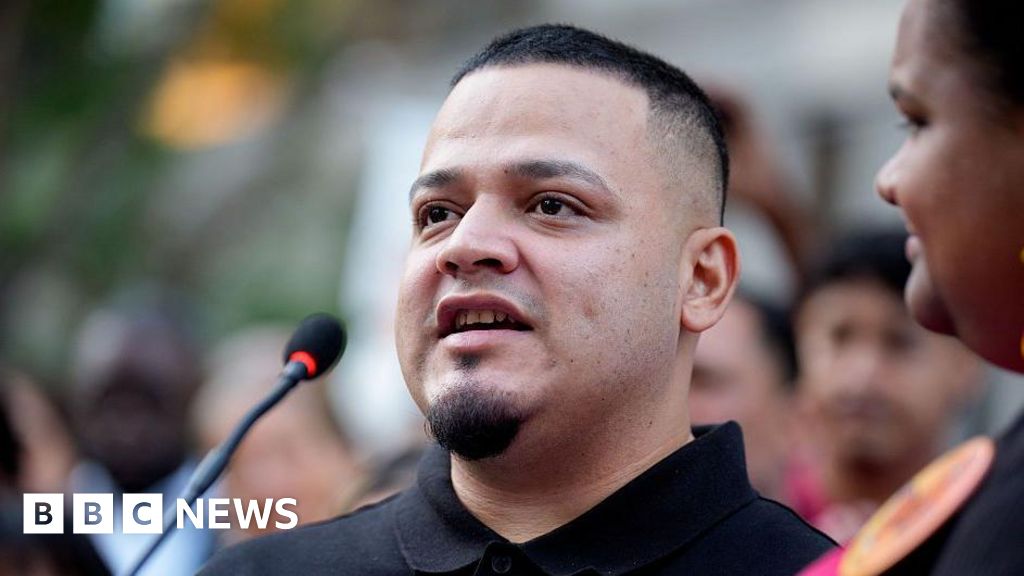
In a landmark ruling, a US federal judge has mandated the immediate release of Kilmar Abrego Garcia from Immigration and Customs Enforcement (ICE) detention. The decision stems from a determination that his prolonged custody lacked lawful authority, marking a significant victory for immigration advocates. Garcia, who has deep roots in Maryland, will now be permitted to return home at least temporarily, pending further proceedings.
Ruling Details and Legal Basis
The judge cited procedural violations and insufficient evidence justifying Garcia's detention amid ongoing deportation debates. This case highlights tensions in US immigration enforcement, where individuals with established community ties often face extended holds without due process. Legal experts note it echoes prior challenges to ICE practices, emphasizing constitutional protections against arbitrary detention.
Implications for Immigration Policy
Garcia's release could inspire similar lawsuits, pressuring authorities to refine detention protocols. For families like his in Maryland, it offers relief and underscores the human impact of policy shifts. As debates intensify ahead of potential reforms, this ruling reinforces judicial oversight in balancing security and rights.
About the People Mentioned
Kilmar Abrego Garcia
Kilmar Abrego Garcia was born in July 1995 in the Los Nogales neighborhood of San Salvador, El Salvador. His family faced serious threats from the Barrio 18 criminal gang, which extorted his mother’s small pupusa business and threatened to force his eldest brother, Cesar, into gang membership or kill him. To protect Cesar, the family sent him to the United States. Later, the gang targeted Kilmar as well, leading his family to send him to the US when he was about 16 years old. He crossed the Mexico–US border illegally near McAllen, Texas, around 2011 or 2012 and subsequently traveled to Maryland to live with his brother Cesar, who had become a US citizen. In Maryland, Kilmar Abrego Garcia established a family life after marrying Jennifer Vasquez Sura, a US citizen, in 2016. The couple had one child together, and they raised this child alongside Vasquez Sura’s two children from a previous relationship. All three children have special needs; notably, the son born to Kilmar and Jennifer has autism and a hearing impairment and is non-verbal. Throughout his time in the United States, Abrego Garcia had no criminal charges or convictions, including any gang-related allegations, in either the US or El Salvador. Despite his family ties and lack of criminal record, Kilmar Abrego Garcia was eventually deported to El Salvador. His case highlights the challenges faced by many Central American migrants fleeing gang violence and the complexities surrounding immigration enforcement in the US. His life story is notable for the intersection of family protection, migration under duress, and the impact of immigration policies on individuals with strong family and community connections in the United States.
About the Organizations Mentioned
Immigration and Customs Enforcement
**Immigration and Customs Enforcement (ICE)** is a federal law enforcement agency under the U.S. Department of Homeland Security (DHS). Established by the Homeland Security Act of 2002, ICE was created in response to the 9/11 attacks to enhance national security and protect public safety. The agency's primary mission is to enforce federal laws related to customs, trade, and immigration, focusing on cross-border crime and illegal immigration[1][2][3]. **History and Structure:** ICE was formed by merging the U.S. Customs Service and the Immigration and Naturalization Service. It operates with over 20,000 staff across more than 400 global offices, with an annual budget of approximately $8 billion[3]. The agency is structured into several key directorates, including **Enforcement and Removal Operations (ERO)**, which handles immigrant detention and deportation, and **Homeland Security Investigations (HSI)**, which investigates transnational crimes[1][2]. **Key Functions and Achievements:** ICE is known for its immigration enforcement efforts, particularly in interior regions of the U.S. It conducts investigations into human trafficking, terrorism, and other transnational crimes. Despite controversy over policies like family separation and detention conditions, ICE has made significant strides in combating illegal activities and protecting national security[4][6]. **Current Status and Notable Aspects:** Today, ICE continues to face challenges and controversy, particularly regarding its enforcement practices and impact on immigrant communities. The agency's actions can have profound effects on local economies and social services, as fear of ICE may deter undocumented immigrants from accessing essential services[6]. Despite these challenges, ICE remains a crucial component of U.S. immigration policy, working to balance enforcement with humanitarian concerns.