2026 Daytona Speedweeks Pit Stall Assignments Unveiled: Strategy Behind the Stalls
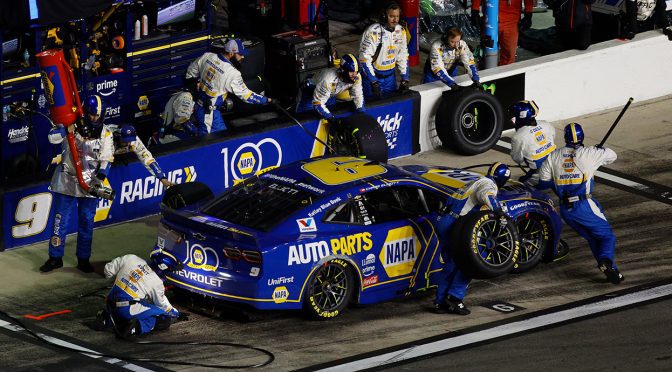
2026 Daytona Speedweeks Pit Stall Assignments Unveiled
The 2026 Daytona Speedweeks pit stall assignments for NASCAR Cup Series, O'Reilly Auto Parts Series, and Truck Series teams are now official, setting the stage for intense competition at the iconic Daytona International Speedway. These strategic selections, revealed just ahead of the high-stakes events, give teams a crucial edge in pit road efficiency during the grueling Speedweeks schedule.
Key Assignments and Team Strategies
Top contenders like William Byron secured prime stalls after expressing confidence in his stable backup car during Happy Hour practice, mirroring his primary setup. Brad Keselowski eyed the top lane's potential speed, while Ryan Preece noted adjustments needed for his No. 60 machine. Jimmie Johnson, the lone Toyota practicer, experimented boldly, and Corey Heim stayed conservative post-Duel. These picks reflect practice insights, with teams prioritizing quick access for fuel and tire changes amid superspeedway chaos.
Impact on Race Outcomes
Pit stall positions could prove decisive in the Daytona 500 and supporting races, influencing draft lines and caution timing. As drivers like Josh Berry fine-tune qualifying runs and Casey Mears rebound from Duel damage, fans anticipate how these assignments shape alliances and rivalries. Stay tuned for thrilling action.
About the People Mentioned
William Byron
William Byron, born November 29, 1997, in Charlotte, North Carolina, is a professional stock car racer competing full-time in the NASCAR Cup Series for Hendrick Motorsports in the No. 24 Chevrolet.[1][2][3] He is renowned for his rapid ascent from virtual sim racing on iRacing—where he amassed over 100 wins before driving a real car at age 16—to becoming one of NASCAR's elite drivers.[1][3][5][6] Byron's career highlights include a record seven wins as a rookie in the 2016 NASCAR Craftsman Truck Series, earning Rookie of the Year honors there and in the subsequent Xfinity Series, where he claimed the 2017 championship with four victories, including at Daytona and Indianapolis.[1][2][3][5][6] He became only the second driver, alongside Erik Jones, to win Rookie of the Year in all three national series consecutively.[1][2] Debuting in the Cup Series in 2018, he secured that series' Rookie of the Year award and has since logged 14 wins in 265 races, with 112 top-10 finishes.[2][4][6] Key achievements encompass his first Cup win at Daytona in 2020, a breakout 2023 season with six victories (including Watkins Glen and Darlington), and leading Hendrick to its 300th Cup win.[4][5][6] In 2024, he triumphed in the Daytona 500—Hendrick's seventh—and added wins at Circuit of the Americas and Martinsville, reaching the Championship 4 and finishing third overall.[1][2][5] He repeated as Daytona 500 winner in 2025 and captured his first Cup Regular Season Championship in August at Richmond, earning 15 playoff bonus points.[2][3] Entering his ninth Cup season in 2026 at age 28, Byron remains a title contender with 42 top-10s over two years, the series-best 11.9 average finish, and nine recent wins, solidifying his status among NASCAR's top talents.[1][3][5][6]
Brad Keselowski
**Brad Keselowski** is a professional NASCAR driver and team owner who began his racing career in 2004 at age 20[7]. He comes from a racing family, with his father Bob competing in the Camping World Truck Series[7]. Keselowski achieved significant success as a driver for Team Penske, becoming the second of only six drivers to win championships in both the NASCAR Cup Series and Xfinity Series[1]. His most notable achievement came in 2010 when he won the Cup Series championship, marking the first NASCAR championship in legendary team owner Roger Penske's history[3]. He finished second in the championship standings in 2020, his best result since winning the title in 2012[4]. Throughout his career with Team Penske, Keselowski accumulated 67 combined wins across Cup Series and Xfinity competition[2]. He is currently tied for third among active drivers in career wins with 36 victories[2]. His accomplishments include memorable victories at prestigious tracks such as Talladega Superspeedway in 2009 (his first Cup Series win), the Coca-Cola 600 at Charlotte Motor Speedway in 2020, and Darlington Raceway in 2024[2][4]. In 2024, Keselowski joined RFK Racing and earned his first victory with the team at Darlington, finishing 13th in the points standings and securing his 10th playoff appearance since 2014[2]. That season, he recorded nine top-five results, his career-best since joining RFK, and led the Cup Series with four runner-up finishes[2]. Beyond his driving career, Keselowski is a co-owner of RFK Racing, demonstrating his expanded role in the sport. He has established himself as a prominent figure in modern NASCAR, known for consistent performance and contributions to multiple team successes throughout his professional tenure.
Ryan Preece
Ryan Preece is an American professional stock car racing driver from Berlin, Connecticut, who has established himself as a competitive presence across multiple NASCAR series[1][2]. Preece began his NASCAR career in the Whelen Modified Tour, where he achieved early prominence by becoming the youngest champion in tour history at 22 years, 11 months, and 25 days old in 2013[1]. He earned 25 wins in the Modified Tour, including three victories in recent seasons, and was named to NASCAR's elite NASCAR NEXT program in 2013 and 2014[1][2]. His transition to NASCAR's national series began in 2013 when he made his Xfinity Series debut at New Hampshire Motor Speedway, finishing 24th in a Tommy Baldwin Racing vehicle[1][2]. Preece demonstrated steady improvement, competing part-time with JD Motorsports in 2016 before joining Joe Gibbs Racing in 2017. With JGR, he secured a significant victory at Bristol Motor Speedway and earned the $100,000 Xfinity Dash 4 Cash bonus[2]. In the NASCAR Cup Series, Preece achieved notable milestones in 2023, earning his first career pole award at Martinsville Speedway and scoring his first stage win in the same race[1]. Despite suffering a severe flip at Daytona that season, he recovered to finish the final 10 races competitively[1]. As of 2025, Preece entered his sixth full-time season in the NASCAR Cup Series, driving for RFK Racing after a two-year tenure with Stewart-Haas Racing[3]. He continues to maintain involvement in the Whelen Modified Tour on a part-time basis while competing at the highest levels of NASCAR stock car racing[2]. Preece is recognized for his resilience, adaptability, and consistency throughout his racing career across multiple competitive divisions[4].
About the Organizations Mentioned
NASCAR Cup Series
The **NASCAR Cup Series** is the premier division of the National Association for Stock Car Auto Racing (NASCAR), hosting the highest level of stock car racing in the United States with 36 chartered teams competing in high-speed oval and road course events.[2] It drives a multibillion-dollar industry blending automotive technology, sponsorships from tech giants like Ford and emerging players like Dodge, and broadcast deals amplifying its business reach.[2] Launched in 1948 as the Strictly Stock series, it evolved into the Grand National Division by 1950 and became the Winston Cup Series in 1971 through a landmark tobacco sponsorship. The modern **Cup Series** era began in 2004, with the playoffs rebranded as "The Chase" in recent years—a 16-driver postseason format emphasizing consistent points accumulation over single wins, as updated for 2026 to reduce aggressive attrition and reward equipment reliability.[1][2] Key achievements include record viewership for the **Daytona 500**, NASCAR's Super Bowl equivalent, which kicks off the season on February 15 at Daytona International Speedway, followed by Atlanta on February 22.[3] Icons like Richard Petty (200 wins) and Jimmie Johnson (seven championships) defined its legacy, while recent tech innovations—such as advanced aerodynamics, hybrid powertrains in lower series hinting at Cup upgrades, and data analytics for predictive performance—position it at the forefront of motorsport engineering.[2] As of early 2026, the series thrives amid business momentum: the season opener, Cook Out Clash at Bowman Gray Stadium, faced snow delays but builds hype for a campaign predicting breakouts like Shane van Gisbergen's Chase qualification and Denny Hamlin's championship push.[1] With declining DNFs (down from 5.2 per race in 2025) and manufacturer rivalries heating up, the Cup Series exemplifies resilient enterprise—merging adrenaline-
O'Reilly Auto Parts Series
# O'Reilly Auto Parts Series: A Comprehensive Overview The **O'Reilly Auto Parts Series** is a professional stock car racing competition sanctioned by NASCAR in the United States[3]. Currently in its 45th season in 2026, the series represents a significant platform for motorsports development and automotive industry promotion[3]. ## History and Foundation O'Reilly Automotive, Inc., the company behind the series' naming rights, has been a cornerstone of the automotive replacement parts industry since 1957[1]. What began as a family-owned enterprise has evolved into a leader in the sector, now operating more than 6,200 store locations across the United States, Mexico, Puerto Rico, and Canada[1]. The company's commitment to community involvement and customer service has defined its corporate culture for decades[1]. ## Current Operations and Structure The 2026 NASCAR O'Reilly Auto Parts Series season runs from February 14 through November 7, featuring races at multiple tracks including Daytona International Speedway and Homestead–Miami Speedway[3]. The series attracts competitive teams and drivers, with notable partnerships forming between independent operations and established racing organizations. For instance, Jeremy Clements Racing partnered with Haas Factory Team for 2026, while Viking Motorsports aligned with championship-caliber programs[2]. ## Notable Achievements The series continues to showcase emerging talent and competitive racing. Richard Childress Racing claimed the 2025 championship with driver Jesse Love, while teams like Haas Factory Team demonstrated championship potential with multiple playoff appearances[2]. Jeremy Clements, a two-time series winner, represents the caliber of competitors in the circuit[2]. ## Significance Beyond racing, the O'Reilly Auto Parts Series serves as a grassroots platform supporting local tracks across the
Truck Series
The **NASCAR Craftsman Truck Series** (NCTS) is a professional pickup truck racing competition owned and operated by NASCAR, the National Association for Stock Car Auto Racing.[1] As the lowest of NASCAR's three national divisions, it represents a unique motorsport category focused exclusively on production pickup truck-based stock cars.[1] ## Origins and Development The Truck Series concept emerged in 1991 when a group of SCORE off-road racers—Dick Landfield, Jimmy Smith, Jim Venable, and Frank "Scoop" Vessels—sought to establish a pavement truck racing series to address concerns about desert racing's future.[1] After initial setbacks, the series officially launched in 1995, initially featuring races primarily on short tracks and western venues in Arizona, California, Colorado, Oregon, and Washington.[1] This regional focus gradually expanded to include southeastern tracks, establishing the series as a truly national competition. ## Competitive Structure and Evolution The Truck Series operates under NASCAR's strict regulatory framework. Beginning in 2011, drivers could compete for the championship in only one of NASCAR's three national touring series per season.[1] In 2016, NASCAR introduced a playoff format with eight drivers competing across three elimination rounds, later replaced by the stage system adopted across all NASCAR national series in 2017.[1] ## Current Status As of 2025, the Truck Series stands as the most recently established NASCAR-sanctioned national racing competition.[1] The 2026 season continues this legacy, with the next race scheduled for February 21st, featuring drivers competing for points and wins across a full schedule.[3] The series maintains its distinctive identity as the only NASCAR division racing production pickup truck-based vehicles, attracting sponsors and drivers committed to this specialized motorsport category. The Truck Series represents an essential tier in NASCAR's competitive hierarchy, providing development opportunities while
Daytona International Speedway
```html <!DOCTYPE html> <html lang="en"> <head> <meta charset="UTF-8"> <meta name="viewport" content="width=device-width, initial-scale=1.0"> <title>Daytona International Speedway: A Racing Legacy of Innovation and Speed</title> <style> body { font-family: Arial, sans-serif; line-height: 1.6; max-width: 800px; margin: 0 auto; padding: 20px; } h1 { color: #d00; text-align: center; } h2 { color: #333; border-bottom: 2px solid #d00; padding-bottom: 10px; } p { margin-bottom: 1em; } ul { margin-bottom: 1em; } </style> </head> <body> <h1>Daytona International Speedway: A Racing Legacy of Innovation and Speed</h1> <p>Daytona International Speedway, the **World's First Motorsports Stadium**, stands as a cornerstone of American motorsports, hosting high-stakes NASCAR events and drawing global fans to its 500-acre Daytona Beach complex[4]. Founded by NASCAR pioneer Bill France Sr., it revolutionized racing by replacing the perilous Daytona Beach Road Course with a state-of-the-art banked superspeedway[1][2][3].</p> <h2>Rich History from Beach to Banking Glory</h2> <p>Racing in Daytona traces to 1902 on the beachfront A1A highway, evolving through 1930s sand races organized by France, who settled there after a 1934 car breakdown[1][2]. By the mid-1950s, surging crowds prompted a permanent track. Construction began November 25, 1957, funded by oil tycoon Clint Murchison's $600,00