Agouti Integrates Environmental Cues to Regulate Paternal Behavior
Agouti Integrates Environmental Cues to Regulate Paternal Behavior
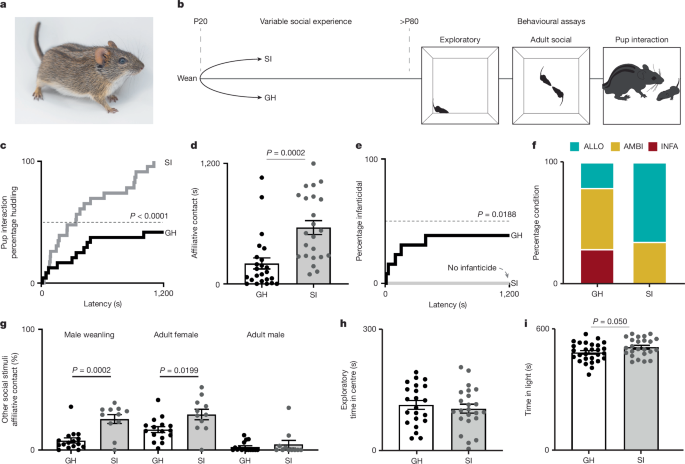
In African striped mice, a fascinating study reveals how the brain adapts paternal instincts to social surroundings. Males isolated after weaning become nurturing fathers, eagerly caring for pups, while those in crowded groups turn neglectful or aggressive. This shift hinges on the medial preoptic area, a key brain hub for parenting, where agouti signaling protein expression surges under group housing, suppressing care[1][2].
The Role of Agouti in Neural Control
Agouti acts as a molecular sensor, integrating long-term housing density rather than hunger. Low levels promote alloparenting, fostering pup survival in solitary setups, whereas overexpression—induced via viral gene therapy—flips tolerant males into infanticidal ones. This demonstrates agouti's function as an environmental toggle, binding melanocortin receptors to dampen caregiving circuits[2][3].
Implications for Social Behavior
These findings highlight gene-environment interplay in mammalian parenting, rare among males. While MPOA and agouti exist in humans, their exact roles remain unclear, sparking research into how social pressures shape fatherhood across species[4].