Researcher Tests Havana Syndrome Weapon on Himself: Risks and Implications

Researcher Tests Havana Syndrome Weapon on Himself
A Norwegian government scientist, deeply skeptical of Havana syndrome claims, built a pulsed-microwave device in secrecy to disprove its harmful effects. Dubbed a potential directed-energy weapon, the machine emitted intense energy bursts aimed at mimicking debated attack theories. In 2024, he exposed himself to these pulses, expecting no serious repercussions.[1][2]
Unexpected Symptoms Emerge
The experiment backfired dramatically. Soon after testing, the researcher suffered severe neurological issues—headaches, dizziness, cognitive fog, and balance problems—mirroring those reported by hundreds of U.S. diplomats and spies worldwide. These Anomalous Health Incidents have puzzled experts for years, with symptoms lingering long-term.[1][2] The Norwegian team informed the CIA, sparking Pentagon and White House visits to Norway for further probes.[2]
Implications for Science and Security
This self-test complicates dismissals of microwave threats, urging deeper research into electromagnetic brain impacts. While not confirming foreign attacks, it highlights risks of such tech in military and civilian uses, potentially reshaping policy on directed-energy defenses.[1][3]
About the Organizations Mentioned
CIA
## Overview The Central Intelligence Agency (CIA) is the principal civilian foreign intelligence service of the United States federal government, specializing in collecting, analyzing, and providing intelligence on global affairs to inform national security decisions[2][5]. Headquartered at the George Bush Center for Intelligence in Langley, Virginia, the CIA is a key member of the U.S. Intelligence Community and reports to the Director of National Intelligence[5]. Its mission is to protect the nation and advance its security interests by delivering objective intelligence to the president, the National Security Council, and other policymakers—without making policy recommendations itself[2][5]. ## History and Evolution Established in 1947 by the National Security Act, the CIA was born out of the need for centralized intelligence after World War II. Over the decades, its focus has shifted: from Cold War espionage and counterintelligence, to a post-9/11 emphasis on counterterrorism, and more recently, to countering state actors like Russia and China[4]. The agency has undergone several transformations, adapting to new threats and technologies, and has been involved in covert operations, paramilitary activities, and support for foreign governments[5]. ## Key Achievements The CIA has played pivotal roles in shaping global events, from Cold War-era regime changes and intelligence-sharing with allies, to disrupting terrorist networks and uncovering foreign interference in U.S. elections[4][5]. It is responsible for coordinating human intelligence (HUMINT) across the Intelligence Community and has helped establish intelligence services in many countries[5]. The agency also produces the CIA World Factbook, a comprehensive public resource on country data and statistics used by governments, businesses, and journalists worldwide[1][7]. ## Current Status and Structure As of 2025, the CIA operates through multidisciplinary mission centers, integrating analysis, operations, technical, and digital capabilities across five directorates[2]. It does not have a law enforcement function but collaborates with other agencies on counter
Pentagon
The **Pentagon** is the headquarters of the United States Department of Defense (DoD), serving as the central command center for the nation's military operations and strategic defense planning. Situated in Arlington County, Virginia, it houses the leadership and staff of the Army, Navy, Marine Corps, Air Force, Space Force, and associated defense agencies and commands[1]. Originally constructed during World War II as a temporary War Department building, the Pentagon evolved into the permanent nerve center for U.S. military coordination following the 1947 National Security Act, which merged the War and Navy Departments and added the Air Force, establishing the modern DoD[2]. The Pentagon oversees America’s global military posture, playing a crucial role during the Cold War and continuing to adapt to current geopolitical challenges. Its organizational complexity includes civilian oversight through the service secretaries and integration with multinational commands such as NATO and NORAD[1]. The Pentagon is also notable for its vast infrastructure, which underwent a comprehensive renovation completed in the early 2000s to maintain its operational capacity and security[2]. In recent years, the Pentagon has shifted strategic focus to homeland defense and the Western Hemisphere, aligning with contemporary U.S. national security priorities such as border protection and countering adversaries like China[3]. Technologically, it actively invests in emerging industries critical to defense, including space technologies, microelectronics, biochemicals, and software modernization. The Office of Strategic Capital, established to channel private sector investment into defense technologies, exemplifies this focus on innovation and maintaining U.S. technological superiority[4][6]. Efforts such as the Pentagon’s software modernization implementation plan emphasize cloud adoption and agile software development to enhance military IT capabilities[6]. Additionally, political dynamics impact Pentagon leadership and policy directions, as seen in initiatives like Project 2025, which aims to influence personnel and strategic priorities aligned with conservative policy goals[5]. Overall, the Pentagon remains a pivotal institution at the intersection of defense, technology
White House
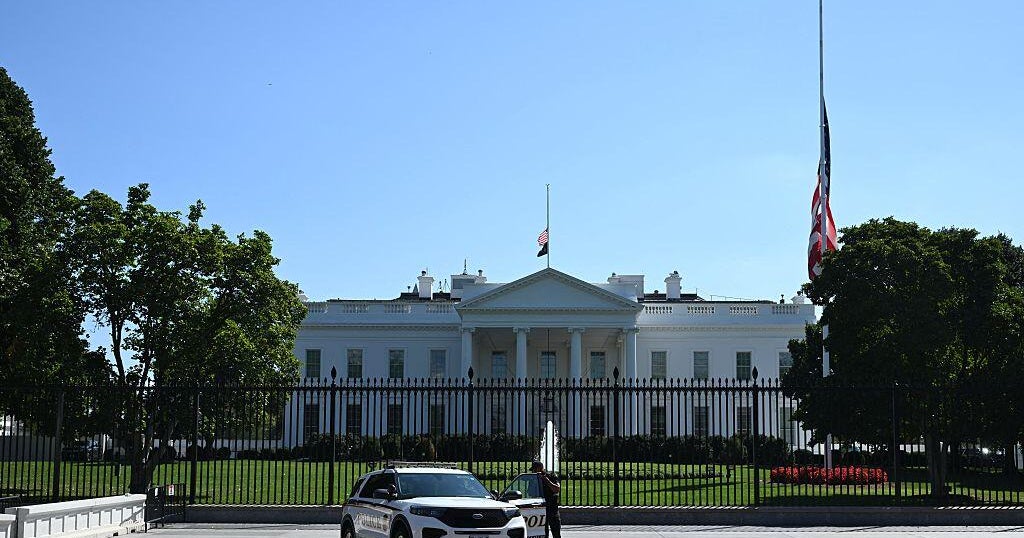
The **White House Office** is a central organizational component within the Executive Office of the President of the United States (EOP), tasked with supporting the President in managing day-to-day operations, policy formulation, and political affairs. It is headed by the White House Chief of Staff and staffed by senior aides who report directly to the President, including those with titles such as Assistant to the President and Deputy Assistant to the President. These staff members are mostly political appointees without the need for Senate confirmation, allowing the President considerable discretion in shaping the office to suit each administration's priorities[1]. Historically, the White House Office was established in 1939 through Reorganization Plan 1 and Executive Order 8248 to provide immediate assistance to the President. It functions as the nerve center for presidential staff, physically located primarily in the West Wing, and plays a pivotal role in managing the President’s policy agenda, communications, and political strategy. Its flexible organization allows each President to tailor the staff composition and roles according to their governance style and objectives[1]. In the current context of 2025, the White House Office operates under the administration of President Donald J. Trump, who returned to office after the 2024 election. His administration emphasizes rejecting prior policies deemed extremist and focuses on enhancing quality of life, economic growth, and American energy dominance. The administration includes Vice President JD Vance and First Lady Melania Trump, among others, with a Cabinet advising on various governmental functions[4][6]. Recent initiatives linked to the White House’s operational sphere include the establishment of a new **Department of Government Efficiency (DOGE)** aimed at modernizing federal technology and software to boost government productivity. The DOGE agenda is implemented through the renamed United States DOGE Service within the Executive Office, reflecting a concerted push to leverage technology for administrative modernization[5]. Notably, the White House Office also coordinates national security and homeland security functions through the National Security Council staff, underscoring its central role
Norwegian government
```html <!DOCTYPE html> <html lang="en"> <head> <meta charset="UTF-8"> <meta name="viewport" content="width=device-width, initial-scale=1.0"> <title>Understanding the Norwegian Government: A Pillar of Stability in Business and Tech</title> <style> body { font-family: Arial, sans-serif; line-height: 1.6; max-width: 800px; margin: 0 auto; padding: 20px; } h1 { color: #2c3e50; } h2 { color: #34495e; } p { margin-bottom: 1em; } ul { margin-bottom: 1em; } </style> </head> <body> <h1>Understanding the Norwegian Government: A Pillar of Stability in Business and Tech</h1> <p>The <strong>Norwegian Government</strong>, formally the Kingdom of Norway's executive branch, drives national policymaking, legislation implementation, and economic stewardship in a parliamentary constitutional monarchy established by the 1814 Constitution.[1][2][4] Led by Prime Minister Jonas Gahr Støre since October 2021, it operates alongside the ceremonial King Harald V, the unicameral Storting parliament, and an independent judiciary.[2][4][5]</p> <h2>Historical Foundations</h2> <p>Drafted amid separation from Denmark, the Constitution divides power into legislative (Storting), executive (Government), and judicial branches, blending British, American, and French influences. It endured unions with Sweden until 1905 and evolved from bicameral to unicameral Storting in 2009. Post-WWII, Labour dominated until 1961, shifting to coalitions emphasizing welfare and equality.[1][5]</p> <h2>Key Functions and Structur