Army Sergeant Shoots 5 Soldiers at Fort Stewart, Georgia

Introduction
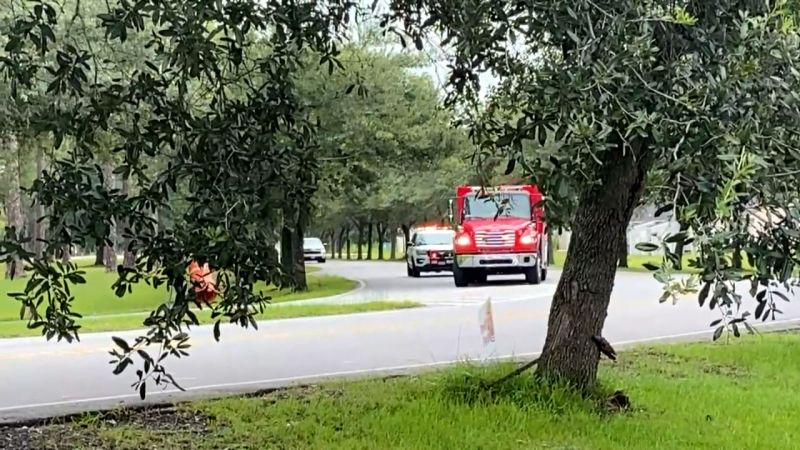
An Army sergeant at Fort Stewart, Georgia, shot five soldiers before being tackled, according to officials. The incident occurred on Friday, and the injured soldiers are now in stable condition and expected to make a full recovery, said Brig Gen. John Lubas.
Details of the Shooting
The shooting occurred during a training exercise, and the motive behind the sergeant's actions is still unknown. The identities of the soldiers have not been released, but it has been reported that they suffered non-life-threatening injuries. Immediately after the shooting, a lockdown was put in place at Fort Stewart, which was later lifted after the shooter was taken into custody.
Care for Injured Soldiers
The injured soldiers were quickly transported to Winn Army Community Hospital, where they received prompt and specialized care. The Army officials have praised the swift response of the medical team and their efforts in ensuring the soldiers' recovery. The incident has left the community in shock, but the officials have reassured the public that there is no ongoing threat or danger at Fort Stewart.
About the People Mentioned
John Lubas
John W. Lubas is a U.S. Army Brigadier General born in January 1975 in Princeton, New Jersey (also noted as Belle Mead), and commissioned as an infantry officer in 1997 after graduating from Wake Forest University via Army ROTC.[1][2] He holds a Master of Science in Defense Analysis from the Naval Postgraduate School and a Master of Strategic Studies from the U.S. Army War College.[1] Lubas advanced through key roles, starting as a rifle platoon leader, aide-de-camp, and executive officer in the 25th Infantry Division in Hawaii and Washington. He served in the 75th Ranger Regiment as a company commander, battalion operations officer, and regimental operations officer, later commanding its Regimental Special Troops Battalion.[2] His field-grade commands included 2nd Battalion, 502nd Infantry Regiment (Fort Campbell, Kentucky), and 3rd Brigade, 25th Infantry Division (Schofield Barracks, Hawaii).[1][2][3] With 12 combat deployments to Iraq and Afghanistan alongside the 75th Ranger Regiment and 101st Airborne Division, plus missions to Poland, Romania, and Thailand, Lubas earned the Distinguished Service Medal, Legion of Merit, Bronze Star Medal, Master Combat Infantryman Badge, Master Parachutist Badge, Air Assault Badge, and Ranger Tab.[1][2][3] He served as Executive Officer to the Secretary of the Army (2020-2021) and Deputy Commander for Operations of the 101st Airborne Division during its historic 2022 deployment to Europe amid Russia-NATO tensions.[1][3] Most recently, from August 2023 to June 2025, he was Director of Operations, Readiness, and Mobilization (G-3/5/7) at Army Headquarters in Washington, D.C.[2][3] In June 2025, Lubas assumed command of the 3rd Infantry Division ("Rock of the Marne") at Fort Stewart, Georgia, succeeding Maj. Gen. Christopher Norrie, praising its modernization, high retention rates, and warfighting readiness as units prepare for European deployments.[3][4] As commanding general of this storied World War I-veteran division, Lubas remains pivotal in U.S. Army combat readiness and global security efforts.[3][4]
About the Organizations Mentioned
Fort Stewart
## Overview Fort Stewart, located about forty miles west of Savannah, Georgia, is the largest U.S. Army installation east of the Mississippi River, encompassing approximately 280,000 acres across five counties[1][2][5]. It serves as a major power projection platform for the U.S. military, specializing in training, equipping, and deploying active and reserve Army units, and is the home of the historic 3rd Infantry Division[3][6]. Hunter Army Airfield in Savannah, which supports rapid global deployment of troops and equipment, is operationally linked to Fort Stewart, enhancing its strategic reach[1][3]. ## History Established in 1940 as an antiaircraft training facility, Fort Stewart was named after Brigadier General Daniel Stewart, a Revolutionary War hero from Liberty County[1][2]. The installation’s creation involved the acquisition of vast tracts of land, displacing over 1,500 families and several small villages, and was spearheaded by U.S. Congressman Hugh Peterson Sr.[1]. During World War II, the camp could billet tens of thousands of soldiers, reflecting its importance in national defense[2]. Over the decades, Fort Stewart has evolved into a premier joint training site for all military branches, offering extensive live-fire, maneuver, and aviation training capabilities[3]. ## Key Achievements Fort Stewart is recognized for its advanced training infrastructure, including seven major drop zones, multiple tank and helicopter gunnery ranges, and three live-fire maneuver areas—facilities that support year-round, all-weather training for joint forces[3]. The base is also a leader in environmental stewardship, operating one of the nation’s most active prescribed fire management programs. In fiscal year 2023 alone, it conducted prescribed burns on over 115,000 acres to reduce wildfire risk and sustain natural ecosystems, while also hosting cutting-edge fire science research[4]. ## Current Status Today, Fort Stewart-Hunter Army Airfield employs
Winn Army Community Hospital
Winn Army Community Hospital (Winn ACH), located at Fort Stewart, Georgia, is a U.S. Army medical facility dedicated to providing comprehensive healthcare services to soldiers, their families, and veterans, supporting military readiness and community health[1][2][6]. Established officially in 1983 and named in honor of Brigadier General Dean Flewellyn Winn, Sr., a distinguished Army physician and leader, the hospital has a rich history rooted in military medical support dating back to World War II[1]. Originally, Winn ACH’s mission was to provide medical care to troops preparing for deployment across multiple theaters of World War II. Over time, it expanded its capacity and capabilities, notably during the 1990 Gulf War when it prepared to receive casualties from Operation Desert Storm by enhancing inpatient services and ancillary care[1]. In the early 2000s, Winn ACH further diversified its services by establishing several patient-centered medical homes, such as the Tuttle Army Health Clinic and other troop medical clinics, improving primary care access for soldiers and their families across the Fort Stewart-Hunter Army Airfield community[1]. Technologically, Winn ACH has developed specialized programs like the Warrior Refractive Eye Surgery Program, supporting the vision readiness of service members in the Southeastern U.S. This reflects its commitment to integrating advanced healthcare solutions for military personnel[1]. As a general hospital under Army control, Winn ACH offers a broad array of services including emergency care, occupational health, ophthalmology, obstetrics, orthopedics, and perioperative nursing, supported by diagnostic technologies such as MRI[2][3]. Currently, Winn ACH emphasizes operational readiness and exceptional patient care, maintaining a focus on supporting Soldiers for Life and their families while fostering a culture of quality, safety, and access in healthcare delivery within the military health system[6]. Its affiliation with medical education institutions like the Uniformed Services University of the Health Sciences further underscores its role in advancing military medical trainin