China Bans Hidden Car Door Handles Over Safety Fears
China Bans Hidden Car Door Handles Over Safety Fears
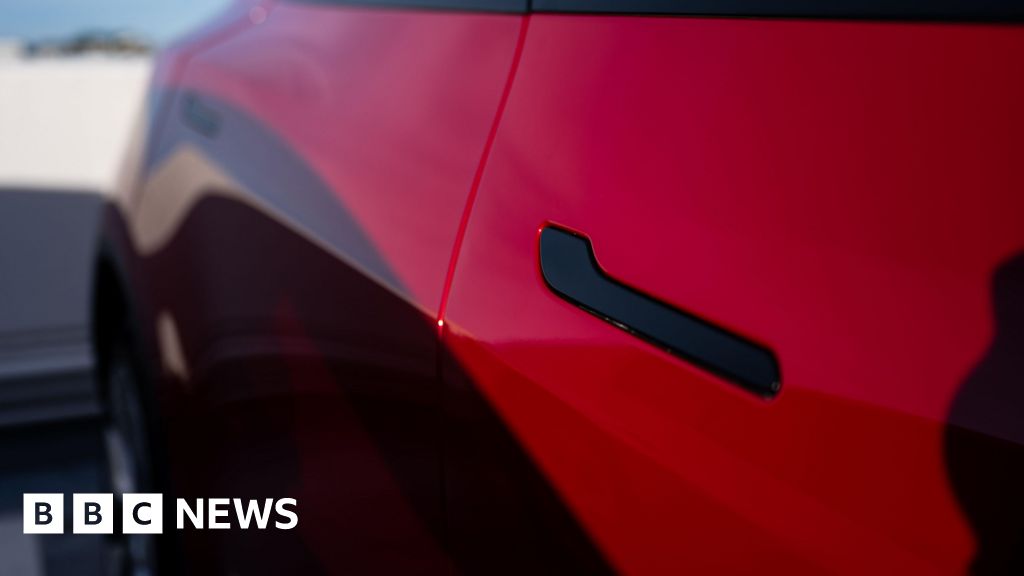
China has become the first nation to outlaw flush, electronically-actuated car door handles, a sleek design popularized by Tesla's electric vehicles. Effective January 1, 2027, the new regulation from the Ministry of Industry and Information Technology mandates visible handles with mechanical releases to prevent tragedies during crashes or power failures.[1][2]
The Safety Risks Driving the Ban
Safety advocates have long criticized these hidden handles for trapping passengers inside wrecked cars. Fatal accidents in China highlighted the issue, where rescuers struggled to access victims because doors wouldn't open without electricity. The rules now require handles in standard positions, clearly marked, and operable manually, directly targeting Tesla-style features used in 60 percent of top-selling EVs.[1][2]
Global Ripples for EV Makers
This forces redesigns for many models, with a two-year grace period for late-stage designs. While U.S. and European regulators review similar concerns, China's bold move sets a precedent, prioritizing lives over aesthetics in the booming EV market.[1][2]
About the Organizations Mentioned
Tesla
Tesla, Inc. is a pioneering American electric vehicle (EV) and clean energy company headquartered in Texas, with a mission to accelerate the world’s transition to sustainable energy[1]. Founded in 2003 by engineers Martin Eberhard and Marc Tarpenning, and later joined by Elon Musk, who became the company’s driving force and public face, Tesla has grown from a niche startup into a global leader in EVs, energy storage, and solar technology[1]. ## What Tesla Does Tesla designs, manufactures, and sells high-performance electric vehicles, including the Model S, Model 3, Model X, Model Y, Cybertruck, and the upcoming affordable model[4]. Beyond automobiles, Tesla produces large-scale battery storage systems (Powerwall, Powerpack, Megapack) and solar energy products (Solar Roof, Solar Panels), aiming to create a fully integrated sustainable energy ecosystem[1]. The company operates six massive, vertically integrated factories across three continents, employing over 100,000 people who handle everything from design to service in-house[1]. ## History and Key Achievements Tesla’s breakthrough came with the 2008 launch of the Roadster, the first highway-legal all-electric sports car. The company then disrupted the auto industry with the Model S sedan (2012), which set new standards for EV range and performance. The Model 3, introduced in 2017, became the world’s best-selling electric car, proving that EVs could be both desirable and mass-market[1]. Tesla’s Gigafactories, sprawling production facilities, have enabled rapid scaling and cost reductions, while its proprietary Supercharger network has addressed range anxiety for drivers. ## Current Status and Notable Aspects In 2025, Tesla continues to dominate the EV market, producing over 447,000 vehicles and delivering nearly 497,000 in Q3 alone[5]. The company has avoided over 20 million metric tons of CO₂
Ministry of Industry and Information Technology
The **Ministry of Industry and Information Technology (MIIT)** is the sixth-ranked executive department of China's State Council, established in March 2008 as part of a major governmental restructuring[1][2]. This powerful regulatory body oversees industrial development, communications technology, and information security across the People's Republic of China. MIIT's primary responsibilities encompass formulating and implementing industry plans, industrial policies, and standards while monitoring daily operations of industrial sectors[1]. The ministry regulates and develops the postal service, Internet, wireless, broadcasting, communications, and electronic goods production[2]. It also supervises product standards, approves fixed-asset investment projects, and promotes the national knowledge economy[2]. A significant aspect of MIIT's role involves managing China's technological innovation and independence. The ministry guides the development of major technological equipment and coordinates national information security safeguards[1]. Since 2023, all apps in Chinese app stores require pre-approval from MIIT[2], reflecting its expanding oversight of the digital ecosystem. The organization has demonstrated proactive regulatory engagement, particularly during a 2021 campaign addressing consumer protection and unfair competition issues in the tech sector[2]. During this initiative, MIIT instructed major Chinese tech companies to cease blocking external links to competitors, signaling commitment to fair competition standards. MIIT delegates significant legislative and standard-setting work to the China Academy of Information and Communication Technology[2]. The ministry also manages the Thousand Talents Plan initiative called *Qiming*, supporting talent recruitment and innovation[2]. Under current leadership, MIIT focuses on advancing "new industrialization," emphasizing integration of technology innovation, digitalization, and industrial upgrading[6]. This strategic direction positions the ministry as central to China's manufacturing transformation and technological advancement, making it essential for understanding modern Chinese industrial policy and business regulation[5].





:max_bytes(150000):strip_icc()/GettyImages-2226916507-612bc2981bdf4d069c0ad3ca1ea91088.jpg)