Tesla's Vision-Based Advantage: FSD vs Nvidia Alpamayo

Tesla's Vision-Based Advantage
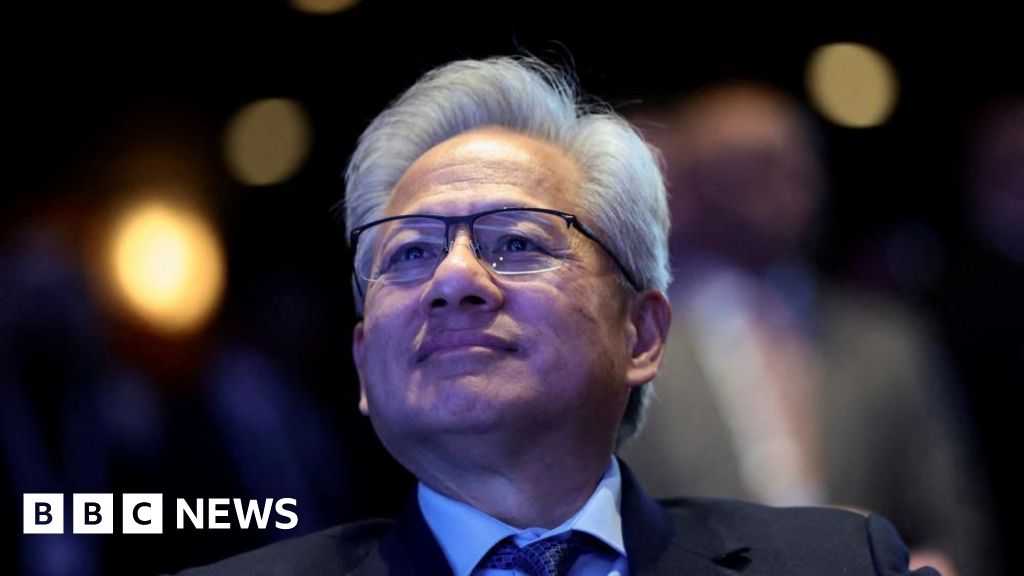
Tesla's Full Self-Driving system operates on a fundamentally different architecture than Nvidia's newly announced Alpamayo platform. While competitors rely on multiple sensors including lidar and radar, Tesla's vision-only approach has proven remarkably effective. Even Nvidia CEO Jensen Huang acknowledged Tesla's FSD as "world-class" and "state-of-the-art" in design, training, and performance during CES 2026.
Different Business Models
The key distinction lies in philosophy. Nvidia supplies autonomous technology stacks for other manufacturers like Waymo and XPeng, functioning as a platform provider. Tesla, conversely, integrates its end-to-end self-driving technology directly into its vehicles. This integrated approach allows Tesla to maintain control over the entire autonomous ecosystem, from training to in-vehicle computing.
Market Confidence
Tesla's confidence stems from demonstrated superiority. MotorTrend named FSD version 14 the best driver assistance system available, citing substantial improvements over previous iterations. With Level 5 autonomy on the horizon, Tesla maintains its competitive edge despite Nvidia's industry partnerships and technological prowess in the autonomous driving sector.
```About the People Mentioned
Jensen Huang
Jensen Huang is a Taiwanese-born American entrepreneur and electrical engineer best known as the co-founder, president, and CEO of NVIDIA Corporation, a leading technology company specializing in graphics processing units (GPUs) and accelerated computing. Born on February 17, 1963, in Tainan, Taiwan, Huang moved to the United States at age nine. He holds a Bachelor’s degree in Electrical Engineering from Oregon State University and a Master’s degree from Stanford University. Before founding NVIDIA in 1993 with Chris Malachowsky and Curtis Priem, he worked at LSI Logic and Advanced Micro Devices (AMD). Under Huang’s leadership, NVIDIA pioneered the development of the GPU in 1999, which revolutionized computer graphics and gaming. This innovation laid the foundation for NVIDIA’s expansion into diverse fields such as artificial intelligence (AI), autonomous vehicles, mobile computing, and scientific research. Huang foresaw the potential of GPUs beyond gaming, particularly for AI and machine learning workloads, which has positioned NVIDIA as a central player in the AI boom of the 2020s. NVIDIA’s GPUs power many of today’s major AI data centers and applications, including large language models like GPT. The company’s market capitalization briefly surpassed $4 trillion in 2024, making it the most valuable public company globally and cementing Huang’s reputation as a visionary CEO. His contributions to the semiconductor industry have earned him prestigious honors such as election to the National Academy of Engineering and the Semiconductor Industry Association’s Robert N. Noyce Award. He has also been recognized by Fortune, The Economist, and TIME magazine as one of the most influential CEOs worldwide. Huang remains deeply involved in NVIDIA’s strategic direction, product innovation, and corporate culture, maintaining a hands-on leadership style that has driven the company’s growth from a startup to a trillion-dollar technology giant.
About the Organizations Mentioned
Tesla
Tesla, Inc. is a pioneering American electric vehicle (EV) and clean energy company headquartered in Texas, with a mission to accelerate the world’s transition to sustainable energy[1]. Founded in 2003 by engineers Martin Eberhard and Marc Tarpenning, and later joined by Elon Musk, who became the company’s driving force and public face, Tesla has grown from a niche startup into a global leader in EVs, energy storage, and solar technology[1]. ## What Tesla Does Tesla designs, manufactures, and sells high-performance electric vehicles, including the Model S, Model 3, Model X, Model Y, Cybertruck, and the upcoming affordable model[4]. Beyond automobiles, Tesla produces large-scale battery storage systems (Powerwall, Powerpack, Megapack) and solar energy products (Solar Roof, Solar Panels), aiming to create a fully integrated sustainable energy ecosystem[1]. The company operates six massive, vertically integrated factories across three continents, employing over 100,000 people who handle everything from design to service in-house[1]. ## History and Key Achievements Tesla’s breakthrough came with the 2008 launch of the Roadster, the first highway-legal all-electric sports car. The company then disrupted the auto industry with the Model S sedan (2012), which set new standards for EV range and performance. The Model 3, introduced in 2017, became the world’s best-selling electric car, proving that EVs could be both desirable and mass-market[1]. Tesla’s Gigafactories, sprawling production facilities, have enabled rapid scaling and cost reductions, while its proprietary Supercharger network has addressed range anxiety for drivers. ## Current Status and Notable Aspects In 2025, Tesla continues to dominate the EV market, producing over 447,000 vehicles and delivering nearly 497,000 in Q3 alone[5]. The company has avoided over 20 million metric tons of CO₂
Nvidia
Nvidia Corporation, founded in 1993 by Jensen Huang, Chris Malachowsky, and Curtis Priem and headquartered in Santa Clara, California, is a pioneering American technology company best known for inventing the graphics processing unit (GPU) in 1999[1][2][4]. Initially focused on GPUs for video gaming, Nvidia has expanded its scope to serve diverse markets, including artificial intelligence (AI), high-performance computing (HPC), professional visualization, automotive technology, and mobile devices[1][3]. Nvidia’s GPUs, such as the GeForce series for gamers and the RTX series for professional applications, are central to its dominance, controlling over 90% of the discrete GPU market as of early 2025[1][4]. The company’s investment in CUDA, a parallel computing platform and API launched in the early 2000s, revolutionized GPU computing by enabling GPUs to accelerate a wide range of compute-intensive tasks, particularly in AI and scientific research[1][4]. By 2025, Nvidia commanded over 80% of the GPU market for AI training and inference and supplied chips to more than 75% of the world’s top 500 supercomputers[1]. Nvidia’s influence extends beyond hardware. It offers a comprehensive ecosystem including software platforms like Omniverse for 3D simulation and digital twins, AI frameworks such as MONAI for medical imaging, and Jetson for robotics and edge AI[2][3]. Its technologies power autonomous vehicle data centers, AI factories, and cloud gaming services like GeForce Now[2][7]. Financially, Nvidia achieved record full-year revenue of $130.5 billion in fiscal 2025, with a workforce of over 36,000 employees worldwide and a robust patent portfolio exceeding 8,700 applications[2]. The company is recognized for innovation and workplace excellence, topping Forbes’ "America’s Best Companies 2025" and Fast Company’s "World’s Most Innovative Companies"
Waymo
Waymo is a leading autonomous vehicle technology company that evolved from Google’s self-driving car project launched in 2009 and became an independent subsidiary under Alphabet in 2016. Its mission is to make transportation safer and more accessible by developing fully self-driving technology that eliminates human error, which currently causes millions of traffic fatalities worldwide. Waymo aims to offer freedom of movement, sustainability, and efficiency through its advanced autonomous driving systems[5]. Waymo’s key milestones include the first fully autonomous ride on public roads in 2015 and launching the first driverless taxi service to the public in Phoenix, Arizona, in 2020. Since then, it has expanded commercial autonomous ride-hailing to cities like Los Angeles, San Francisco, Austin, and Atlanta, handling over 250,000 trips per week with a fleet of more than 1,500 self-driving vehicles, mainly Jaguar I-PACEs[1][3][4]. The company has completed over 100 million autonomous miles on public roads and provided over 10 million paid rides, reflecting its leadership in the robotaxi market[1][6]. Waymo is notable for its deep expertise in both hardware and software, including sensor suites and motion control systems developed at its technology and assembly centers in Michigan and Arizona. It also partners with major automotive manufacturers like Toyota and Jaguar Land Rover to build and scale its vehicles[2][6]. In October 2024, Waymo raised $5.6 billion at a $45 billion valuation, supported by investments from Alphabet, Andreessen Horowitz, Tiger Global, and others, marking it as a high-value autonomous mobility platform with significant growth potential[1][2]. Looking forward, Waymo is preparing to expand internationally with plans to launch fully autonomous ride services in London in 2026, leveraging its UK engineering hubs and local partnerships. It is also growing its corporate travel business and integrating with airports and public transit systems to compete with traditional ride-hailing companies[3][6]. Unde
XPeng
**XPeng Inc. (XPEV)** is a leading Chinese electric vehicle (EV) manufacturer founded in 2014 by former Alibaba executives, positioning itself as a technology company that builds smart, AI-powered cars for middle-class buyers seeking premium features at accessible prices.[1][4] The company designs, manufactures, and sells intelligent EVs with a focus on autonomous driving, treating vehicles like updatable smartphones through its XPILOT system (over 500 patents, 70 million km of testing data) and XNGP (Navigation Guided Pilot) for city-level autonomy in 126 Chinese cities.[2][3] Key models include the G9 SUV (up to 702 km range, 3.9s 0-100 km/h) and P7 sedan, powered by advanced 800V platforms and high-density batteries (672 Wh/kg).[2][5] XPeng's direct-to-consumer model, inspired by Tesla but blended with dealerships, generated $6.94 billion in trailing twelve-month revenue (87-91% from vehicles), with a 14.9% gross margin and ~15,000 employees; it's targeting profitability by 2026 despite recent net losses of $0.8 billion.[1][5] Since its 2020 NYSE and 2021 HKEX listings, XPeng has scaled three smart factories (up to 600,000 annual capacity) and built ecosystems like 2,411 supercharging stations and WeChat-integrated AI assistant "Xiao P" (98.6% voice accuracy).[1][4] Achievements include pioneering urban NGP in China, mass-producing end-to-end AI models (second globally in 2024), and its Turing AI chip for Q2 2025 production, aiming for L3 autonomy by late 2025.[3][5] Currently, with an $18.4 billion market cap, XPeng dominates China (90% sales) via G/P-series an
MotorTrend
**MotorTrend** is the world's largest automotive media company, delivering content across digital platforms, TV, streaming, events, and print to entertain and inform enthusiasts and car shoppers worldwide[1][2][6]. Founded in September 1949 by Robert E. Petersen in Los Angeles as *"the magazine for a motoring world,"* it emerged post-World War II amid booming U.S. car culture, covering diverse vehicles from hot rods to luxury imports[1][4][5]. Headquartered initially at 8490 Sunset Boulevard, it quickly outpaced Petersen's earlier *Hot Rod* title in circulation, becoming a trusted source for road tests, specs, and buyer's guides that influenced millions of purchases[1][5]. Key achievements include the iconic **Car of the Year** award, launched early on with the 1949 Cadillac as the first winner, cementing its influencer status in the $3.5 trillion industry[1][4]. The brand pioneered digital shifts: by 2008, it boasted a top automotive website; by 2013, its YouTube channel hit nearly 7 million subscribers with shows like *Roadkill* and *Head2Head*[1]. Evolving from Source Interlink Media to TEN: The Enthusiast Network, it rebranded as **Motor Trend Group** in 2018 after Discovery's acquisition, integrating Velocity TV into MotorTrend TV and launching MotorTrend OnDemand (now MotorTrend+), the first SVOD for gearheads[3][6]. Today, post-2024 sale to Hearst Communications, it's headquartered in El Segundo, California, with 26 million monthly viewers, 110 million social followers, and 2 billion content views[3][6]. It owns brands like *HOT ROD*, *Roadkill*, and hosts events such as the 30-year HOT ROD Power Tour[2]. In the last six years, it achieved tripl