Did We Just Witness a Black Hole Explode? New Hawking Radiation Theory
#neutrinos #black_holes #astrophysics #dark_matter #cosmology

Did We Just Witness a Black Hole Explode?
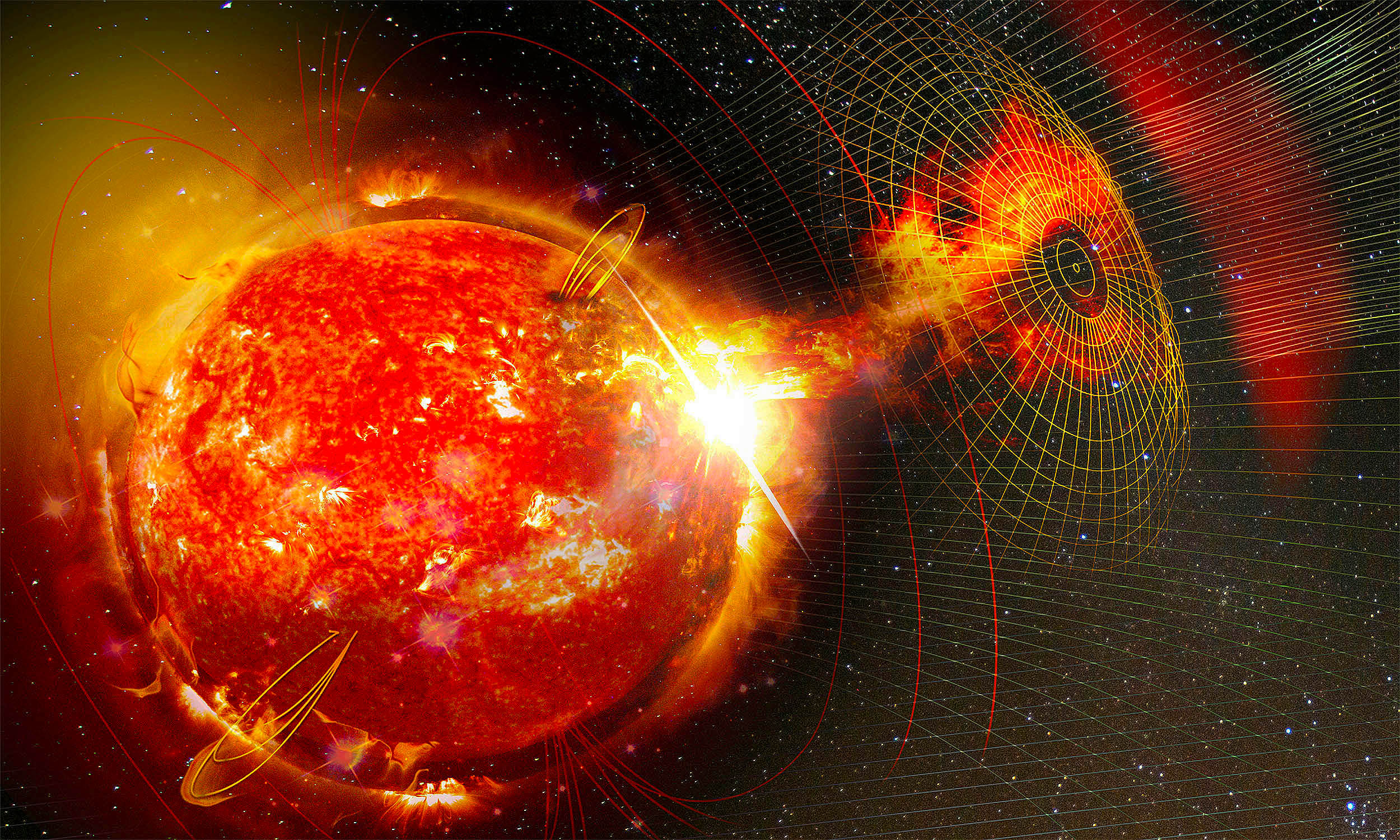
In 2023, an ultra-energetic neutrino slammed into Earth's atmosphere, packing 220 petaelectronvolts—over 20 times the previous record. Detected by the KM3NeT telescope off Sicily, this "ghost particle" baffled physicists, as no known cosmic source could generate such power. Now, MIT researchers propose a thrilling explanation: the final burst of a primordial black hole evaporating nearby.
The Primordial Black Hole Theory
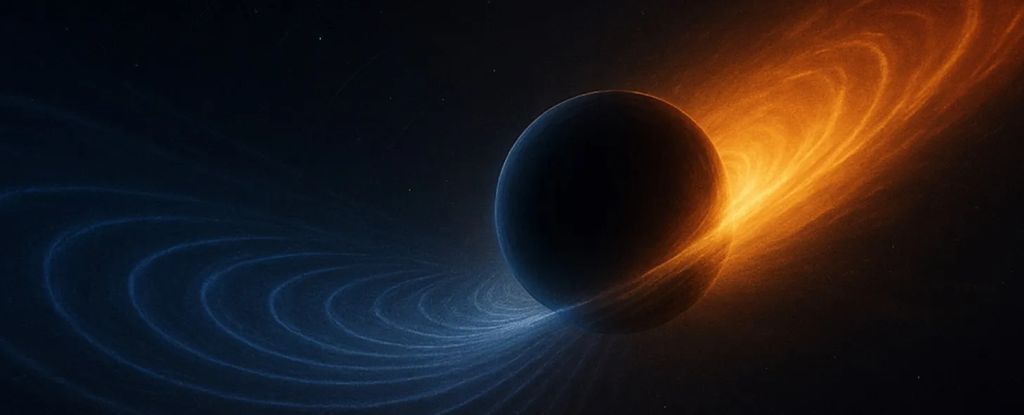
Primordial black holes, tiny relics from the Big Bang, might form most of our galaxy's dark matter. As they shrink via Hawking radiation, an asteroid-mass one could explode in its last nanosecond, spewing a sextillion neutrinos at extreme energies. Calculations show such an event within 2,000 astronomical units—mere 3% of a light-year—could send one straight to our detectors, aligning perfectly with the KM3-230213A signal.
Unlocking Cosmic Mysteries
This hypothesis not only explains the neutrino outlier but ties into dark matter puzzles. Future observations from upgraded telescopes could confirm explosions clustering near the Galactic Center, offering first evidence of Hawking radiation and reshaping our view of the universe's hidden mass.
About the Organizations Mentioned
KM3NeT
**KM3NeT** is a European research infrastructure that operates the world's largest neutrino telescope network in the Mediterranean Sea.[1] Rather than a traditional business organization, it functions as an international scientific collaboration comprising over 360 scientists, engineers, and technicians from more than 68 institutions across 21 countries.[1] The infrastructure detects and studies neutrinos—elusive subatomic particles—from distant cosmic sources and Earth's atmosphere using arrays of thousands of optical sensor modules.[1] These modules capture faint Cherenkov light produced when neutrinos interact with water or rock, allowing scientists to reconstruct particle trajectories and energy levels with exceptional precision.[1] **Scientific Mission and Goals** KM3NeT's primary objectives include discovering high-energy neutrino sources in the universe, including those from supernovae, gamma-ray bursts, and supernova remnants, to understand cosmic ray origins and extreme universal events.[1] The project also aims to determine the neutrino mass hierarchy—a fundamental physics question.[6] The infrastructure features two principal detectors: ARCA for high-energy cosmic neutrino astronomy and ORCA for measuring atmospheric neutrino oscillations.[4] **Current Status and Evolution** The first construction phase was completed, with the project now advancing to KM3NeT 2.0.[4] In June 2025, the KM3NeT AISBL was formally established as a non-profit legal entity under Belgian law, enabling more efficient governance of construction, operation, and maintenance activities.[2] The infrastructure appears on major European research roadmaps including ESFRI, ASPERA, and APPEC.[2] **Notable Infrastructure** The system employs approximately 192,000 photomultiplier tubes housed in Digital Optical Modules
MIT
The Massachusetts Institute of Technology (MIT) is a globally renowned private research university in Cambridge, Massachusetts, celebrated for its leadership in science, technology, and innovation[2][9]. Founded in 1861 by William Barton Rogers and opened in 1865, MIT was established to foster “useful knowledge” in response to the industrializing United States, emphasizing laboratory instruction and applied science[2][9]. Originally located in Boston, MIT moved to its current Cambridge campus along the Charles River in 1916, where it has grown into a sprawling academic and research hub[2][9]. MIT is organized into five schools—Architecture and Planning; Engineering; Humanities, Arts, and Social Sciences; Management (Sloan School); and Science—plus the Schwarzman College of Computing[3]. Its motto, “Mens et Manus” (“Mind and Hand”), underscores its commitment to blending theory with practical application[3]. The university boasts approximately 1,000 faculty and over 11,000 students, with undergraduate and graduate programs known for their rigor and interdisciplinary approach[3][8]. MIT’s educational philosophy emphasizes problem-solving and critical thinking, preparing students to tackle complex global challenges[5]. Historically, MIT has been a crucible for technological breakthroughs, including the development of radar, magnetic core memory, and foundational work in artificial intelligence[2][3]. During World War II, MIT’s Radiation Laboratory was central to Allied radar research, cementing the institute’s role in national defense and big science[2][9]. Post-war, MIT expanded its research footprint in computing, aerospace, and engineering, while also nurturing a strong entrepreneurial culture—alumni have founded or co-founded companies like Intel, Dropbox, and Bose[2]. Today, MIT is not only a top-ranked university (consistently #1 in QS World University Rankings for technology and engineering)[3], but also a vibrant ecosystem for innovation, with 65 research centers and collaborations with