Interstellar Tunnel Mapped: 3D View of Milky Way's Hot Plasma Corridors
Discovering the Interstellar Tunnel
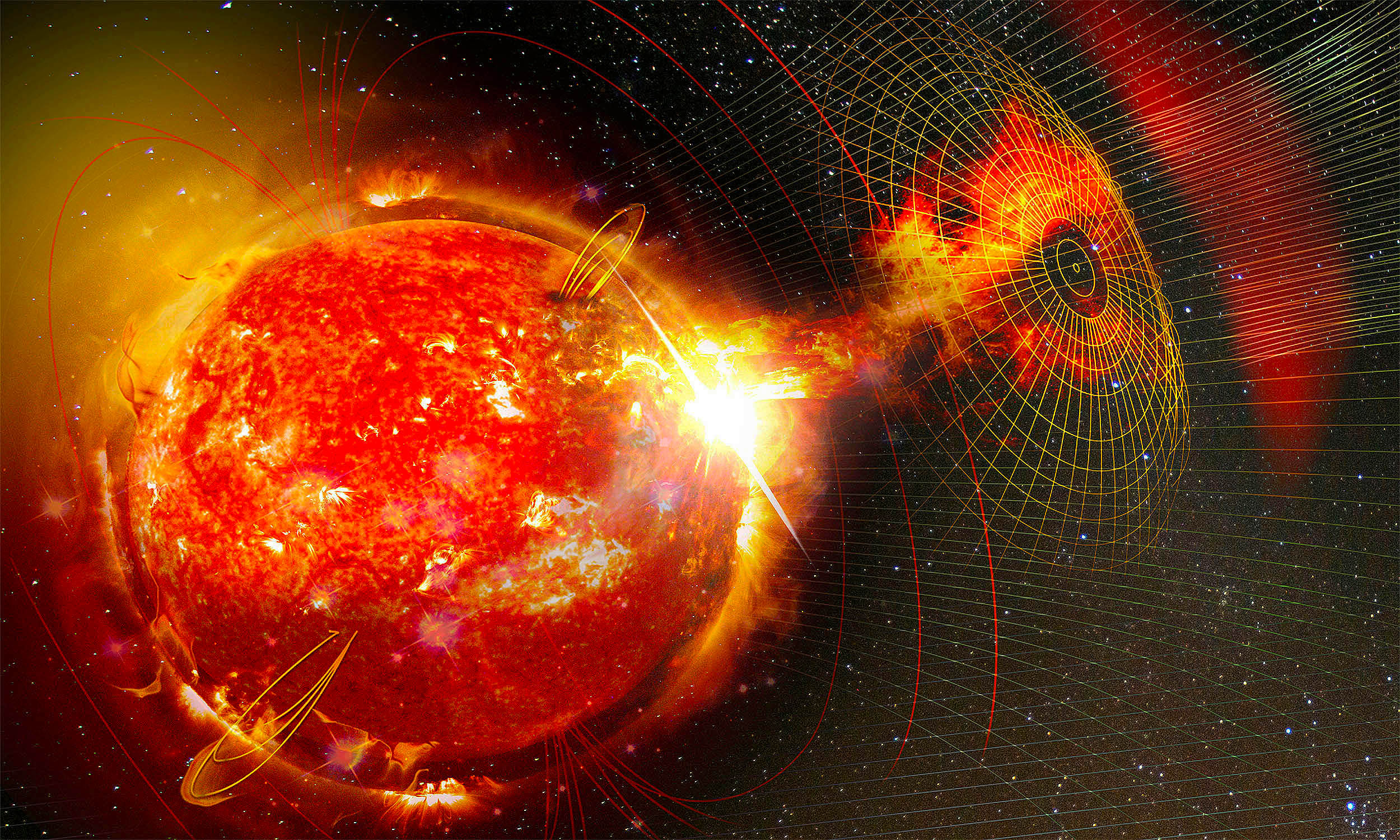
Astronomers have uncovered a remarkable interstellar tunnel near our solar system, a cosmic channel piercing through hot gas to link us with distant stars. Published in Astronomy & Astrophysics, this discovery reveals pathways within the Local Hot Bubble (LHB), a vast cavity of million-degree plasma surrounding our neighborhood.[1][2]
Key Findings from eROSITA Data
Using the eROSITA X-ray telescope aboard the SRG observatory, researchers mapped the LHB in 3D detail, spotting a prominent tunnel toward the Centaurus constellation and hints of another near Canis Major. These low-density corridors, carved by supernova explosions and stellar winds over millions of years, cut through cooler interstellar medium, connecting the LHB to neighboring superbubbles. The northern LHB burns hotter, likely from recent cosmic blasts, challenging uniform models of galactic structure.[3][4]
Implications for Galactic Connectivity
This tunnel suggests a network of hot plasma channels spans the Milky Way, facilitating matter and energy flow between star-forming zones. Far from isolated, our solar system resides in a dynamic, porous cosmos where ancient events shape ongoing evolution. Future missions promise deeper insights into these bridges.[5][7]
About the Organizations Mentioned
Astronomy & Astrophysics
**Astronomy & Astrophysics (A&A)** is a prestigious **monthly peer-reviewed scientific journal** that serves as one of the four major generalist astronomical journals worldwide[1]. Rather than a traditional organization, A&A functions as an international collaborative publishing platform operated by an editorial team supervised by a board of directors representing 27 sponsoring countries and the European Southern Observatory[1]. ## Historical Foundation The journal's origins trace to 1968, when European astronomers established a formal agreement at meetings in Leiden and Brussels to create a unified publication platform[1]. The first editors-in-chief, Stuart Pottasch and Jean-Louis Steinberg, were appointed in July 1968, with Adriaan Blaauw becoming the first board chairman[1]. The journal officially launched with limited output—only four issues in 1969—but quickly evolved into a monthly publication[1]. ## Operational Structure and Evolution Published by EDP Sciences, A&A accepts submissions in multiple languages, though English papers receive significantly higher citation rates—approximately twice those of papers in French or German[1]. The journal expanded its offerings beyond regular research papers to include Letters and Research Notes for significant discoveries, plus a Supplement Series established in 1970 for extensive tabular data and astronomical catalogs[1]. ## Research Coverage A&A covers theoretical, observational, and instrumental astronomy and astrophysics, providing a comprehensive platform for diverse research domains[1]. Its governance model—with senior astronomers and government representatives from sponsoring nations—ensures scientific rigor while maintaining international cooperation[1]. Today, A&A remains a cornerstone of astronomical publishing, reflecting how international scientific collaboration can advance knowledge discovery across borders. Its sustained prominence demonstrates the enduring value of peer-reviewed journals in legitimizing and disseminating cutting-edge astronomical research globally.
SRG observatory
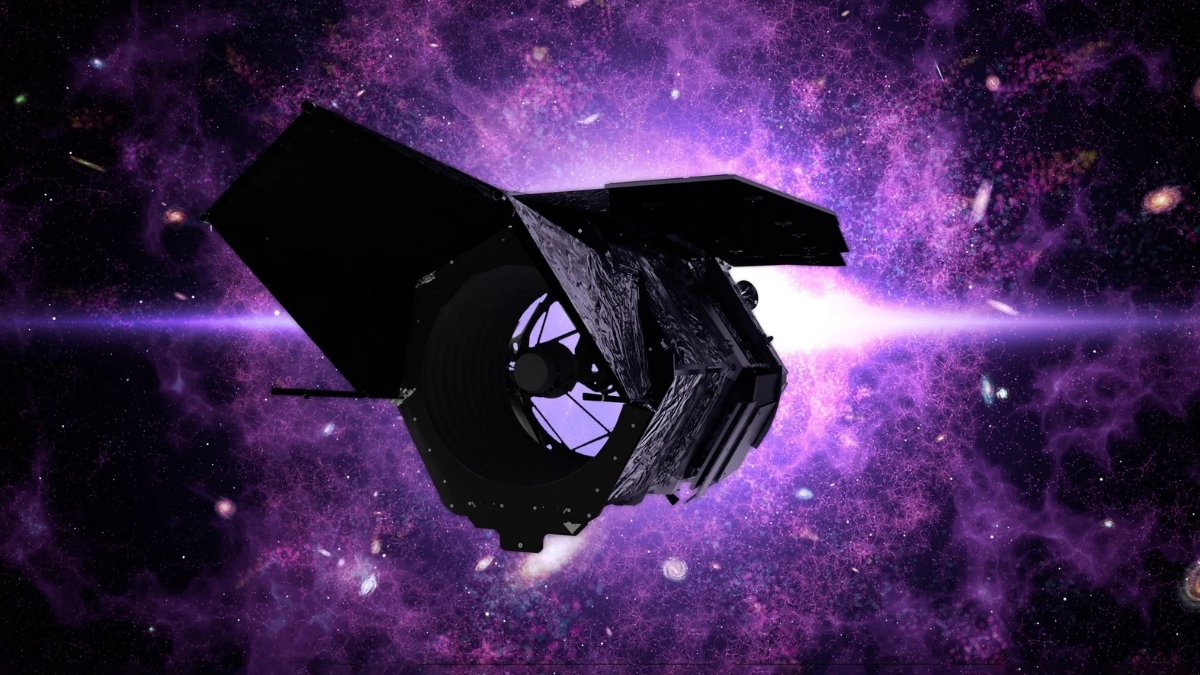
**Spektr-RG (SRG) Observatory** is a Russian-German astrophysical space mission dedicated to mapping the Universe in X-rays, revealing hidden cosmic phenomena like supermassive black holes and galaxy clusters.[1][2][3] Conceived in the 1980s by Rashid Sunyaev at the Space Research Institute (IKI) of the USSR Academy of Sciences, the project aimed for a grand observatory with multiple telescopes but was shelved post-Soviet collapse due to costs. Revived in 2003 as a leaner design, it gained momentum with a 2009 Roscosmos-DLR agreement, uniting Russian and German expertise.[2][3] Launched on July 13, 2019, by Roscosmos, SRG orbits the L2 Lagrange point, 1.5 million km from Earth, enabling uninterrupted sky scans. Its core instruments are **eROSITA** (German, Max Planck Institute for Extraterrestrial Physics; 0.3–10 keV sensitivity, 810 kg) for soft X-rays and **ART-XC** (Russian, IKI; 4–30 keV, 350 kg) for harder X-rays—both Wolter-type mirrors far surpassing predecessors like ROSAT in sensitivity (25 times for eROSITA).[1][2][3] Key achievements include ART-XC's first all-sky survey (December 2019–June 2020, 4–12 keV), early supernova remnant detections, and eROSITA's half-sky mapping by 2020. Pre-launch forecasts predict ~100,000 galaxy clusters, 3 million active black holes, and 500,000 stars over four years of eight surveys; data flows daily via Russia's Deep Space Network.[1][4][6] As of recent reports, SRG remains operational at L2, led by Lavochkin Association (spacecraf