FAA Awards RTX and Indra Massive Radar Overhaul
FAA Selects RTX and Indra for Massive Radar Overhaul
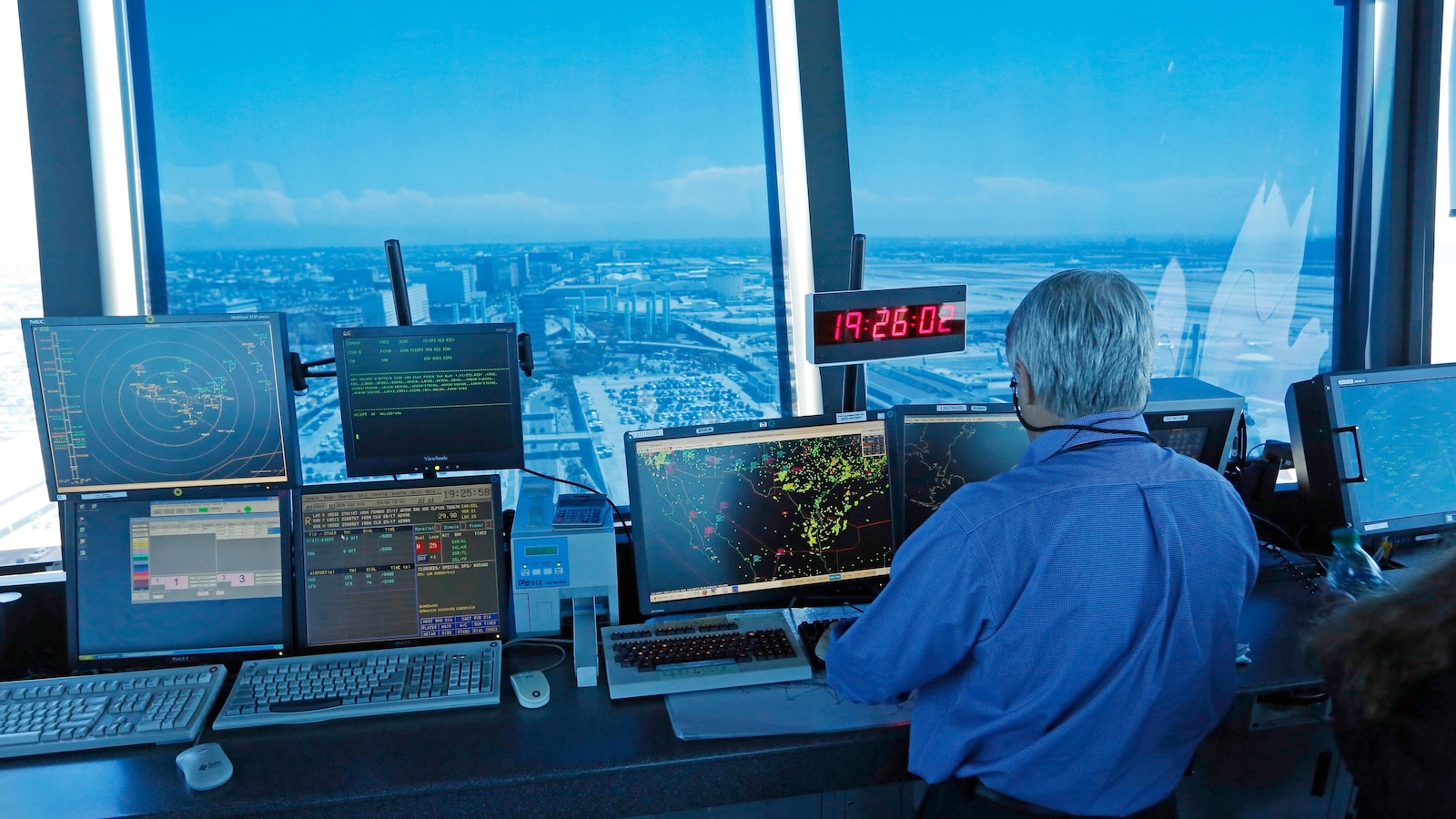
The Federal Aviation Administration has awarded contracts to RTX and Indra to replace 612 outdated radar systems across the U.S., many dating back to the 1980s and reliant on obsolete tech like floppy disks. This multibillion-dollar initiative, part of a $12.5 billion air traffic control modernization under Transportation Secretary Sean Duffy and FAA Administrator Bryan Bedford, aims to boost safety and efficiency in the National Airspace System.[1][2][3]
Key Details of the Radar Replacement Program
RTX's Collins Aerospace secured a $438 million deal to deploy advanced systems like Condor Mk3 and ASR-XM, offering precise tracking at low altitudes and consolidating 14 legacy configurations into one streamlined architecture. Indra will contribute commercially available surveillance radars, with deployments starting this quarter in high-traffic areas and completing by June 2028. This follows Peraton's role as prime integrator for broader upgrades, including fiber optics and voice switches.[4][5][7]
Why Modernization Matters for Air Travel
Aging radars have become costly to maintain, with parts sourced from eBay, straining the FAA's $3 billion budget. New systems will cut logistics complexity, enhance reliability, and support future airspace demands, ensuring the world's safest air travel remains robust amid rising traffic.[3][6][8]
About the People Mentioned
Sean Duffy
Sean Patrick Duffy is the 20th United States Secretary of Transportation, a position he has held since January 28, 2025.[1][2] Born on October 3, 1971, in Hayward, Wisconsin, Duffy comes from a large Irish Catholic family as the tenth of eleven siblings.[2][5] He earned a bachelor's degree in marketing from St. Mary's College of Maryland and a Juris Doctor from William Mitchell College of Law in 1999.[2] Before entering politics, Duffy gained national recognition as a professional lumberjack athlete, becoming a two-time world champion in the 90-foot speed climb and a three-time champion in the 60-foot climb.[3] He worked his way through law school by performing in lumberjack shows and exhibitions across Wisconsin and the country. Duffy also appeared on MTV's "The Real World: Boston" and "Road Rules: All Stars," where he met his wife, Rachel Campos-Duffy. The couple has been married for 25 years and has nine children together, making them America's first and longest-married reality television couple.[2][4] Duffy's legal career began as a special prosecutor in Ashland County, Wisconsin, before being appointed district attorney in 2002, a position he held until 2010.[2] During his tenure, he brought over 100 cases to trial with a success rate exceeding 90% and was particularly dedicated to prosecuting child sex crimes.[4] In 2010, he was elected to the U.S. House of Representatives, representing Wisconsin's 7th congressional district until 2019.[1][2] During his nearly nine years in Congress, he served on the House Financial Services Committee and co-chaired the Great Lakes Task Force, focusing on financial services and economic policy. He was the lead sponsor of PROMESA, legislation addressing Puerto Rico's debt crisis.[2] After leaving Congress, Duffy co-hosted "The Bottom Line" on Fox Business Network starting in 2023.[2] Following his appointment as Transportation Secretary, he additionally began serving as acting NASA administrator on July 9, 2025.[2][5]
Bryan Bedford
**Bryan Bedford** is an aviation industry executive who currently serves as **Administrator of the Federal Aviation Administration (FAA)**.[7] He was confirmed to this position over the summer of 2025 after being nominated by President Donald Trump.[2] Bedford brings more than 35 years of experience in the airline industry to his role.[7] He earned a bachelor's degree in accounting and finance from Florida State University and holds commercial, multi-engine, and instrument pilot ratings.[3][5] He is also a certified public accountant.[5] Throughout his career, Bedford has held leadership positions at several major airlines. He served as president and CEO of Mesaba Airlines and Business Express Airlines before joining **Republic Airways in July 1999 as president and CEO**, a position he maintained for 26 years until his FAA appointment.[1][7] Under his leadership, Republic Airways experienced dramatic growth, expanding from $85 million in revenues and 36 turboprop aircraft to more than $1.3 billion in revenues and nearly 200 E-Jet aircraft.[3][5] The airline now operates approximately 900 daily flights across the U.S. and Canada.[3] Bedford's achievements in the airline industry have been widely recognized. He was named Airline Executive of the Year by Regional Airline World in 1997 and 2004, and received the same honor from Airline Business in 2009.[3][5] He also appeared on the television program *Undercover Boss* in 2010 as CEO of Frontier Airlines, announcing plans to end a ten percent pay cut for employees.[1] As FAA Administrator, Bedford faces significant challenges, including overseeing air traffic control modernization and addressing aviation safety concerns following recent incidents.[2][4] He has previously taken positions on controversial aviation issues, including opposing the mandatory 1,500-hour pilot requirement and the mandatory retirement age of 65 for pilots.[1]
About the Organizations Mentioned
Federal Aviation Administration
The **Federal Aviation Administration (FAA)** is a U.S. government agency responsible for ensuring the safety, efficiency, and regulation of civil aviation and commercial space transportation within the United States and its surrounding international waters. Established originally as the Federal Aviation Agency in 1958, it became part of the Department of Transportation in 1967, adopting its current name[1][3]. The FAA’s core functions include regulating and overseeing air traffic control, pilot and technician certification, airport safety standards, and aircraft manufacturing and maintenance regulations. The agency manages air traffic for over 50,000 daily commercial and general aviation flights, ensuring safe and efficient navigation through the National Airspace System (NAS)[2][4]. It also develops and operates air traffic control and navigation systems used by both civil and military aircraft, showcasing its broad operational scope[1][3]. The FAA operates through five main lines of business: - Air Traffic Organization (ATO), managing air navigation services and control facilities such as towers and radar centers - Aviation Safety (AVS), responsible for certification of personnel and aircraft - Airports (ARP), overseeing national airport system planning and grants - Office of Commercial Space Transportation (AST), regulating commercial space launches and reentries - Security and Hazardous Materials Safety (ASH), focusing on risk reduction and infrastructure protection[4]. In addition to regulation, the FAA invests heavily in research and development, advancing aviation technology and safety systems, including aeromedical research and environmental programs addressing noise and pollution from aircraft[2][3]. Its mission emphasizes providing the safest, most efficient aerospace system globally, with a vision of integrating new technologies and users into aviation safely and innovatively[6]. Notable achievements include establishing stringent safety standards that have made U.S. airspace one of the safest worldwide and pioneering regulation of commercial space transportation, an emerging sector. The FAA’s commitment to innovation and safety continues to shape the future of aviation and aerospace, making it a central figure in both business and technolog
RTX
**RTX Corporation** is a leading global aerospace and defense technology company headquartered in Arlington, Virginia, specializing in advanced systems for government and commercial customers, with annual revenues exceeding $68 billion, ranking it among the top five military contractors worldwide.[1][2] Founded in 1922 as the American Appliance Company, RTX—formerly Raytheon Technologies—began manufacturing radio tubes before pivoting to radar during World War II, adopting the name Raytheon in 1925 from the Greek for "light of the gods." It merged with United Technologies in 2020, rebranding as Raytheon Technologies, then simply RTX in 2023 to reflect its evolved focus.[2] Today, RTX operates through three core businesses: **Collins Aerospace** (avionics, interiors, and mission systems for commercial and military aviation), **Pratt & Whitney** (advanced aircraft engines and power systems), and **Raytheon** (missile systems, defense electronics, radar, and cybersecurity).[5] Key achievements include being the world's largest guided missile producer (e.g., Patriot system), inventing the microwave oven, and powering over 90% of U.S. and allied airborne communications, every daily air travel passenger via efficient aviation systems, and billions of gallons in fuel savings through engine innovations.[1][2] RTX protects 25% of the global population with defense products and supports most Department of Defense and commercial space launches.[1] With 57,000 engineers, 60,000 patents, and $7.5 billion in annual R&D, RTX drives breakthroughs in **artificial intelligence**, machine learning, advanced propulsion, directed-energy weapons, and cybersecurity across domains from seabed to space.[1][3] Subsidiaries like RTX BBN Technologies (founded 1948, pioneered ARPANET) and RTX Technology Research Center fuel innovation, complemented by RTX Ventures investing in startups and partnerships with 85
Indra
**Indra Sistemas** is a **leading Spanish technology and consulting company** headquartered in Madrid that serves as a critical technological partner for core business operations across multiple industries worldwide[1][2]. ## Company Overview and Scale Indra is the **3rd largest IT company in Europe by market capitalization**[6] and operates with approximately 57,000 employees across 46 countries, conducting business in over 140 countries[2][3]. Listed on the Bolsa de Madrid and included in the IBEX 35 index, the company generated €3.851 billion in revenue in 2022[2]. Ángel Escribano serves as the current executive chairman[1]. ## Core Business Areas The company operates across three primary business segments: information technologies, simulation and automatic test equipment, and defense electronic equipment[1]. Indra's portfolio encompasses consultancy, project development, systems integration, and IT outsourcing services[1]. Notably, **Indra claims that one-third of the world's air traffic is managed by its systems**, making it one of the world's largest air traffic control suppliers[1]. The company's technology manages 25% of the world's total airspace and is used by 85% of airline passengers during at least one flight phase[3]. Beyond aviation, Indra provides ticketing systems for rapid transit networks in major cities including Madrid, Barcelona, Paris, and Shanghai, plus solutions in defense, financial services, energy, and healthcare[1]. ## Innovation and International Presence **Innovation is central to Indra's strategy**, with the company investing 6-8% of annual revenue in research and development[4]. The company operates specialized Centers of Excellence and maintains a global Software Labs network operating 24 hours daily[4]. About one-third of revenues come from international markets, with Europe an
Collins Aerospace
**Collins Aerospace** is a leading American aerospace and defense technology company, subsidiary of RTX Corporation (formerly Raytheon Technologies), specializing in designing, manufacturing, and servicing advanced systems for commercial aviation, military, space, and related sectors.[1][2][3] Formed in 2018 through the merger of UTC Aerospace Systems and Rockwell Collins—following United Technologies' $30 billion acquisition of Rockwell—Collins combined legacies of innovation dating back generations, including pioneering GPS, Wi-Fi in aviation, space suits, and synthetic vision.[1][2] Headquartered in Charlotte, North Carolina, it reported $26 billion in sales in 2019 with 68,000 employees; by 2024, this grew to $28.3 billion in adjusted sales, over 80,000 employees (including 20,000 engineers), and 250+ global sites, backed by $4 billion annual R&D investment.[2][3] Key achievements include equipping nearly every aircraft platform with avionics, landing gear, nacelles, interiors, fuel systems, and connectivity—handling over 75 million daily secure messages and 70% of U.S./allied military airborne communications.[1] Strategic units span Aerostructures, Avionics, Interiors, Mission Systems, Connected Aviation Solutions, and Power & Controls, driving breakthroughs like hybrid-electric propulsion, lighter structures for fuel efficiency, autonomous operations reducing pilot workload, and data analytics enhancing airline operations and passenger experiences.[2][3] Currently, Collins thrives amid aerospace evolution, collaborating on electrified aircraft, connected battlespaces, and digital transformation.[3][4] Notable moves include a $1.8 billion sale of its actuation business to Safran in 2023 and a £16 million investment in advanced seating at its Kilkeel, Northern Ireland site in 2024.[2] With systems on UAVs, satellites, and maritime vehicles, Collins redefines flight efficiency
Peraton
**Peraton** is a **privately held national security and technology company** headquartered in Reston, Virginia, that serves as a mission-critical partner to the U.S. government and allied nations.[3] Formed in 2017 through Veritas Capital's acquisition of Harris Corporation's government IT services division, Peraton has rapidly expanded into one of the world's leading mission capability integrators.[3] The company operates across diverse service areas including **space, intelligence, cyber, defense, homeland security, and citizen security**.[3] With approximately 18,000 employees worldwide and more than 150 U.S. offices as of 2021, Peraton supports every branch of the U.S. Armed Forces and essential government agencies.[3] Its applied research organization, **Peraton Labs**, located in Basking Ridge, New Jersey, employs over 450 scientists, engineers, and analysts.[1] This division boasts a distinguished heritage tracing back to Bell Labs and has contributed to groundbreaking technologies including early multimedia email, the first wide-area gigabit networks, and blockchain innovations.[1] Peraton's growth has been driven by strategic acquisitions, including Solers, Inc. (2019), Northrop Grumman's federal IT business (2021), and Perspecta (2021).[3] The company specializes in **cloud transformation, cybersecurity, electronic warfare, advanced analytics, and 5G networking**.[1][2] Recent achievements underscore Peraton's prominence. The company secured a **$2.69 billion Department of Homeland Security contract** for data center and cloud optimization and a **$1 billion Pentagon contract** addressing misinformation.[3] Most notably, Peraton was awarded a **$31.5 billion FAA contract** to modernize