Historic Union Victory at Tennessee Volkswagen Plant: 96% UAW Backing and Wage Gains
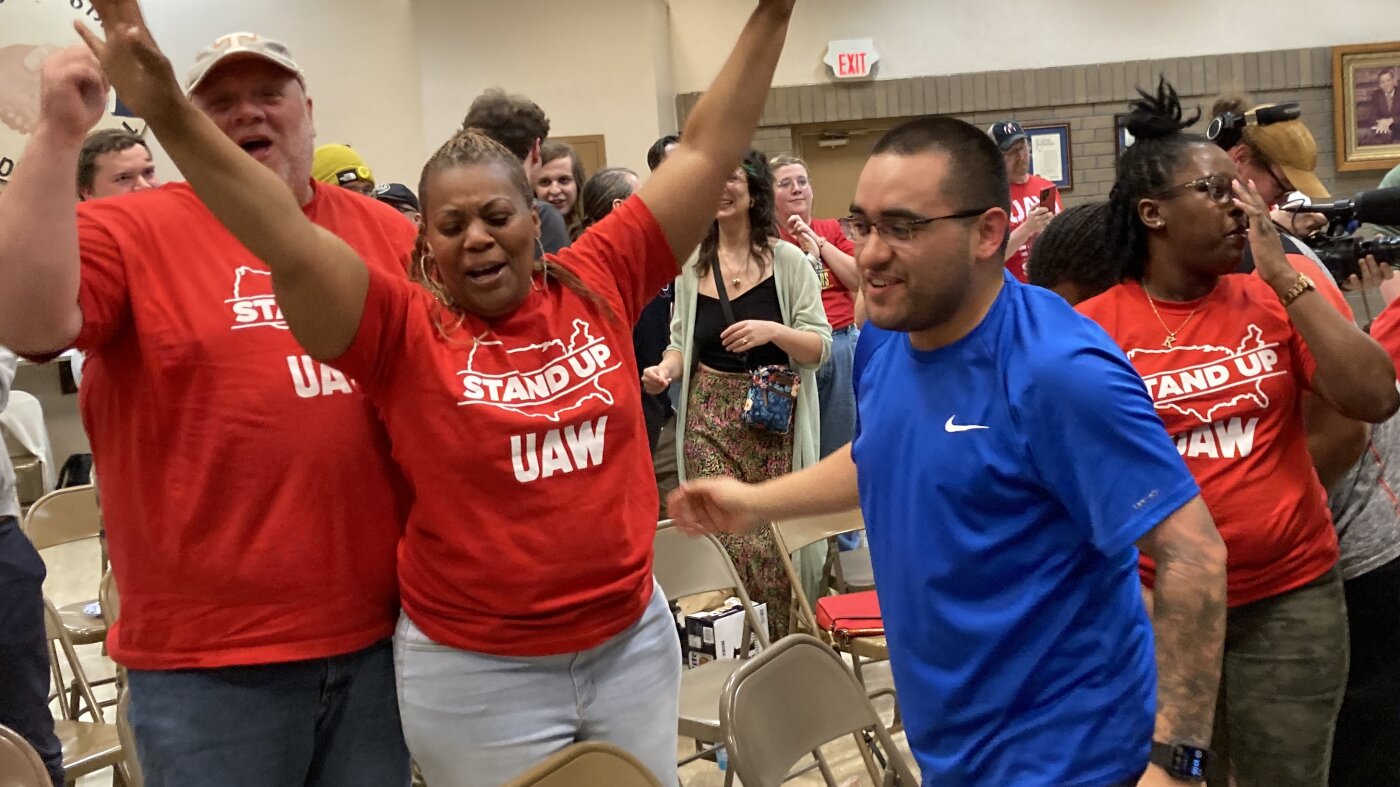
Historic Union Victory at Tennessee Volkswagen Plant
In a landmark moment for Southern labor, Volkswagen workers in Chattanooga, Tennessee, overwhelmingly ratified their first union contract with 96% approval. This four-year agreement, finalized after years of organizing, delivers substantial gains including 20% wage hikes, reaching $39.41 hourly for production staff and $49.86 for skilled trades by 2030, plus immediate $6,550 bonuses.
Key Wins and Negotiation Journey
The pact slashes healthcare premiums by 20%, freezes increases for four years, adds two paid days off, and ensures job security with enforceable grievance procedures. Workers joined the UAW in April 2024 by a 3-to-1 margin, elected a 20-member bargaining team, and authorized a strike in October 2025. A tentative deal struck in early February capped intense talks, bolstered by global support from Germany's IG Metall and Volkswagen Works Council.
Broader Implications for Southern Workers
UAW leaders hail this as proof Southern autoworkers can secure respect and fair pay. While initial momentum promised a regional wave, this breakthrough sets a binding standard for safer conditions and equity, inspiring manufacturing employees nationwide to unite against division.
About the Organizations Mentioned
Volkswagen
**Volkswagen Group**, headquartered in Wolfsburg, Germany, is the world's second-largest automaker by sales and Europe's market leader, producing over 10 million vehicles annually across brands like Audi, Porsche, Bentley, Lamborghini, SEAT, Škoda, and commercial arms such as Scania and MAN.[2][3] Founded on May 28, 1937, it began as a state-backed initiative for affordable "people's cars" (Volkswagen means "people's car") and evolved into a global powerhouse serving 153 countries with cars, trucks, buses, motorcycles, engines, and financial services.[2][3] Historically, Volkswagen dominated Europe and vied for global supremacy with Toyota, boasting €348.8 billion in 2023 revenue and 678,825 employees under CEO Oliver Blume.[2] The 2015 emissions scandal prompted the "TOGETHER – 2025+" strategy, emphasizing restructuring, profitability (targeting 6% operating margin), and a pivot to electrification—launching 30 new EVs by 2025, aiming for one million annual electric sales, and battery tech leadership.[1][2][4] Key achievements include maintaining Europe's top market share for over two decades, ranking 11th on the 2024 Fortune Global 500, and innovations in digital ecosystems, autonomous driving, and software via its "Software-enabled Car Company" module.[3][4][5] As of late 2025, Volkswagen reports solid H1 results with €158.4 billion sales revenue despite challenges like delayed EV investments, falling Chinese sales, plant closures in Germany, and job cuts; Brand Group Core saw 2.28 million vehicle deliveries in the first nine months (up 0.8% YoY), though U.S. Q2 sales dropped 29%.[3][6][7][8] The group eyes 80 million active digital users by 2025, partnership
UAW
```html <!DOCTYPE html> <html lang="en"> <head> <meta charset="UTF-8"> <meta name="viewport" content="width=device-width, initial-scale=1.0"> <title>UAW: The Powerhouse Union Shaping America's Auto Industry and Beyond</title> <style> body { font-family: Arial, sans-serif; line-height: 1.6; max-width: 800px; margin: 0 auto; padding: 20px; } h1 { color: #333; } h2 { color: #555; } p { margin-bottom: 1em; } </style> </head> <body> <h1>UAW: The Powerhouse Union Driving Change in Auto, Aerospace, and More</h1> <p>The **United Automobile, Aerospace and Agricultural Implement Workers of America (UAW)** is a powerhouse labor union headquartered in Detroit, Michigan, representing over 375,000 active members and 580,000 retirees across autos, aerospace, healthcare, casinos, and higher education.[3][4][7] Born from gritty **sit-down strikes** in the 1930s, the UAW transformed America's industrial landscape, securing landmark contracts that set wage and benefit standards for generations.[1][3]</p> <h2>A Turbulent History of Militancy and Triumph</h2> <p>Founded in 1935 amid the AFL's craft unionism limits, the UAW exploded onto the scene via the CIO's industrial push. The pivotal 1936-37 Flint sit-down strike forced General Motors to recognize the union, followed by Chrysler and, after bloody battles, Ford in 1941.[1][3][5] Under president **Walter Reuther** (1946-1970), it pioneered cost-of-living adjustments, health plans, pensions, an
IG Metall
```html <!DOCTYPE html> <html lang="en"> <head> <meta charset="UTF-8"> <meta name="viewport" content="width=device-width, initial-scale=1.0"> <title>IG Metall: Germany's Powerhouse Union in Metal and Tech Industries</title> <style> body { font-family: Arial, sans-serif; line-height: 1.6; max-width: 800px; margin: 0 auto; padding: 20px; } h1 { color: #333; } h2 { color: #555; } p { margin-bottom: 15px; } </style> </head> <body> <h1>IG Metall: Germany's Powerhouse Union Driving Industry Standards</h1> <p><strong>IG Metall</strong>, or Industriegewerkschaft Metall, stands as Germany's largest trade union and Europe's biggest industrial union, representing over 2.2 million workers in metals, electricals, automotive, textiles, wood, plastics, and ICT sectors[1][2][3][7]. Headquartered in Frankfurt, it champions fair wages, secure jobs, and workplace democracy for giants like Volkswagen, Siemens, BMW, and Bosch[1].</p> <h2>A Storied History of Militancy and Milestones</h2> <p>Tracing roots to the 1891 German Metalworkers’ Union, IG Metall formalized in 1949 amid West Germany's post-WWII reconstruction under unitary trade union principles[1][4][6]. Key triumphs include the 1950s reduction of workweeks from 48 to 44 hours without pay cuts, 1957's landmark strike securing full illness wage continuation—equaling blue- and white-collar treatment—and the 1984 battle for the 35-hour week[4]
Volkswagen Works Council
# Volkswagen Works Council: Employee Representation and Co-Determination The **Volkswagen Works Council** represents all employees across VW Group operations globally, functioning as an elected body that includes both blue-collar and white-collar workers.[2] Rather than operating as a traditional adversarial union structure, it embodies a collaborative model rooted in German labor relations principles. ## Structure and Responsibilities The Works Council operates through multiple tiers, including local plant councils, a European Works Council established in 1992, and a Global Works Council.[4] Members are elected by employees and make decisions by majority vote on matters affecting workplace conditions.[1] The organization participates in company decisions through three levels of engagement: information sharing, consultation, and co-determination—where the council must consent before certain measures are implemented.[3] Day-to-day responsibilities include defining workplace categorization, reviewing individual work conditions, and addressing employee concerns.[1] The council also convenes up to four annual works assemblies to communicate with the broader workforce.[3] ## Impact and Influence VW Group significantly supports these councils, paying for 70 administrative personnel to assist in their duties.[4] The current chair, **Daniela Cavallo**, elected in 2022, is considered arguably the most powerful employee representative in Germany and the first woman to lead VW's works council.[4] The Works Council model has demonstrated measurable benefits. German works councils helped reduce unemployment during the Great Recession through work-sharing arrangements and contributed to faster economic recovery.[2] At VW specifically, the councils have negotiated agreements addressing temporary worker conditions, wage harmonization, and job security provisions across European subsidiaries.[7] ## Contemporary Relevance The VW Works Council represents an innovative alternative to traditional labor relations, demonstrating how employee participation in management decisions can enhance efficiency and workplace cooperation while maintaining competitive capability.[2]