Vera C. Rubin Observatory Debuts with Record-Breaking Fast-Spinning Asteroid
Vera C. Rubin Observatory’s Dazzling Debut
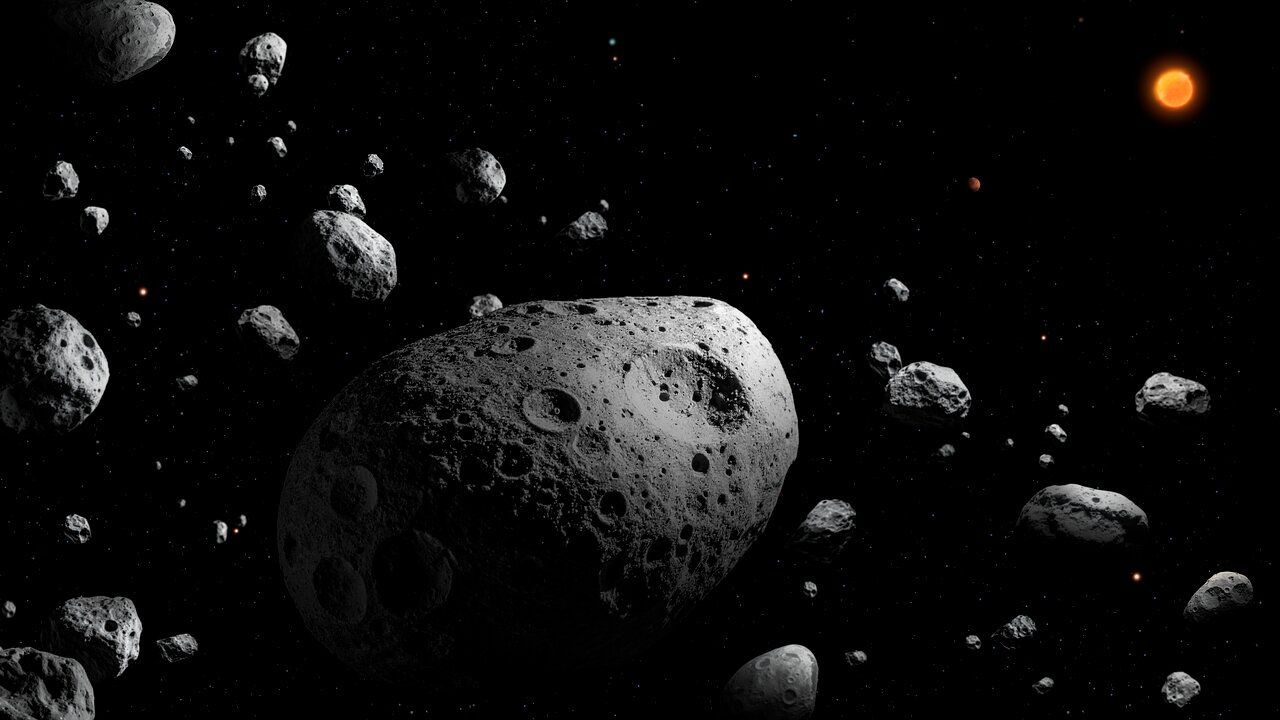
The Vera C. Rubin Observatory has burst onto the astronomy scene by revealing an enormous, record-breaking asteroid in just its first seven nights of test observations. Powered by the ultra-sensitive LSST Camera, this Chilean survey telescope scans the southern sky repeatedly, turning faint streaks of light into detailed portraits of distant space rocks. Its inaugural dataset already showcases thousands of newly spotted asteroids, but one object stands out: a giant, fast-spinning body that has shattered previous rotation records for its size.
A Fast-Spinning Giant Rewrites Asteroid Physics
This asteroid whirls around in mere minutes, challenging long-held assumptions that large asteroids are fragile rubble piles that would fly apart if they spun too quickly. Instead, its breakneck rotation hints at a monolithic interior, perhaps the exposed core of a shattered parent world. As Rubin continues observing, astronomers expect many more unusual “superfast rotators,” offering fresh clues to how planetary building blocks formed, collided, and evolved across our solar system.
About the Organizations Mentioned
Vera C. Rubin Observatory
The **Vera C. Rubin Observatory** is a groundbreaking astronomical facility designed to conduct a decade-long, wide-field survey of the southern sky called the Legacy Survey of Space and Time (LSST). Located on Cerro Pachón in northern Chile, it is a joint project funded by the U.S. National Science Foundation and Department of Energy, with construction starting in 2014 and operations beginning in 2025[2][4][5][7]. The observatory’s core mission is to image about 18,000 to 25,000 square degrees of the southern sky repeatedly over 10 years, capturing an unprecedented volume of data—around 500 petabytes—using its 3,200-megapixel camera and an 8.4-meter primary mirror telescope. This creates a dynamic "movie" of the universe, with about 800 panoramic images per sky patch, enabling detailed study of cosmic phenomena and changes over time[2][6][9]. Key scientific goals include probing the mysteries of dark energy and dark matter through weak gravitational lensing, baryon acoustic oscillations, and supernova photometry; mapping the Milky Way; discovering near-Earth asteroids and Kuiper belt objects with expected catalog expansions by factors of 10 to 100; searching for the hypothetical Planet Nine; and detecting transient events such as supernovae, gamma-ray bursts, and quasar variability[2][3][5]. Technologically, Rubin Observatory offers unprecedented depth and breadth by observing in six optical bands from ultraviolet to infrared, allowing detection of extremely faint and distant objects missed by previous surveys. It also provides real-time alerts every 60 seconds for dynamic objects, enabling rapid scientific follow-up[4][9]. Notably, the observatory honors astronomer Vera Rubin, who revolutionized understanding of dark matter. Early test observations have already identified thousands of new asteroids, demonstrating the transformative potential of the observatory’s data. It operates as a public facility, making its vast dataset