Iran's 47th Revolution Anniversary Amid Rising Tensions
Iran's 47th Revolution Anniversary Amid Rising Tensions
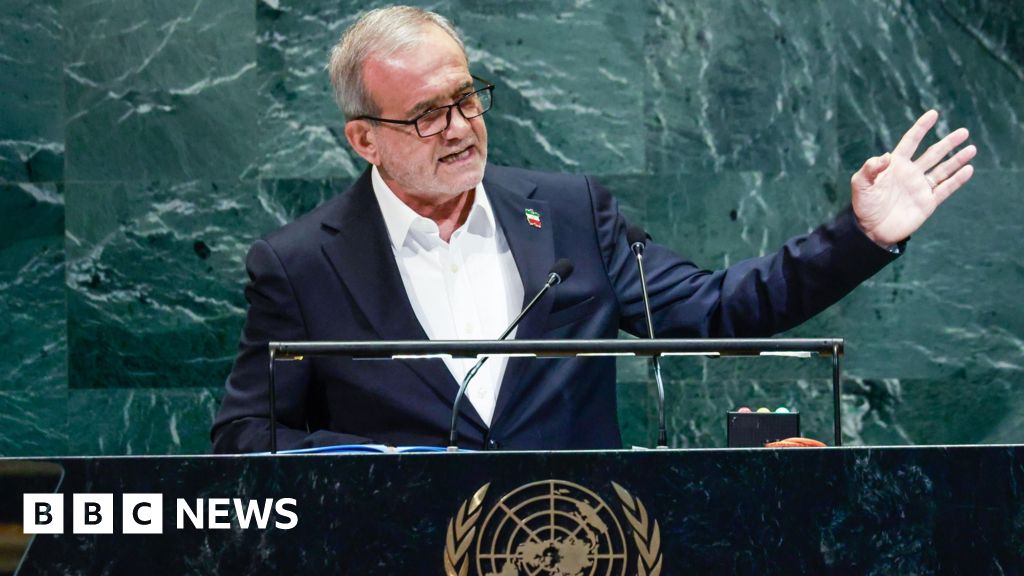
Iran marked the 47th anniversary of its 1979 Islamic Revolution on February 11, 2026, with mass rallies in Tehran and other cities, as state media broadcast pro-government chants against the United States and Israel. President Masoud Pezeshkian addressed crowds, emphasizing national resilience despite economic hardships and regional strife. Supreme Leader Ali Khamenei hailed the events as a display of Iran's power and dignity, urging participation to deter foreign adversaries.[1][2]
State Displays vs. Underlying Discontent
Streets flooded with flags and organized marches reaffirmed support for the Islamic Republic, yet analysts note the regime's heavy orchestration to project legitimacy. Khamenei framed the rallies as a national weapon against those coveting Iran's sovereignty, echoing past years' spectacles. However, persistent crackdowns on dissent and U.S. tensions fuel public anger, casting shadows over the celebrations.[2]
Global Implications and Future Outlook
These anniversaries highlight Iran's geopolitical stance amid sanctions and protests. While the state controls the narrative through banners and military unveilings, growing internal pressures question the republic's endurance. Observers watch closely as economic woes and external conflicts test the revolution's legacy, potentially signaling turbulent times ahead.[1][2]
About the Organizations Mentioned
State media
**State media**, often termed state-owned or state-controlled media, encompasses government-owned outlets like television, radio, newspapers, and digital platforms that disseminate information while advancing official narratives.[1][2] Unlike independent public service media (PSM) such as the BBC, which prioritize impartiality and public accountability, state media typically operates under direct governmental influence, curtailing editorial freedom through funding, pressure, or oversight.[2][3][6] Historically, state media models diverged in the 20th century. Western Europe developed public broadcasting with legal independence guarantees to ensure pluralism, while the Soviet Union pioneered a controlled system replicated in nations like China, Russia, Vietnam, and Zimbabwe.[5][6] This Soviet-style approach treated media as a state tool for propaganda, contrasting with PSM's "inform, educate, entertain" ethos originating with the BBC in 1922.[3] Key achievements of state media include rapid crisis communication and broad audience reach, especially in authoritarian contexts where TV remains dominant despite internet growth.[5] Governments leverage it to unify regime elites, the populace, internet users, and even opposition groups, obstructing sensitive political news without total censorship.[5] Notable examples persist in China and Russia, where state outlets shape domestic and global perceptions effectively.[5] Currently, state media thrives in diverse regimes from Azerbaijan to Iran, blending traditional broadcast with online distribution to counter fragmented digital alternatives.[2][5] However, it faces criticism for bias, undermining press freedom, and failing pluralism—government newspapers often devolve into propaganda, as seen in Zimbabwe's post-independence trust.[6] For business and technology enthusiasts, state media's tech adaptations—like digital propaganda in China—highlight tensions between innovation and control, influencing global info flows and investment risks in regulated markets. While PSM fosters democratic tech ecosystems, state models prioritize regime stability over open discourse.[3][5] (298 words)
Islamic Republic
**No organization named 'Islamic Republic' exists.** The term typically refers to the **Islamic Republic of Iran**, a sovereign nation-state and government established in 1979, not a distinct organization like a business or NGO[1][2][4][5][9]. ### History The Islamic Republic of Iran emerged from the 1979 Iranian Revolution, overthrowing the Pahlavi monarchy under Ayatollah Ruhollah Khomeini. It blends theocratic rule—led by a Supreme Leader—with republican elements via elected presidents and parliament. Rooted in Shia Islamism, it has faced international isolation over its nuclear program, support for proxies like Hezbollah and Houthis, and human rights abuses[4][5]. ### What It Does Iran's regime governs 89 million people, managing oil-rich economy (key exports fund military), foreign policy via Islamic Revolutionary Guard Corps (IRGC), and regional influence through the "Axis of Resistance." It pursues ballistic missile development for deterrence and funds militias amid sanctions[3][5][9]. ### Key Achievements Domestically, Iran advanced missile tech, space launches, and regional sway post-2003 Iraq invasion. Scientifically, it boosted STEM education despite sanctions, ranking high in nanotechnology publications[1] (contextually relevant via OIC ties). Oil production sustains a GDP of ~$400B (pre-2026 estimates). ### Current Status (as of early 2026) Facing turmoil: A massive January 2026 uprising spread to 190 cities, met with brutal crackdowns—thousands killed, internet blackouts, IRGC suppression ordered by Supreme Leader Ali Khamenei. Economic collapse worsens via protests and sanctions; leadership transition looms, risking hardliner IRGC dominance or chaos[2][4][5][9][10]. UN Human Rights Council held a special session on deteriorating conditions[10]. ### Notable Aspects for Business/Tech Readers Iran'