Japan Stocks Surge to Record Highs as Takaichi Trade Sparks Rally

Japanese Stocks Surge to Record Highs
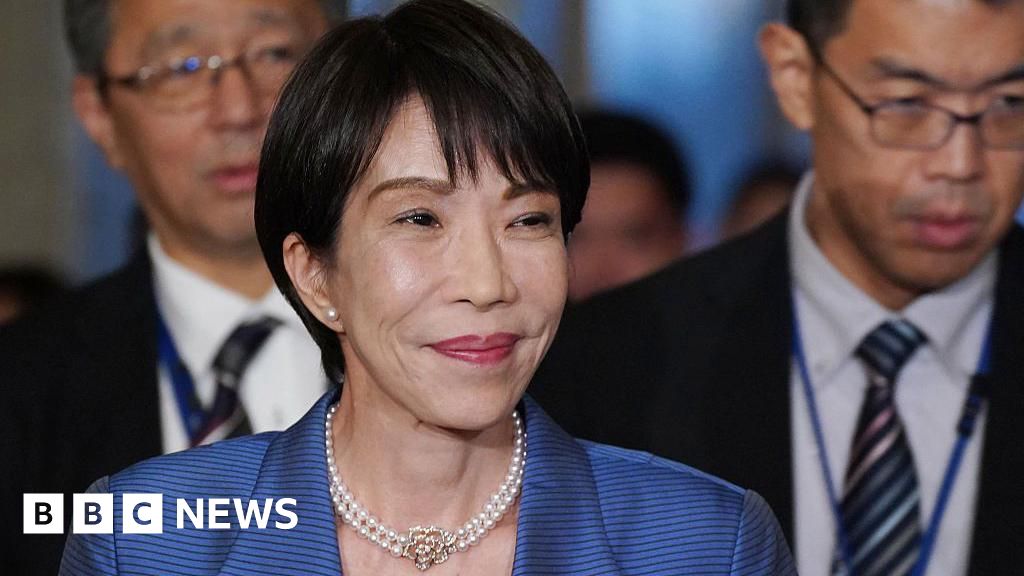
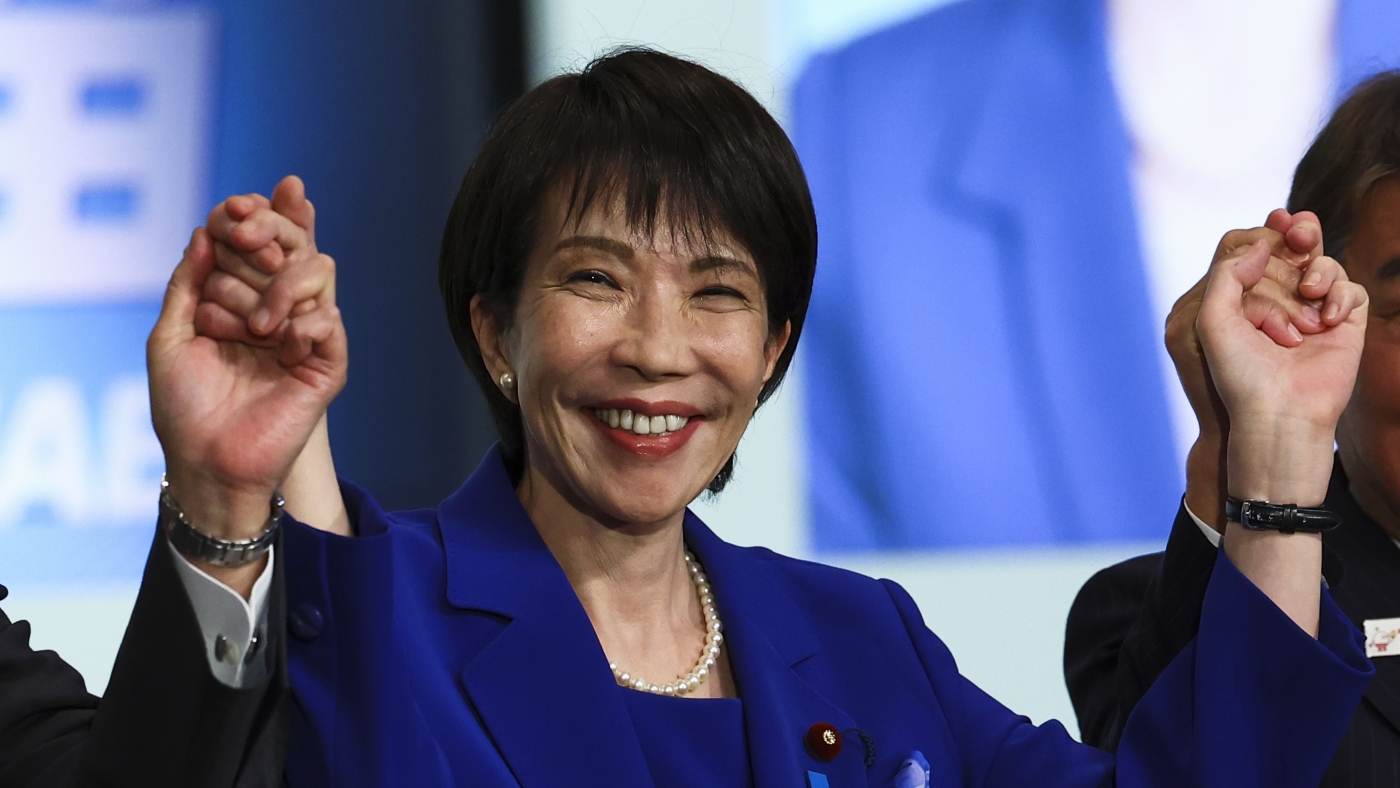
Japan's Nikkei 225 index opened at unprecedented levels, smashing through 53,549 amid soaring investor optimism.[3][2] This rally follows Prime Minister Sanae Takaichi's hints at a snap election in February, potentially strengthening her Liberal Democratic Party's grip on power.[1][3] As Japan's first female leader and a disciple of Shinzo Abe, Takaichi's vision of bold fiscal stimulus has ignited the so-called "Takaichi trade."[1][2]
Drivers Behind the Market Boom
A weakening yen and rising bond yields fueled the surge, with auto giants like Toyota jumping 7.5% and semiconductor firms such as Tokyo Electron gaining 8.2%.[3] Expectations of aggressive spending on defense, AI, and tax cuts underpin the enthusiasm, alongside corporate governance reforms prompting massive buybacks from hoarded cash reserves.[2][1] Analysts from Barclays and Credit Agricole predict continued gains in these high-growth sectors if Takaichi secures a mandate.[3]
Global Implications and Outlook
This milestone signals Japan's shift from stagnation to a tech-driven powerhouse, drawing global funds away from overvalued U.S. markets.[2] While yen depreciation risks intervention around 162-165 levels, the rally's momentum suggests sustained equity strength barring election surprises.[3][1] Investors eye Takaichi's policies as a new era for Japanese prosperity.
About the People Mentioned
Sanae Takaichi
Sanae Takaichi is a Japanese politician of the Liberal Democratic Party (LDP) who became Japan’s first female prime minister after winning the LDP leadership and being elected by the National Diet in 2025[2][3]. She was first elected to the House of Representatives in 1993 and has held multiple cabinet posts, notably Minister for Internal Affairs and Communications and Minister of State for Economic Security[5][3]. Takaichi is widely described as a conservative and a protégé of former prime minister Shinzō Abe, advocating traditionalist cultural policies, stronger defence and economic-security measures, and limits on immigration[5][3]. Her tenure as a senior minister included controversial moves such as seeking greater government influence over public broadcasting and visiting the Yasukuni Shrine while in office[5]. After several attempts at party leadership, she secured the LDP presidency in 2025 and led a minority government formed with the Japan Innovation Party amid a fractured Diet and the end of the long-standing LDP–Kōmeitō alliance[2][3]. Key challenges cited for her government include restoring public trust after LDP funding scandals, addressing Japan’s demographic decline and low growth, high public debt, inflation and wage issues, and navigating a tense regional security environment involving China and North Korea[2][3]. Analysts note her policy priorities include expansionary fiscal measures, tighter control over monetary policy levers, and strengthening the U.S.–Japan alliance and economic-security ties[2][5]. Takaichi’s rise is significant both for breaking gender barriers in Japanese national leadership and for shifting the LDP toward more conservative, security-focused policies during a period of domestic political realignment[3][5].
About the Organizations Mentioned
Liberal Democratic Party
## Overview The Liberal Democratic Party (LDP; Jiyū-Minshutō) is Japan’s largest and most influential political party, having dominated the country’s political landscape for nearly seven decades since its founding in 1955[1][5][7]. As a conservative to moderate force, the LDP has shaped Japan’s post-war recovery, guided its transformation into a global economic powerhouse, and maintained a steadfast alliance with the United States[2][4][7]. The party’s broad appeal—encompassing both nationalist and progressive factions—allows it to adapt to shifting political and economic climates, much like major U.S. parties[4]. ## What the Organization Does The LDP’s core mission is to promote economic growth, national security, and social stability through policies that favor business, low taxes, and government support for industry[4][5]. It prioritizes a close relationship with the U.S., advocates for export-driven growth, and has historically resisted sweeping social reforms such as the legalization of same-sex marriage[1]. The party also supports constitutional revision to expand Japan’s military role internationally, reflecting evolving national security priorities[4]. ## History Formed in 1955 through the merger of the Liberal Party and the Japan Democratic Party, the LDP was created to counter the rising influence of socialist parties[3][6]. It quickly established itself as the dominant political force, overseeing Japan’s remarkable post-war economic recovery and industrialization[7]. The LDP’s uninterrupted rule from 1955 to 1993 was punctuated only by brief opposition-led governments in 1993–94 and 2009–12[2][7]. Its longevity is attributed not only to policy successes but also to a robust political machine built on patronage and close ties with business and agricultural interests[6]. ## Key Achievements Under LDP leadership, Japan became the world’s second-largest economy by the 198
Barclays
Barclays is a leading multinational financial services company headquartered in London, with origins dating back to 1690 when John Freame and Thomas Gould began trading as goldsmith bankers in the City of London[1][5][6]. The name Barclays was adopted in 1736 when James Barclay, Freame’s son-in-law, became a partner, marking the start of the Barclays legacy[1][6]. The bank’s iconic Black Spread Eagle symbol, first associated with their Lombard Street premises in 1728, remains a key part of its brand identity[1][4]. Barclays evolved through numerous mergers, notably in 1896 when twelve banks united to form Barclays and Co., becoming a joint-stock bank and one of England's largest banks by deposits[1][3]. Throughout the 20th century, Barclays expanded its operations globally, entering markets in the Caribbean, South Africa, and Europe, and innovating in retail and investment banking[3][5]. It was floated on the stock exchange in 1902 and renamed Barclays Bank Limited in 1917[3]. Today, Barclays operates across multiple financial sectors including retail banking, investment banking, wealth management, and credit cards. It organizes its operations into business units such as Barclays Africa, Barclaycard, Barclays Capital, and UK Banking, serving millions of customers worldwide[2][5]. It has a significant global presence with over 2,000 domestic branches and nearly 850 international branches in more than 60 countries[2]. Barclays is recognized for technological innovation in banking and digital services, boasting over 4.5 million registered online banking users and more than 10.6 million Barclaycard customers in the UK alone[2]. Under CEO Coimbatore Sundararajan Venkatakrishnan, Barclays continues to focus on modernization, sustainability, and adapting to the evolving financial landscape while maintaining its historic commitment to financial services excellence[5]. The bank’s ric
Credit Agricole
**Crédit Agricole** is the world's largest cooperative financial institution, a French multinational banking group that evolved from rural agricultural lender to universal bank serving millions globally.[1][4] Founded in 1894 through France's Act of November 5, authorizing local mutual banks for farmers, it addressed funding gaps for small family farms with short-term harvest loans, inspired by models like Salins-les-Bains cooperatives.[1][2][4] Early challenges, including World War I disruptions, were met by financing farm reconstruction and loans for ex-servicemen.[4] The 1920 establishment of the national office (later Caisse Nationale de Crédit Agricole, CNCA) granted autonomy, expanding to rural electrification (1923), home loans (1928), and nationwide coverage, slowing urban exodus.[2][4] A pivotal 1966 reform gave CNCA financial independence, enabling diversification into SMEs, universal banking, and international growth—starting with a 1979 Chicago branch.[1][2][3] The 1988 privatization let regional banks acquire 90% of CNCA, which became Crédit Agricole S.A. in 2001, listing on the stock market.[1][2][5] It ventured into bancassurance via Predica (1986) and Pacifica (1990), and launched Crédit Agricole Corporate and Investment Bank (CACIB) in 2001.[3][5] Today, the decentralized group comprises 39 regional banks, Crédit Agricole S.A., and subsidiaries offering retail, investment banking, insurance, and more to households, businesses, and sectors worldwide, with ~147,000 employees.[2][7] Key achievements include €7.5 billion net income in 2022, post-pandemic recovery, and leadership in cooperative banking through strategic acquisitions.[3] Its adaptive journey from niche rural suppor
Toyota
**Toyota Motor Corporation**, headquartered in Toyota City, Aichi, Japan, is the world's largest automobile manufacturer, producing around 10 million vehicles annually as a multinational giant specializing in cars, trucks, hybrids, and luxury vehicles under brands like Lexus.[2][1] Founded in 1937 by Kiichiro Toyoda as an independent entity spun off from Toyoda Automatic Loom Works—an innovator in weaving machinery led by Sakichi Toyoda—the company drew from early principles like *jidoka* (automation with human intelligence) that underpin its famed **Toyota Production System (TPS)**, emphasizing efficiency, quality, and waste reduction.[6][1][3] Toyota's first car, the Model AA, launched in 1936, but post-WWII challenges nearly ended it; recovery came via affordable, reliable vehicles for Japan's booming economy.[4][2] Key U.S. entry in 1957 faltered with the underpowered Toyopet, but the 1965 **Corona**—tailored for Americans—tripled sales, followed by the 1968 **Corolla**, the all-time best-selling car with over 30 million units sold globally.[5][4][2] By 1975, Toyota topped U.S. imports, surpassing Volkswagen; 1986 marked 1 million annual U.S. sales and first American-assembled Corolla.[1][5] Milestones include the 1989 Lexus LS 400 luxury debut, 1997 Prius—the first mass-produced hybrid—and 2008 overtake of GM as global sales leader.[2][4][5] Today, Toyota dominates with innovations in hybrids, electrification, and global plants from Brazil (1959) to the UK and U.S., boasting ninth-largest revenue worldwide (as of 2020 data).[2][6] Its culture of relentless improvement fuels tech leadership, from TPS to sustainable mobility, making it an enduring icon in business and automotiv
Tokyo Electron
**Tokyo Electron Limited (TEL)** is a leading Japanese multinational specializing in semiconductor production equipment, enabling the fabrication of integrated circuits (ICs), flat panel displays (FPDs), and photovoltaic cells that power modern technology.[1][3][4] Founded on November 11, 1963, as Tokyo Electron Laboratories by entrepreneurs like Tokuo Kubo and Toshio Kodaka, TEL began as a technology trading firm affiliated with Tokyo Broadcasting System, importing diffusion furnaces and IC systems amid the rise of mainframe computers.[1][5][6] It shifted to full-scale manufacturing in the 1970s-1980s, expanding with offices in San Francisco (1968) and Yokohama, and grew through globalization in the 1990s-2000s, aligning with personal computers, mobile phones, and digital electronics.[1][5] By 2015, TEL re-emerged with a new vision for innovation, now headquartered in Akasaka, Tokyo, under President & CEO Toshiki Kawai.[3][6] TEL excels in key semiconductor processes like deposition, etching, lithography (photoresist coating/development), cleaning, and testing, holding the industry's largest patent portfolio at 21,645 as of 2023.[2][4][5] Achievements include shipping ~6,000 equipment units annually (cumulative base: 89,000+), leading market shares in patterning technologies, and driving efficiency gains that cut power use—vital as chips underpin big data and AI eras.[2][4][5][6] Its FPD segment has shrunk, but **semiconductor production equipment (SPE)** dominates earnings.[1] Today, TEL operates 26 companies across 18 countries/95 sites, with 20,273 employees (consolidated) and FY2025 net sales of ¥2,431.5 billion (~$16