Jimmy Lai Trial Adjourned Due to Health Issues in Hong Kong
Introduction
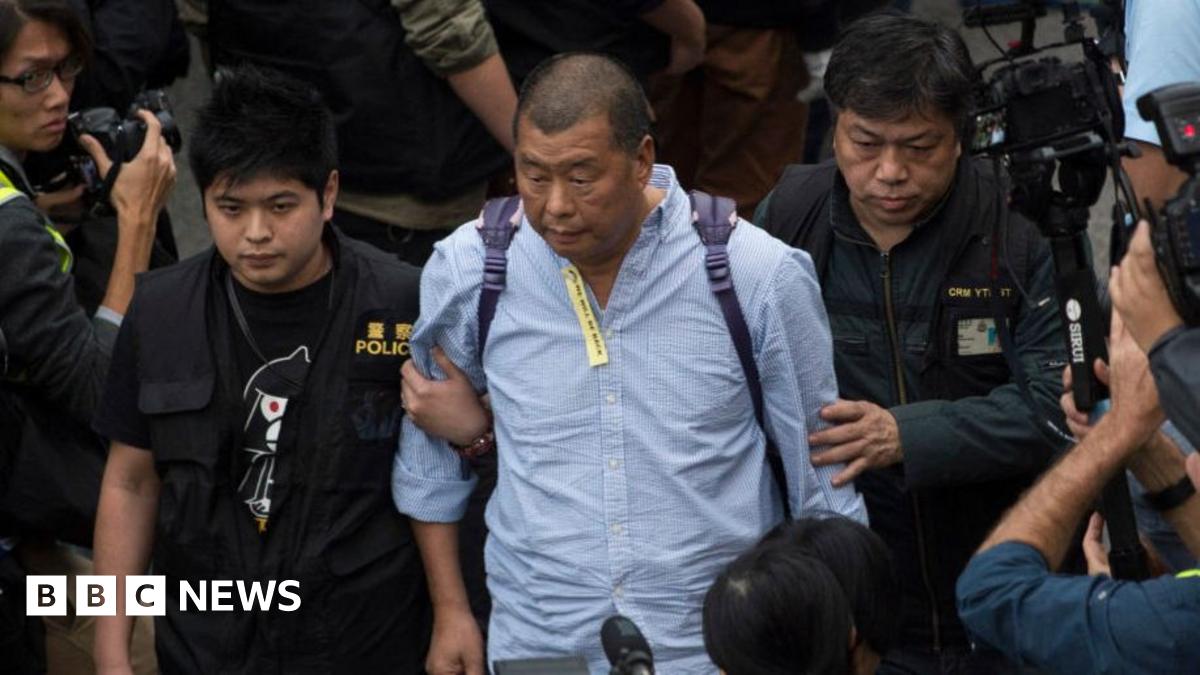
Hong Kong pro-democracy tycoon Jimmy Lai's national security trial has been adjourned due to health issues. Lai, who has been charged under a controversial Beijing-backed law, will return to court on Monday for further proceedings.
Background
Lai, a media mogul and outspoken critic of the Chinese government, was arrested in August 2020 under the national security law. The law, which was imposed by Beijing, has been widely condemned for its broad and vague language, allowing for the prosecution of any act deemed as undermining national security. Lai's case is one of many that have been brought under the law, leading to concerns over the erosion of civil liberties in Hong Kong.
Implications
The adjournment of Lai's trial highlights the ongoing challenges faced by pro-democracy activists in Hong Kong. It also raises questions about the impact of the national security law on the city's political climate and the future of civil liberties. Despite these challenges, Lai remains a symbol of resistance and continues to fight for democracy and freedom of expression in Hong Kong.
About the People Mentioned
Jimmy Lai
Jimmy Lai Chee-ying, born December 8, 1947, is a Hong Kong businessman, media mogul, and democracy activist. Despite being a British national since 1996, he has remained a prominent figure in Hong Kong's political landscape for decades. Lai's entrepreneurial career began when he arrived in Hong Kong at age twelve with minimal resources. He worked in a garment factory before purchasing the bankrupt knitwear manufacturer Comitex in 1975. Six years later, he founded Giordano, a fast-fashion chain that became highly successful across Asia, eventually making him a billionaire with an estimated fortune of $1.2 billion before government seizure of his assets. Beyond business, Lai became deeply committed to democracy and human rights advocacy. The 1989 Tiananmen Square protests catalyzed his political engagement; his garment factory supplied t-shirts to protesters. In 1990, he founded Next Magazine, combining tabloid journalism with hard-hitting political reporting. His most significant media venture came in 1995 when he founded Apple Daily, a pro-democracy newspaper he financed with $100 million of his own money. The publication became Hong Kong's second-largest newspaper by 1997 and served as a platform for exposing government corruption and advocating democratic freedoms. Lai's activism intensified over the decades. He contributed over $140 million of his personal wealth to the pro-democracy movement and became one of the Chinese Communist Party's most vocal critics, earning him the label of "traitor" from Beijing. In August 2020, Lai was arrested under Hong Kong's National Security Law for allegedly "colluding with foreign countries." He has since faced multiple convictions and sentences totaling concurrent imprisonment. As of November 2024, he faces trial with a maximum penalty of life imprisonment. Currently held at Stanley Prison in Hong Kong, Lai has endured prolonged solitary confinement. His case represents a significant flashpoint in debates over Hong Kong's freedoms and press independence following the imposition of national security legislation.
About the Organizations Mentioned
Chinese Government
The **Chinese Government**, formally the government of the People's Republic of China (PRC), operates under a unitary communist state system controlled by the Chinese Communist Party (CCP). The CCP exercises unified leadership through the National People's Congress (NPC), which is the highest state organ of power and the sole legislative body. The government structure lacks separation of powers; all state organs, including the Supreme People's Court and the State Council, act under the authority of the NPC, with CCP committees embedded in all state bodies and enterprises to ensure party control over decision-making[1][8]. Historically, the PRC government was established in 1949 following the CCP's victory in the Chinese Civil War. Since then, it has evolved into a highly centralized system where the party dominates political, economic, and social governance, maintaining strict control over media, civil society, and online speech[7]. Over the decades, the government has prioritized economic modernization, state-led industrial development, and social stability. In recent years, China’s government has focused heavily on innovation-driven development and building a modern industrial system, as articulated in its Five-Year Plans. The current 14th Five-Year Plan (2021–2025) emphasizes accelerating government function transformation, improving governance capacity, and advancing science and technology to drive economic growth and modernization[3]. The upcoming 15th Five-Year Plan (2026–2030) under President Xi Jinping aims to enhance economic resilience, boost technological self-reliance, and deepen reforms to sustain high-quality development. Key sectors include advanced manufacturing, aerospace, transportation, and digital infrastructure, reinforcing China’s global leadership ambitions in technology and industry[2][4][6]. Notably, the government balances fostering a market economy with maintaining strong state intervention, promoting private sector growth while safeguarding state interests. Its strategic vision includes achieving substantial scientific breakthroughs, improving citizens' quality of life, and advancing socialist modernization by 2035, positioning China as