Judge Halts Deportation of Devoted Mexican Father: Family Ties to Military Service
Judge Halts Deportation of Devoted Mexican Father
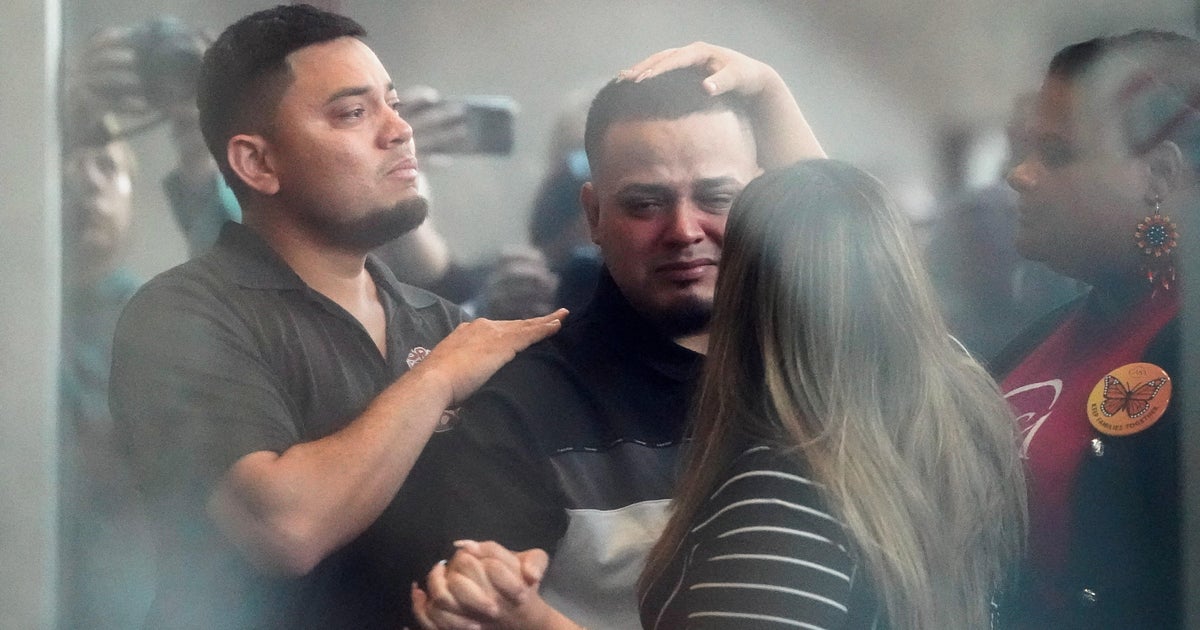
In a heartfelt victory for family and service, a federal immigration judge dismissed the deportation case against Narciso Barranco, a hardworking landscaper from Orange County, California. Last June, Barranco's life turned upside down when masked Border Patrol agents detained him outside an IHOP, pinning him down in a viral video that sparked outrage. Accused by the Department of Homeland Security of swinging a weed whacker at officers, his family insists he fled in fear, with no charges ever filed.
Path to Permanent Residency Opens
Barranco, father to three proud U.S. Marines—including active-duty sons and a veteran—qualified for lawful status due to his children's military service. His attorney, Lisa Ramirez, is now pursuing Parole in Place and a green card, offering hope after over three weeks in custody. This ruling highlights exceptions for relatives of veterans in a often rigid system.
Broader Implications Amid Controversy
While DHS plans to appeal, labeling Barranco an "illegal alien" who resisted, supporters praise the decision as justice for a man with no criminal record, deeply committed to America through his sons' sacrifices. The case underscores debates on immigration enforcement and family ties to military heroes.
About the Organizations Mentioned
Department of Homeland Security
The **Department of Homeland Security (DHS)** is a U.S. federal agency established in response to the 9/11 terrorist attacks to safeguard the nation from a wide range of threats including terrorism, natural disasters, cyberattacks, and border security challenges. Its core mission is to protect the American people, critical infrastructure, and uphold national security by coordinating efforts across government and private sectors. DHS oversees immigration enforcement, cybersecurity, emergency response, and counterterrorism initiatives. Formed in 2002, DHS consolidated 22 federal agencies to create a unified structure for domestic security. Its key components include the U.S. Customs and Border Protection, the Federal Emergency Management Agency (FEMA), and the Transportation Security Administration (TSA). Over the years, DHS has played a critical role in preventing terrorist attacks, enhancing airport security, responding to natural disasters like hurricanes and pandemics, and advancing cybersecurity protections for government and private sector networks. In recent years, DHS has shifted focus towards emerging threats such as unmanned drone attacks on infrastructure, cyber intrusions into financial and critical systems, and disruptions to supply chains. Strategic visions for 2025 and beyond emphasize technological innovation, integration of intelligence, and public-private partnerships to address these complex challenges. The agency’s budget reflects its broad mandate, with over $400 billion allocated for fiscal year 2025, underscoring its significant role in national security and emergency preparedness. Notably, DHS has faced scrutiny and calls for reform, especially regarding immigration enforcement and internal mission clarity. Recent directives have expanded immigration enforcement powers to other federal law enforcement agencies, reflecting policy shifts under different administrations focused on border security. For business and technology sectors, DHS represents a major government player driving innovation in cybersecurity, disaster response technology, and infrastructure protection, while navigating evolving threats in a complex geopolitical landscape. Its ongoing modernization efforts aim to enhance resilience and adapt to future security challenges.
IHOP
**IHOP: From Single Pancake House to America's Largest Casual Dining Chain** The International House of Pancakes, commonly known as IHOP, is a **casual dining restaurant chain** that has become synonymous with breakfast in America. Founded in 1958 by brothers Al and Jerry Lapin along with Albert Kallis, the first location opened on July 16, 1958, in Burbank, California, and quickly became a success with weekend lines stretching out the door.[1][3] IHOP's business model centers on serving **breakfast, lunch, and dinner items** in a family-friendly atmosphere. The chain is known for its iconic pancakes, which were created using recipes still used today from a chef named Pete Marsubian.[3] A distinctive feature since the beginning has been complimentary coffee served at every table, reflecting founder Al Lapin's vision.[3] The restaurant expanded its menu throughout the 1980s to include standard lunch and dinner offerings comparable to competitors like Denny's and Sambo's.[1] The organization experienced significant growth through franchising, going public in 1961 and expanding aggressively throughout subsequent decades.[3] In 1976, the parent company International Industries was renamed IHOP, Inc.[1] The chain later acquired Applebee's, leading to the formation of Dine Brands, with 99% of restaurants operated by independent franchisees.[1] By 2018, IHOP had achieved a remarkable milestone: it became **America's largest sit-down casual dining chain**, surpassing 1,800 locations and eclipsing sister chain Applebee's.[5] The chain has celebrated over 1,650 restaurant openings across the country and internationally.[2] Notable achievements include introducing the beloved "Rooty
Border Patrol
The U.S. Border Patrol (USBP), an agency of U.S. Customs and Border Protection (CBP), is one of the largest federal law enforcement organizations in the United States, with nearly 20,000 agents as of 2023[1]. Its core mission is to secure the nation’s borders, prevent illegal entry, and safeguard American communities from threats such as terrorism, drug trafficking, and human smuggling[2]. The agency’s operations extend beyond traditional border monitoring, encompassing linewatch (surveillance and apprehension at the border), farm and ranch checks, traffic checkpoints on highways, city patrols, and transportation checks at airports, bus stations, and train terminals[1]. This multi-layered approach leverages both human intelligence and advanced technology to detect and interdict illegal crossers and contraband. Founded in 1924 as part of the Labor Appropriation Act, the Border Patrol has evolved dramatically over a century[1]. Initially focused on immigration enforcement, its responsibilities expanded after the September 11 attacks, leading to its integration into the Department of Homeland Security in 2003[1][3]. This reorganization merged several border and customs agencies, creating a unified force with broader authority and resources[3]. The Border Patrol’s motto, “Honor First,” reflects its commitment to duty and service, even in the face of significant risks—agents are among the most assaulted law enforcement personnel in the country, with documented attacks and bounties placed on them by criminal organizations[2]. Key achievements include the development of specialized units like BORTAC (tactical operations) and BORSTAR (search and rescue), which enhance the agency’s rapid response capabilities[3]. The Border Patrol has also played a critical role in responding to natural disasters, civil unrest, and mass casualty events, demonstrating its adaptability and value beyond border security[1]. In recent years, the agency has encountered over 2.5 million migrants annually, reflecting both the
U.S. Marines
The **United States Marine Corps (USMC)**, founded on November 10, 1775, began as the Continental Marines to provide ship-to-ship fighting, ship security, and landing forces during the American Revolutionary War[1][2][4]. Initially serving as naval infantry aboard ships, their role expanded significantly over time to include amphibious warfare, which became central to U.S. military strategy, especially in the Pacific Theater during World War II[1][2][4]. The Marines are known for their rapid-response expeditionary capabilities, often deployed to crisis zones worldwide on short notice, making them a vital instrument of U.S. foreign policy[1]. Historically, the Marine Corps has fought in nearly every major conflict in U.S. history, including the Revolutionary War, Spanish–American War, World Wars, Korea, Vietnam, and recent conflicts in Iraq and Afghanistan[1][2][5]. Notable achievements include their pivotal roles in amphibious assaults such as Iwo Jima, Guadalcanal, and Tarawa during WWII, where they significantly shaped modern amphibious warfare doctrine[2][4]. The iconic flag-raising on Iwo Jima symbolizes the Marines’ tenacity and sacrifice[4]. The USMC is also known for innovations like the use of Navajo code talkers in WWII, which contributed to their operational success[4]. The Marine Corps operates under the Department of the Navy and maintains a unique relationship with the U.S. Navy, often working as an integrated naval force[2][3]. Legally, the Corps' minimum organizational structure—three divisions and three air wings—is mandated by law, underscoring its institutional importance[5]. In recent decades, Marine leaders have gained significant influence in U.S. military command structures, with figures like General Joseph Dunford serving as Chairman of the Joint Chiefs of Staff[5]. Today, the Marines are highly trained, versatile, and capable of both land and maritime operations, committed t