Trump Orders Pentagon to Buy Coal Power; DOE Funds Boost for Coal Plants
Trump's Bold Move: Pentagon to Buy Coal Power
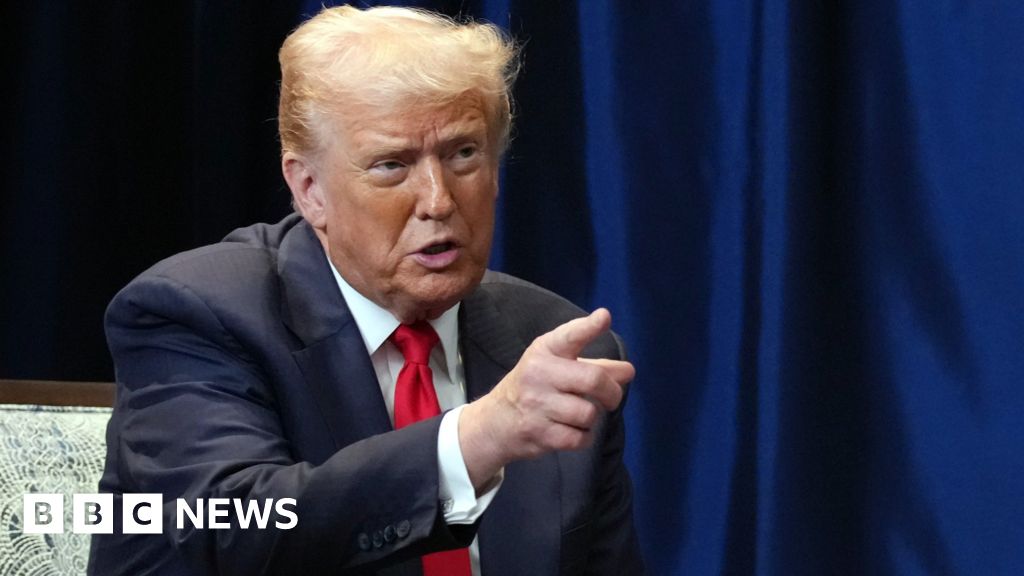
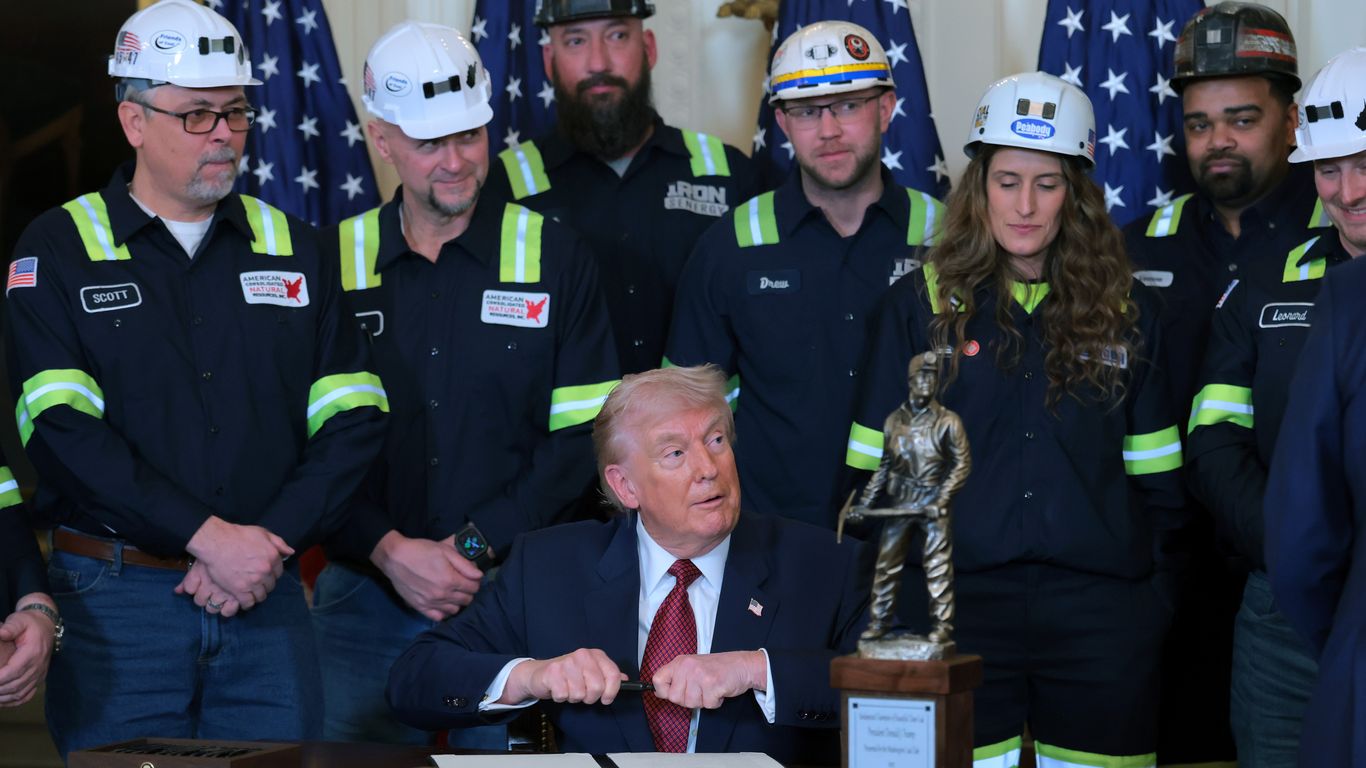
President Donald Trump has signed an executive order directing the Pentagon to purchase electricity from coal-fired plants, aiming to bolster the U.S. power grid's reliability for military operations. Declaring coal essential for national defense, Trump emphasized, "We're going to be purchasing a significant amount of coal through military channels now," highlighting its role in preventing blackouts and ensuring energy security amid rising demands from defense facilities.
Key Details and Funding Boost
The order instructs the Department of War, alongside the Department of Energy, to secure long-term power purchase agreements with coal plants, prioritizing grid resilience and on-site fuel security. Additionally, $175 million in DOE funding targets upgrades at plants in states like West Virginia, Ohio, Kentucky, North Carolina, and Virginia. This builds on prior actions, including April 2025 orders expanding coal mining on federal lands and research for AI data centers.
Implications for Energy and Critics
Proponents tout "beautiful, clean coal" for jobs and dependable baseload power, revitalizing an industry vital to economic stability. Yet critics, like the Union of Concerned Scientists, warn it could raise household electricity costs and exacerbate climate change through CO2 emissions, sparking debate over fossil fuels versus renewables in America's energy future.
About the People Mentioned
Donald Trump
Donald John Trump, born June 14, 1946, in Queens, New York, is an American businessman, media personality, and politician. He graduated from the University of Pennsylvania’s Wharton School in 1968 with a degree in economics. In 1971, he took over his family’s real estate business, renaming it the Trump Organization, through which he expanded into building and managing skyscrapers, hotels, casinos, and golf courses. Trump gained widespread fame as the host of the reality TV show *The Apprentice* from 2004 to 2015, which helped establish his public persona as a successful entrepreneur. Trump entered politics as a Republican and was elected the 45th president of the United States, serving from 2017 to 2021. His presidency was marked by significant policy actions including tax cuts, deregulation, the appointment of three Supreme Court justices, renegotiation of trade agreements (notably replacing NAFTA with the USMCA), and a focus on immigration control including border wall expansion. He withdrew the U.S. from international agreements such as the Paris Climate Accord and the Iran nuclear deal, and engaged in a trade war with China. His administration’s response to the COVID-19 pandemic was criticized for downplaying the virus’s severity. Trump was impeached twice by the House of Representatives—first in 2019 for abuse of power and obstruction, and again in 2021 for incitement of insurrection—but was acquitted by the Senate both times. After losing the 2020 election to Joe Biden, Trump challenged the results, culminating in the January 6, 2021, Capitol riot. He remains a central figure in American politics, having won the 2024 presidential election and returned as the 47th president in 2025, continuing to promote policies aimed at economic growth, border security, and military strength[1][2][3][4].
About the Organizations Mentioned
Pentagon
The **Pentagon** is the headquarters of the United States Department of Defense (DoD), serving as the central command center for the nation's military operations and strategic defense planning. Situated in Arlington County, Virginia, it houses the leadership and staff of the Army, Navy, Marine Corps, Air Force, Space Force, and associated defense agencies and commands[1]. Originally constructed during World War II as a temporary War Department building, the Pentagon evolved into the permanent nerve center for U.S. military coordination following the 1947 National Security Act, which merged the War and Navy Departments and added the Air Force, establishing the modern DoD[2]. The Pentagon oversees America’s global military posture, playing a crucial role during the Cold War and continuing to adapt to current geopolitical challenges. Its organizational complexity includes civilian oversight through the service secretaries and integration with multinational commands such as NATO and NORAD[1]. The Pentagon is also notable for its vast infrastructure, which underwent a comprehensive renovation completed in the early 2000s to maintain its operational capacity and security[2]. In recent years, the Pentagon has shifted strategic focus to homeland defense and the Western Hemisphere, aligning with contemporary U.S. national security priorities such as border protection and countering adversaries like China[3]. Technologically, it actively invests in emerging industries critical to defense, including space technologies, microelectronics, biochemicals, and software modernization. The Office of Strategic Capital, established to channel private sector investment into defense technologies, exemplifies this focus on innovation and maintaining U.S. technological superiority[4][6]. Efforts such as the Pentagon’s software modernization implementation plan emphasize cloud adoption and agile software development to enhance military IT capabilities[6]. Additionally, political dynamics impact Pentagon leadership and policy directions, as seen in initiatives like Project 2025, which aims to influence personnel and strategic priorities aligned with conservative policy goals[5]. Overall, the Pentagon remains a pivotal institution at the intersection of defense, technology
Department of War
The **United States Department of War** was a historic Cabinet department responsible for managing the U.S. Army and, initially, naval affairs before the creation of separate departments for the Navy and Air Force. Established on August 7, 1789, it served as the primary federal institution overseeing military operations for 158 years until it was reorganized under the National Security Act of 1947, which split it into the Department of the Army and the newly formed Department of the Air Force[1][3]. Originally called the War Department and sometimes the War Office, it managed the Army's operation and maintenance, as well as naval affairs from 1794 until the Navy Department's establishment in 1798. It also oversaw most non-naval air forces until the Air Force became its own department in 1947[1]. The department was headed by the Secretary of War, a civilian official responsible for military finance, procurement, and limited military direction. Key historical milestones linked to the department include its role during foundational conflicts like the Revolutionary War, the Korean War, and the Vietnam War, where it coordinated U.S. military efforts. Following World War II and the National Security Act, the War Department’s functions were consolidated into the Department of Defense in 1949, which unified the Army, Navy, and Air Force under a single Secretary of Defense[3]. In modern context, there has been a recent executive order in 2025 aimed at restoring the Department of War name to replace the Department of Defense, emphasizing a stance of deterrence through strength and signaling a shift in military policy and branding[4]. This initiative includes restructuring commands and submitting legislative proposals to effect the change. Today, the Department of War (or its contemporary equivalent) remains America’s largest government agency, coordinating all military branches including the Army, Marine Corps, Navy, Air Force, Space Force, and National Guard to ensure national security and military readiness[5]. It continues to emphasize technological innovation, acquisition, and operational
Department of Energy
The **U.S. Department of Energy (DOE)**, established on October 1, 1977, is a pivotal federal agency responsible for shaping America’s energy policy, advancing scientific research, and managing the nation’s nuclear weapons program[1][2][3]. It was created by the Department of Energy Organization Act under President Jimmy Carter to consolidate fragmented energy programs and address the energy crises of the 1970s by promoting energy conservation, energy independence, and alternative energy development[3][4]. The DOE’s origins trace back to two major traditions merged into one agency: defense-related nuclear programs initiated during World War II’s Manhattan Project, which developed the atomic bomb, and a collection of disparate energy-related federal programs[1][2]. The Manhattan Project was a massive wartime effort involving top scientists and tens of thousands of workers, laying the foundation for DOE’s ongoing nuclear weapons stewardship and national laboratory system[2][3]. After the war, the Atomic Energy Commission managed nuclear energy until the 1974 Energy Reorganization Act split regulatory and development functions, leading to the DOE’s eventual formation[3]. Key achievements of the DOE include managing the U.S. nuclear weapons stockpile, advancing energy research and development through its Office of Science, and overseeing national laboratories that drive innovation in clean energy, physics, and other fields[7]. The DOE also plays a critical role in energy policy, including strategic petroleum reserves, fuel efficiency standards, and environmental regulations[4][5]. Today, the DOE employs about 16,000 permanent staff and oversees approximately 100,000 contractors working at national labs and facilities[4][5]. It remains central to U.S. efforts to transition to sustainable energy, enhance energy security, and maintain technological leadership in nuclear and renewable energy domains. Notably, the DOE integrates complex energy and defense missions uniquely, balancing national security with advancing cutting-edge energy technologies, making it a key player in both business and technology sectors[1][7].
Union of Concerned Scientists
```html <!DOCTYPE html> <html lang="en"> <head> <meta charset="UTF-8"> <meta name="viewport" content="width=device-width, initial-scale=1.0"> <title>Union of Concerned Scientists: Science-Driven Advocacy for a Better World</title> <style> body { font-family: Arial, sans-serif; line-height: 1.6; max-width: 800px; margin: 0 auto; padding: 20px; } h1 { color: #2c5aa0; } h2 { color: #333; } p { margin-bottom: 1em; } </style> </head> <body> <h1>Union of Concerned Scientists: Harnessing Science for Global Impact</h1> <p>The <strong>Union of Concerned Scientists (UCS)</strong> is a powerhouse nonprofit organization that deploys rigorous, independent science to tackle humanity's biggest challenges, from climate change to nuclear threats, building a healthier planet and safer world.[3][5]</p> <h2>Rich History and Founding</h2> <p>Founded in <strong>1969</strong> by scientists and students at the Massachusetts Institute of Technology, UCS emerged amid Vietnam War protests, initially focusing on opposing military misuse of science. Today, it boasts over <strong>500,000 members</strong>, including top scientists via its UCS Science Network of nearly 23,000 experts.[1][2]</p> <h2>Core Mission and Activities</h2> <p>UCS conducts technical analyses, mobilizes coalitions, educates policymakers, and advocates for change. Key programs address <strong>climate action</strong>—pushing clean energy grids, vehicle electrification, and cap-and-invest strategies—and <strong>global security</strong>