Kosovo's Vetevendosje Secures Historic Election Victory Led by Albin Kurti
Kosovo's Vetevendosje Secures Historic Election Victory
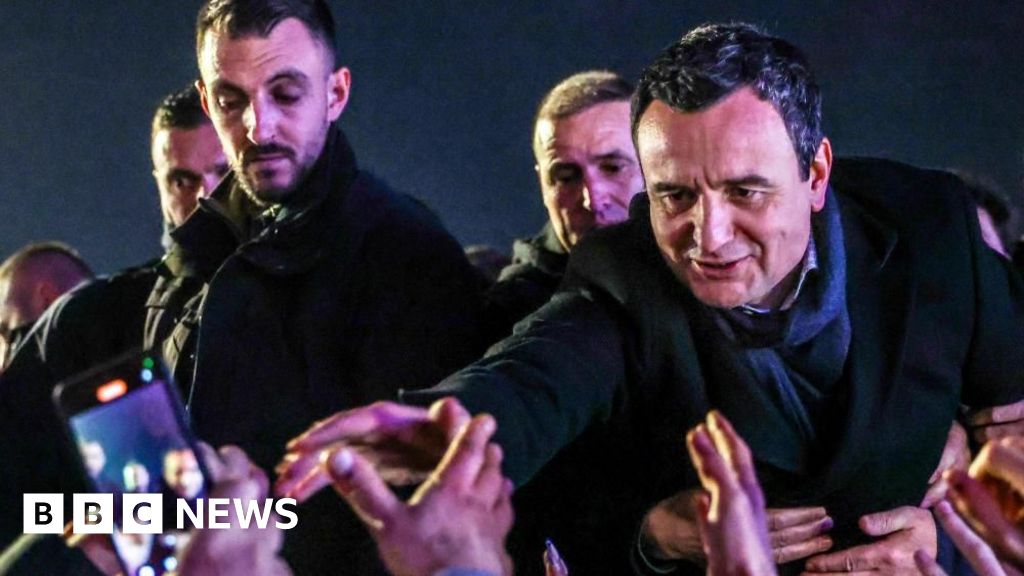
Kosovo's ruling Vetevendosje party, led by Prime Minister Albin Kurti, has claimed a resounding win in the snap parliamentary elections held on December 28, 2025, breaking months of political deadlock. With nearly 98% of ballots counted, the Albanian nationalist movement captured 49.62% of the vote, marking the largest victory in the nation's history and paving the way for Kurti's third consecutive term.
Key Election Results and Coalition Dynamics
Vetevendosje amassed over 433,000 votes, far ahead of rivals like the Democratic Party of Kosovo at 21% and the Democratic League of Kosovo at 13.68%. Turnout hovered around 45%. To form a government in the 120-seat Assembly, Kurti must secure coalition partners, including minority parties such as the Kosovo Democratic Turkish Party, which earned guaranteed seats with 0.62% support, highlighting ethnic representation's role.
Implications for Kosovo's Future
Kurti hailed the triumph as a mandate to advance national priorities, urging opposition cooperation on international deals. This decisive outcome stabilizes governance after turmoil, promising continuity in self-determination policies while navigating regional tensions and minority interests for sustained progress.
About the Organizations Mentioned
Vetevendosje
**Vetëvendosje (Self-Determination Movement)** is a Kosovo-Albanian social and political organization founded in 2005 as a radical protest group advocating self-determination, anti-corruption, and opposition to foreign influence in Kosovo's governance.[1][2][3][6] ### History and Evolution Emerging from the Kosova Action Network (KAN) in 2003, Vetëvendosje challenged UNMIK and EULEX missions post-1999, criticizing them for shielding corrupt elites and pushing unbalanced Serbia talks.[1][2] Led by activist Albin Kurti—jailed by Serbia in 1999 for pro-independence protests—the group gained traction amid public frustration with war crimes impunity, economic stagnation, and organized crime.[1] From street activism and campaigns like forming the RrOSh Albanian network in 2008, it institutionalized into a political party by 2010, entering parliament and transitioning from grassroots radicals to elected officials.[1][3] ### Key Achievements Vetëvendosje capitalized on anti-establishment sentiment, surging in elections: it formed a coalition government under Kurti in February 2020 with the Democratic League of Kosovo (LDK).[1] Its radical rhetoric isolated it initially but propelled it as Kosovo's main opposition force, repealing pro-Serbia tariffs to restart EU-mediated talks while prioritizing institutions and development.[1] ### Current Status (as of late 2025) Post-inconclusive February 2025 elections, Vetëvendosje leads the "Vetëvendosje Movement Coalition" with Guxo, Alternativa, and PSHDK for December 28 snap polls—the only major coalition amid fragmented rivals.[4] Kurti serves as acting Prime Minister.[4] ### Notable Aspects Ideologically social democratic and nationalist, it maintains civil society ties and a U.S
Democratic Party of Kosovo
The **Democratic Party of Kosovo (PDK, Partia Demokratike e Kosovës)** is a major center-right political party in Kosovo, rooted in the armed struggle for independence and focused on advancing national sovereignty, European integration, and economic development.[3][4] ### History Evolving from the **Kosovo Liberation Army (KLA)**—the guerrilla force that fought Serbian forces in the 1990s—PDK emerged post-1999 NATO intervention as a key player alongside the more moderate Democratic League of Kosovo (LDK).[2][4] Led by former KLA political chief **Hashim Thaçi** (president until 2016), it capitalized on war veterans' networks to build influence, contrasting LDK's nonviolent resistance under Ibrahim Rugova.[1][5] PDK entered politics amid Kosovo's transition from Serbian control, participating in the first post-war elections in 2001.[4] ### Key Achievements PDK has been instrumental in Kosovo's state-building: Thaçi served as prime minister (2008–2014), steering the 2008 independence declaration and Belgrade-Pristina talks.[3][5] It co-led early coalitions, passing foundational laws via the Kosovo Assembly, and championed NATO/EU alignment—critical for attracting foreign investment in tech and infrastructure.[4] Electoral wins, like strong showings in 2004 and 2017, solidified its "war wing" dominance.[1][5] ### Current Status As of recent years, PDK remains influential but faces headwinds from corruption scandals (e.g., 2018 "Pronto Affair" indictments) and voter fatigue with its long governance tenure.[5] Post-2020, it shifted to opposition amid Vetëvendosje's rise under Albin Kurti, amid economic woes and war crimes probes targeting leaders like Thaçi.[5][7] Membership draws fro
Democratic League of Kosovo
**The Democratic League of Kosovo (LDK)** is a prominent **centre-right political party** in Kosovo, dedicated to advancing **freedom, rule of law, and democracy** through governance, coalition-building, and institutional reforms.[1][3][4] Founded in 1989 by **Ibrahim Rugova**, the LDK emerged as a non-violent resistance force against Serbian rule during the 1990s, advocating Kosovo's self-determination and earning Rugova the title "Father of the Nation." It spearheaded the shadow parallel institutions that provided essential services under repression, laying groundwork for Kosovo's democratic framework post-1999 NATO intervention. The party's structured organization includes an **Assembly** of 355 delegates for program oversight, a **General Council** of 101 members for coalition decisions, a **Chairman** for leadership, and a **Presidency** for executive action, alongside branches, a Youth Forum, Women's Forum, and the **Ibrahim Rugova Foundation** promoting his pacifist philosophy.[1] Key **achievements** include Rugova's presidency (2002–2006), **Fatmir Sejdiu**'s subsequent leadership as Kosovo's president, and pivotal roles in coalitions like the post-2020 government with Vetevendosje (VV) and earlier alliances with AAK and minority parties.[1][3][4] The LDK helped navigate Kosovo's 2008 independence declaration and UN-supervised transitions.[4] As of late 2025, the LDK remains a major player, securing **20 seats** (18.3% vote) in the February 2025 parliamentary elections, behind VV (48 seats) and PDK (24 seats).[5] It operates amid Kosovo's volatile politics, marked by corruption challenges, ethnic tensions with Serbs, and institutional gridlock, including delayed Assembly inaugurations.[4][5][6] In business and technology contexts, the LDK supports E
Kosovo Democratic Turkish Party
The **Kosovo Democratic Turkish Party (KDTP)**, known in Turkish as *Kosova Demokratik Türk Partisi*, is a conservative political organization dedicated to safeguarding and advancing the political, legal, and cultural rights of Kosovo's Turkish minority.[1][4] Founded to address the community's needs amid Kosovo's post-conflict transition, KDTP positions itself as the sole political voice for Kosovo Turks, blending modern democratic principles with national values through fair, transparent governance.[1] Historically, KDTP emerged from efforts to protect Turkish interests during Kosovo's turbulent 1990s and independence era in 2008. It has maintained a steady presence in parliament via reserved seats for minorities, advocating for education, economic development, and cultural preservation in Turkish-majority areas like Prizren. Notable leader **Fikrim Damka**, an Istanbul University economics graduate born in 1972, exemplifies the party's focus on competent representation.[1] Key achievements include securing consistent parliamentary seats and coalition partnerships. In recent snap elections on December 28 (around 98% counted), KDTP garnered **0.62% of votes (5,332 ballots)**, clinching two guaranteed Turkish seats despite Vetevendosje's (VV) dominant 49.62% win.[2][3][7] This mirrors prior coalitions; KDTP supported VV-led governments previously and remains pivotal for the incoming administration, providing essential minority votes in Kosovo's 120-seat parliament to pass international agreements and budgets.[2][3][5] Currently active with branches, news updates, and membership drives, KDTP emphasizes revitalizing its influence.[1] Though small (Turkish community ~1-2% of population), its kingmaker role in coalitions underscores resilience in Kosovo's fragmented politics. For business and tech enthusiasts, KDTP's pushes for minority economic integration could influence regional investments, EU-aligned reforms, and cross-border ties with Turkey—potentially fostering tech hubs i