Murree Brewery Exports Resume After 50-Year Ban: Pakistan's Alcohol Revival Goes Global
#murree_brewery #pakistan #exports #alcohol_legislation #global_markets
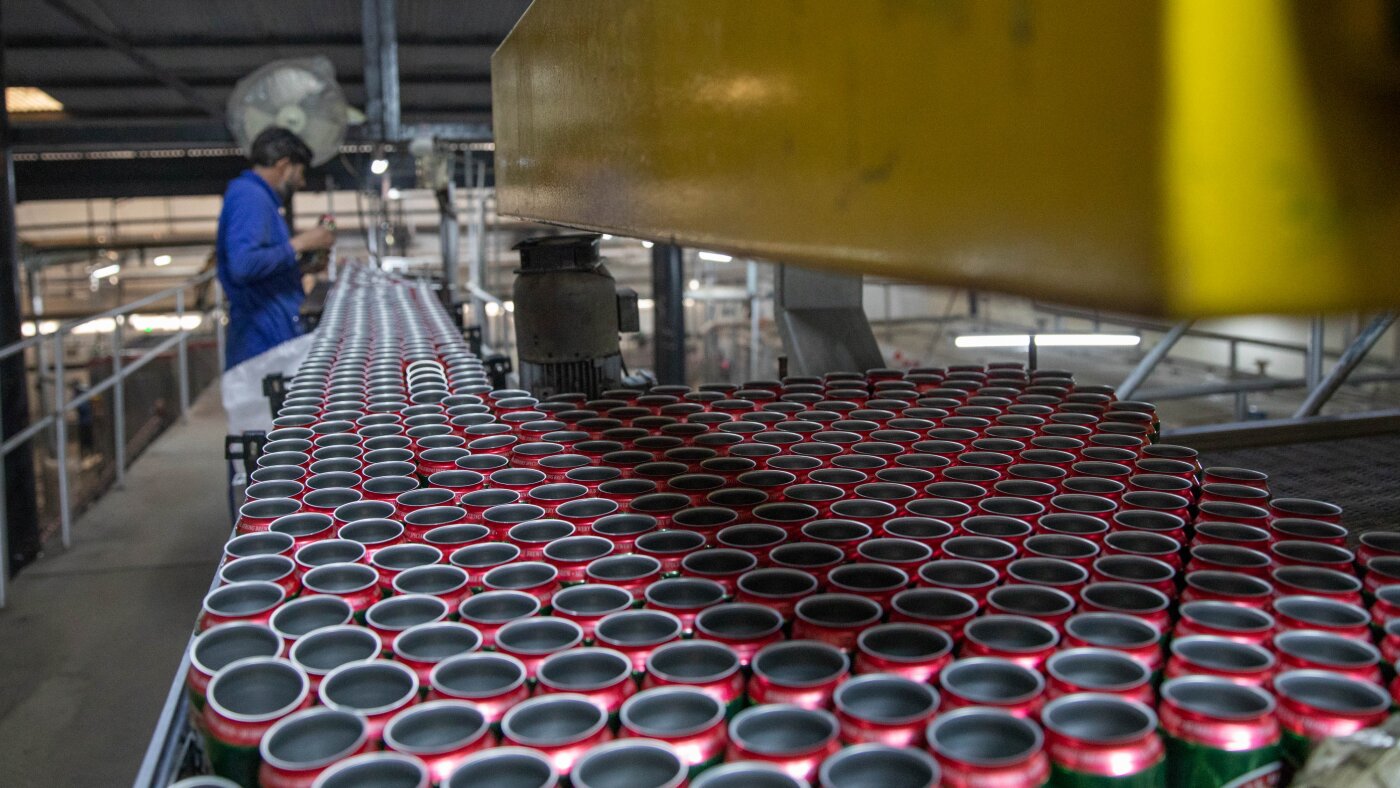
Pakistani Brewery Breaks Free: Exports Resume After 50-Year Ban
After decades of restrictions, Pakistan's iconic Murree Brewery is exporting beer again, marking a historic shift in a nation where alcohol is banned for the Muslim majority. Founded in 1860 by British colonials, the brewery survived partition in 1947 and thrived serving non-Muslims and foreigners domestically. A 1977 export ban halted overseas sales until a 2022 policy change allowed shipments to non-OIC countries.[1][2][3]
First Shipments and Record Success
Last spring, Murree sent its initial beer shipment to the United Kingdom, followed by exports to Portugal and Japan. Export manager Ramiz Shah expressed initial caution, but operations have smoothed out. The company eyes expansion into the United States and Canada next. Despite local competition from a Chinese brewery, Murree achieved its best year in 2025, exceeding $100 million in revenue, thanks to shrewd family management.[1][2]
Future Horizons Amid Cultural Paradox
Murree's revival highlights Pakistan's complex alcohol landscape, producing whisky, vodka, and beer while navigating strict laws. As the oldest public company in South Asia, listed on the Pakistan Stock Exchange, it now competes globally with smuggled imports. Will U.S. markets embrace this resilient Pakistani brew? The future looks promising.[3][4]
About the Organizations Mentioned
Murree Brewery
**Murree Brewery Company Limited**, founded in 1860 by the British in the Murree Hills of pre-partition India, stands as Pakistan's oldest and largest producer of both alcoholic and non-alcoholic beverages.[1][2][3][6] Headquartered in Rawalpindi, it operates three key divisions—Liquor, Tops (non-alcoholic), and Glass—manufacturing beers, vodkas, gins, whiskies, rums, brandy, liqueurs, energy drinks, non-alcoholic beers, juices, mineral water, and glass packaging.[1][6] The company's rich history spans over 165 years, surviving Pakistan's 1947 partition under the Bhandara family leadership, now in its third generation with CEO Isphanyar M. Bhandara at the helm.[1][2][3] Alcohol bans for Muslims since the 1970s—initially in 1977 under Zulfikar Ali Bhutto—restricted its market to non-Muslims (about 9 million of 241 million) and foreigners, imposing heavy taxes and red tape.[2][3] Yet, Murree thrived as an outlier, leveraging scant competition and an elite consumer base amid prohibition.[2] Key achievements include resuming beer exports after decades, marking a global return, and strong financials: as of August 2025, its PSX-listed stock (MUREB) hit PKR 953.55 with a 26.73B market cap, 27.05B ttm revenue, 3.30B net income, and a 6.21% dividend yield.[3][4] It employs around 2,200 staff and boasts ISO 9001/HACCP-certified products like Sparkletts mineral water and high-ABV Venom Lager (12%).[2][6] Currently, under Non-Executive Chairman Ch. Mueen Afzal, Murree is pi
Pakistan Stock Exchange
The **Pakistan Stock Exchange (PSX)** is Pakistan's premier national stock exchange, headquartered in Karachi with offices in Lahore and Islamabad, facilitating the trading of equities, bonds, and other securities across 38 sectors to support capital formation and economic growth.[1][2][3][4] Established as the **Karachi Stock Exchange (KSE)** on September 18, 1947—mere weeks after independence—it began humbly with just five listed companies and a paid-up capital of Rs 37 million, operating via open outcry in Karachi's financial district.[1][2][3][4][6] Incorporated as a company limited by guarantee in 1949, it grew amid challenges like low volumes and volatility.[1][2] The 1960s-1990s saw expansion: the KSE-100 index launched in 1991 as a key benchmark, while the Lahore Stock Exchange (1970) and Islamabad Stock Exchange (1989) emerged to serve regional needs, creating a fragmented system with separate indices and management.[1][2][3][4] A pivotal shift came with the **Stock Exchanges (Corporatisation, Demutualisation, and Integration) Act of 2012**, mandating conversion to for-profit entities, separation of ownership from trading rights, and divestment (40% to strategic investors, 20% to the public).[3][4][6] This culminated in the **January 11, 2016 merger** of the three exchanges into PSX, introducing a unified digital platform like the Karachi Automated Trading System (KATS) for efficient, computerized trading.[1][2][3][6] Regulated by the Securities and Exchange Commission of Pakistan (SECP), PSX divested 40% of shares in 2016 to a Chinese consortium (including Shanghai and Shenzhen exchanges) and listed itself via IPO.[4][6] **Key achievements** include explosive growth: fro