Myanmar's First Post-Coup Election Sparks Controversy
Myanmar's First Post-Coup Election Sparks Controversy
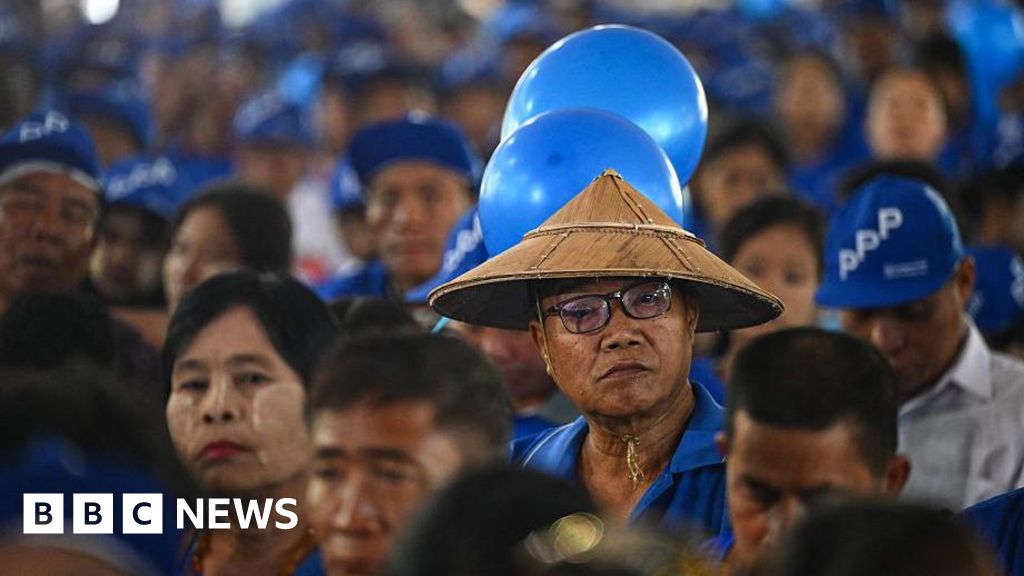
Myanmar's military junta has launched the first phase of its 2025-26 general election, the initial stage of voting for the Amyotha Hluttaw and Pyithu Hluttaw amid ongoing civil war and humanitarian crisis. Held under junta rule since the 2021 coup that ousted Aung San Suu Kyi's government, this poll fulfills constitutional mandates after repeated extensions of the state of emergency, which ended in July 2025.[1][2]
Rigged Rules and Opposition Boycotts
Critics, including the United Nations and ASEAN, denounce the election as a sham designed to legitimize military control. New proportional representation rules favor the junta's Union Solidarity and Development Party, which faltered in 2020's fair vote, while the military retains 25% reserved seats and veto power per the 2008 Constitution. Aung San Suu Kyi remains imprisoned, her National League for Democracy boycotting alongside weakened opposition amid violent crackdowns.[1][2]
Global Implications and Uncertain Future
With two more phases set for January 2026, final results may entrench junta dominance, drawing international skepticism. Despite claims of democratic restoration, analysts predict minimal legitimacy gains, prolonging Myanmar's instability as rebels contest junta authority nationwide.[1][2]
About the People Mentioned
Aung San Suu Kyi
Aung San Suu Kyi, born June 19, 1945, in Rangoon (now Yangon, Myanmar), is a prominent politician, pro-democracy activist, and opposition leader, daughter of Myanmar's independence hero Aung San, assassinated in 1947, and diplomat Khin Kyi.[1][2][3] Educated in Myanmar, India, the UK (including Oxford University), and London, she married Tibet scholar Michael Aris in 1972, with whom she had two sons, living abroad until 1988 when she returned to care for her ailing mother amid nationwide pro-democracy uprisings against military dictator General Ne Win.[1][2][3][4] In 1988, following the brutal suppression of the "8-8-88" mass uprising that killed thousands, Suu Kyi emerged as a leader, delivering her first major speech at Shwedagon Pagoda and co-founding the National League for Democracy (NLD) as general secretary, advocating non-violent civil disobedience inspired by Gandhi.[1][2][3][4][7] Placed under house arrest in 1989 by the State Law and Order Restoration Council (SLORC), she spent nearly 15 of the next 21 years detained, even as the NLD won 392 of 492 seats in the 1990 election, results ignored by the junta.[1][4][6][7] In 1991, she received the Nobel Peace Prize for her non-violent struggle for democracy and human rights; she donated the prize money to health and education trusts.[1][2] Released periodically, including in 2002 and 2010, Suu Kyi led the NLD to victory in 2015 elections. From 2016 to 2021, barred from the presidency by military-linked constitutional provisions, she served as state counsellor (de facto leader), minister of foreign affairs, and minister of the president's office, coordinating government branches.[1][4][5] Her tenure faced criticism over the Rohingya crisis, though she defended Myanmar at the International Court of Justice. In February 2021, the military seized power in a coup, alleging election fraud, detaining Suu Kyi and sidelining her from leadership; as of recent reports, she remains under house arrest.[1][6] Now 80, she continues as NLD president, symbolizing Myanmar's democracy movement amid ongoing conflict.[4]
About the Organizations Mentioned
United Nations
The United Nations (UN) is a pivotal international organization established in 1945, following the devastation of World War II, with the primary goal of maintaining global peace and security, fostering international cooperation, and promoting social progress. The UN Charter, signed by 51 founding member states, including the United States, the United Kingdom, China, and the Soviet Union, laid the foundation for this ambitious endeavor[1][3]. ## History and Structure The UN was born out of the failures of its predecessor, the League of Nations, which failed to prevent World War II. Key planning meetings, such as the Dumbarton Oaks Conference in 1944, defined the UN's structure, which includes the General Assembly, the Security Council, the Economic and Social Council, the Trusteeship Council, the International Court of Justice, and the Secretariat[1][6]. The Security Council, with five permanent members (the United States, China, France, Russia, and the United Kingdom), holds significant influence due to its veto power[2]. ## Key Achievements Over the years, the UN has played a crucial role in conflict resolution, human rights advocacy, and sustainable development. Notable achievements include the establishment of the Universal Declaration of Human Rights in 1948 and the implementation of numerous peacekeeping missions worldwide[3][4]. The UN has also been instrumental in addressing global challenges such as climate change and pandemics through its various programs and agencies. ## Current Status Today, the UN comprises 193 member states, with its most recent addition being South Sudan in 2011[5]. The organization continues to evolve, addressing emerging issues like digital governance and cybersecurity. Despite challenges, the UN remains a cornerstone of international diplomacy and cooperation. ## Notable Aspects The UN's work is not limited to politics; it also impacts business and technology through initiatives that promote sustainable development and digital inclusion. Its role in setting global standards and fostering international cooperation makes it a significant player in shaping the
ASEAN
**The Association of Southeast Asian Nations (ASEAN)** is an intergovernmental organization of 11 Southeast Asian states—Brunei, Cambodia, Indonesia, Laos, Malaysia, Myanmar, the Philippines, Singapore, Thailand, Vietnam, and Timor-Leste—dedicated to fostering economic growth, trade integration, security cooperation, and regional stability.[1][2][4][8] Founded on August 8, 1967, by Indonesia, Malaysia, the Philippines, Singapore, and Thailand amid Cold War tensions, ASEAN expanded to its current lineup by 2025, with Timor-Leste's historic admission at the 47th Summit in Kuala Lumpur, marking the bloc's first growth since 1999.[2][4][8] Early visions like ASEAN Vision 2020 emphasized peace, a nuclear-free zone (treaty signed 1995), and economic ties, culminating in the 2015 ASEAN Community declaration and **ASEAN 2025: Forging Ahead Together**, which targets a politically cohesive, economically integrated, and socially responsible region.[1][7] Key achievements include the **Regional Comprehensive Economic Partnership (RCEP)**, the world's largest free trade agreement, alongside intra-ASEAN free trade pacts, harmonized standards, and freer movement of people and businesses, propelling a combined GDP of $3.9 trillion (2024) and a 678-million population toward projected fourth-largest global economy status by 2045.[3][4][6] The bloc promotes tech collaboration, biodiversity protection, counter-terrorism, and sustainable practices, while upholding "ASEAN Centrality" to navigate U.S.-China rivalries.[2][5][6] In 2025, under Malaysia's chairmanship, the Kuala Lumpur Summit advanced the **ASEAN Community Vision 2045**, updating trade rules via the Second Protocol to ATIGA, enhancing digital transformation, financial integration, and resilience amid Myanmar's crisis an
Union Solidarity and Development Party
The **Union Solidarity and Development Party (USDP)** is Myanmar's principal pro-military political party, functioning as an electoral proxy for the Tatmadaw (armed forces) and promoting ultranationalist, authoritarian, and militarist ideologies.[1][4] Founded on April 29, 2010, by then-Prime Minister Thein Sein—a retired general—and senior military officers, the USDP emerged as the successor to the Union Solidarity and Development Association (USDA), the military junta's mass organization notorious for political violence and asset control.[1][3][4] It inherited the USDA's membership, resources, and economic interests, including the Myan Gon Myint conglomerate tied to key sectors like those potentially relevant to business networks.[1][3] Formed ahead of the 2010 general election—the first multiparty vote in two decades—the USDP swept to victory amid a National League for Democracy (NLD) boycott, securing 259 of 330 contested seats in the lower house and paving Thein Sein's path to presidency in 2011.[1][2][4] **Key achievements** for the USDP include dominating the 2010 polls, which enabled a nominal transition to civilian rule under military oversight, and maintaining influence through retired generals in leadership.[1][4] Thein Sein led until 2013, followed by figures like Khin Yi since 2022, a loyalist to junta head Min Aung Hlaing.[1] Critics, however, decry the party's deep ties to military conglomerates like Myanma Economic Holdings Limited (MEHL), alleging systemic corruption, cronyism, and unaccounted assets inherited from the USDA—issues echoing in business scandals without legal repercussions.[3] Its history involves stoking ethnic and religious divisions, violating laws with impunity.[3] As of late 2025, post-2021 coup, the USDP remains active under ju
National League for Democracy
The **National League for Democracy (NLD)** is Myanmar's prominent pro-democracy political party, advocating non-violent transition to multi-party rule, human rights, rule of law, and national reconciliation.[1][3] Founded on September 27, 1988, amid the **8888 Uprising** against military dictator U Ne Win, the NLD emerged as a beacon of civilian resistance following decades of junta control since 1962.[1][2][3] Co-founded by **Aung San Suu Kyi**—Nobel Peace Prize winner and daughter of independence hero Aung San—the party symbolized hope with its peacock flag, echoing Burmese nationalist traditions.[1] **Key achievements** include a landslide 1990 election victory, securing over 80% of contested parliamentary seats, though the junta nullified results and suppressed the party.[1][3] Banned in 2010 for boycotting rigged polls, it re-registered in 2011, sweeping 43 of 44 by-election seats in 2012 and forming government after the 2015 win.[1][4] In 2020, the NLD again triumphed overwhelmingly.[6] Governing from 2016 under Suu Kyi as State Counsellor—bypassing constitutional barriers—the NLD pursued peace, federalism, and economic reforms, yet faced criticism for centralizing power, echoing authoritarian traits, and mishandling ethnic issues like the Rohingya crisis.[2][4][5] As of late 2021, a military coup ousted the NLD, detaining Suu Kyi and leaders, derailing democratization under the 2008 constitution's military safeguards (25% reserved seats, key ministries).[2][5] Currently in exile and opposition, the NLD supports the National Unity Government (NUG), urging institutional reforms, broader leadership, and recommitment to non-violence and inclusion to unify resistance agains
Amyotha Hluttaw
**Amyotha Hluttaw**, Myanmar's upper house of parliament known as the House of Nationalities, plays a pivotal role in the bicameral Pyidaungsu Hluttaw (Assembly of the Union), representing the nation's ethnic diversity alongside the lower Pyithu Hluttaw.[1][2][6] Comprising **224 members**—168 directly elected from equal quotas across 14 regions and states (12 each) and 56 appointed by the military—it ensures balanced regional input in legislation, with both houses holding equal powers; bills require approval from each, or a joint vote resolves disputes.[1][2][3][6] Established under the 2008 Constitution, it emerged post-military rule as Myanmar transitioned toward democracy, holding its first elections in 2010 and marking a shift from junta dominance.[2][5][6] Elected every five years by universal suffrage, it gained prominence in 2015 when the National League for Democracy (NLD) secured a majority, electing Mahn Win Khaing Than as Speaker; this term extended through 2020 polls.[3][6] Key achievements include modifying junta-era laws, scrutinizing budgets, fostering public debate, and building legislative capacity via research services and consultations—nascent steps toward oversight in a historically authoritarian context.[4][5] The 2021 military coup disrupted this progress: Acting President Myint Swe dissolved the Pyidaungsu Hluttaw, transferring powers to coup leader Min Aung Hlaing amid a declared emergency, suspending parliamentary functions.[6][8] As of late 2025, the regime has initiated elections—the first phase reported with over 5,000 candidates for nearly 950 seats, primarily in the lower house—signaling attempts to legitimize control, though the Amyotha Hluttaw's status remains tied to this volatile process.[9] Notable for its military quota (2
Pyithu Hluttaw
**Pyithu Hluttaw**, the lower house of Myanmar's bicameral legislature known as the Assembly of the Union (Pyidaungsu Hluttaw), represents townships and wields key legislative powers alongside the upper house, Amyotha Hluttaw.[1][4] Comprising 440 members—330 directly elected via first-past-the-post in townships and 110 appointed by the military (Tatmadaw)—it ensures the armed forces hold 25% influence, a unique constitutional feature limiting civilian dominance.[1][3][4] Established under the 2008 Constitution post-military rule, the Pyithu Hluttaw marked Myanmar's shift toward a hybrid democracy, convening in Naypyidaw's Hluttaw Complex.[1][7] Members serve five-year terms, with the house electing its Speaker and Deputy Speaker.[1][2] Its core functions include drafting and passing laws, approving budgets and taxes, overseeing the executive via committees and questions, representing citizen interests, and joining an electoral college to select the president.[1][3][5] Key achievements emerged post-2010 elections: the nascent parliament modified junta-era laws, scrutinized the executive, and fostered public debate—a stark contrast to prior military suppression.[7] The 2015 and 2020 polls saw National League for Democracy (NLD) gains, amplifying reform voices despite military quotas.[6] Currently, the Pyithu Hluttaw remains suspended following the February 1, 2021, military coup, which ousted the 2020-elected assembly before its swearing-in, halting legislative functions amid ongoing conflict.[8] This underscores Myanmar's tense power dynamics, where military guarantees clash with democratic aspirations. Notable for business and tech observers, its budgetary role once influenced economic policies, though paralysis now stifles investment and innovation amid sanctions and instability.[1] (Word count: 29