Pfizer's Monthly GLP-1 Obesity Injection Shows Competitive Promise

Pfizer's Monthly Obesity Injection Shows Competitive Promise
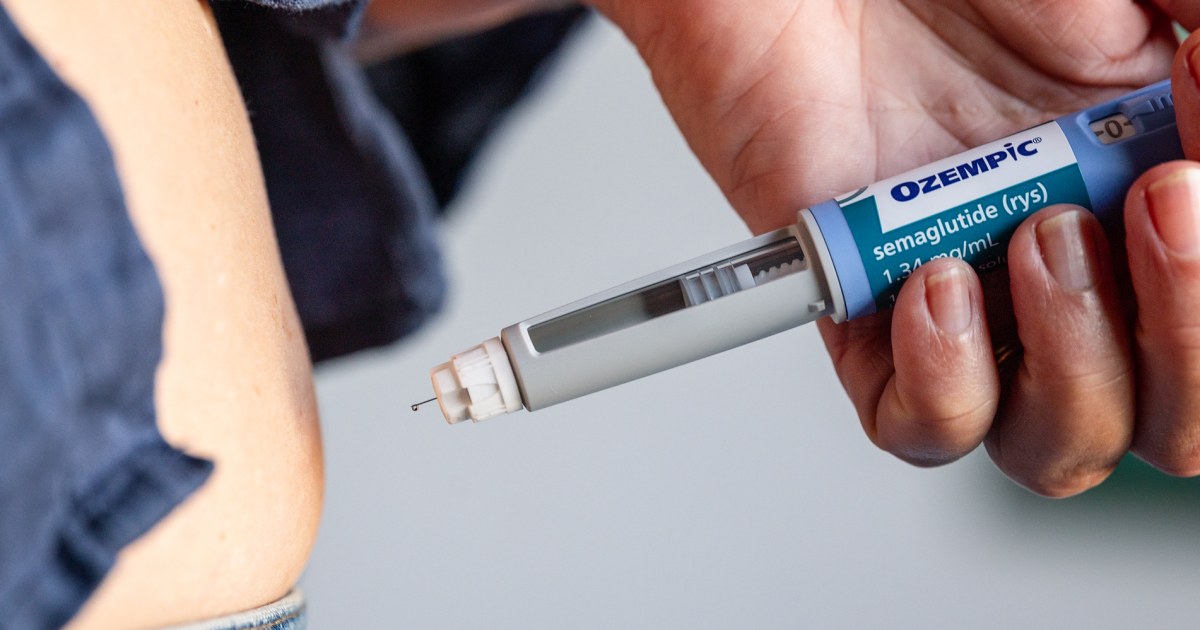
Pfizer announced encouraging mid-stage trial results for PF-08653944, its experimental GLP-1 receptor agonist acquired through the Metsera acquisition. The Phase 2b VESPER-3 study demonstrated that patients achieved up to 12.3% placebo-adjusted weight loss at 28 weeks, with the significant advantage of monthly dosing instead of weekly injections required by competitors like Eli Lilly and Novo Nordisk.
Sustained Weight Loss Without Plateau
The trial's most compelling finding revealed continuous weight loss after transitioning from weekly to monthly injections, with no plateau observed at 28 weeks. This suggests patients will continue losing weight through the full 64-week study period. All four dosing regimens tested demonstrated statistically significant superiority over placebo, reinforcing confidence in the drug's potential as a less-frequent alternative in the competitive obesity market.
Path Forward
Pfizer plans to advance ten Phase 3 trials in 2026, with detailed results from VESPER-3 presented at the American Diabetes Association conference in June. The favorable tolerability profile combined with monthly dosing convenience positions this candidate competitively within the expanding obesity treatment landscape.
```About the Organizations Mentioned
Pfizer
Pfizer is a renowned American multinational pharmaceutical and biotechnology corporation headquartered in Manhattan, New York City. Founded in 1849 by Charles Pfizer and Charles F. Erhart, Pfizer is one of the oldest pharmaceutical companies in North America, with a rich history spanning over 170 years[2]. The company's mission is to apply science and global resources to improve health and well-being by developing and manufacturing medications and vaccines for various therapeutic areas, including immunology, oncology, cardiology, and neurology[3]. Pfizer's portfolio includes some of the world's best-selling medications and vaccines, such as Eliquis, Prevnar, Paxlovid, and the Pfizer-BioNTech COVID-19 vaccine, Comirnaty[2]. These products have contributed significantly to the company's revenue, with Eliquis and Prevnar being among its top-selling products[2]. Pfizer is ranked as the fifth-largest biomedical company by revenue and is recognized on the *Fortune* 500 and *Forbes* Global 2000 lists[2]. Currently, Pfizer operates with a global presence, selling its products in nearly 200 countries and territories, and employing about 81,000 people worldwide[1]. The company has a strong pipeline of over 100 projects, focusing on innovative medicines and vaccines that address pressing health challenges like Alzheimer's disease and cancer[1][3]. In 2025, Pfizer aims to enhance shareholder value by focusing on R&D investments, cost efficiencies, and strategic growth initiatives[5]. Pfizer's commitment to innovation and public health is evident in its efforts to expand access to affordable healthcare globally. The company collaborates with healthcare providers, governments, and local communities to support wellness and prevention programs[3]. With a projected revenue range of $61 to $64 billion for 2025, Pfizer continues to be a leader in the biopharmaceutical industry, driven by its strategic roadmap and talented workforce[4][5].
Metsera
Metsera is a clinical-stage biopharmaceutical company at the forefront of revolutionizing obesity treatment through innovative, next-generation therapies. Founded in 2022, Metsera has rapidly established itself as a leader in the development of nutrient-stimulated hormone (NuSH) therapeutics, aiming to reduce the physical, emotional, and economic burdens of obesity—a global health challenge affecting hundreds of millions. The company’s mission centers on engineering, developing, and commercializing potent, ultra-long-acting, and scalable medicines that are both injectable and oral, designed to make treatment more accessible, convenient, and effective for patients. Metsera’s approach is rooted in a proprietary peptide engineering platform, which enables the creation of therapies with best-in-class performance, improved tolerability, and enhanced scalability. Its portfolio includes multiple candidates that promise to lower barriers to adoption and long-term use, with the goal of enabling oral therapies that deliver results comparable to injectables. By integrating agile translational science, efficient clinical development, and large-scale manufacturing, Metsera is redefining how obesity medicines are developed and delivered. A key achievement for Metsera is its acquisition by Pfizer, announced in September 2025. This strategic move positions Metsera’s innovative pipeline to benefit from Pfizer’s global clinical, regulatory, manufacturing, and commercial capabilities, accelerating the potential for widespread impact. The acquisition underscores Metsera’s reputation as a category leader in obesity therapeutics and highlights its promise to transform the lives of millions. Notably, Metsera’s vision extends beyond treatment to empowering sustainable weight loss and maintenance, making it a standout in the biotech sector for both its scientific innovation and its commitment to scalable, patient-centric solutions.
Eli Lilly
Eli Lilly and Company is a leading global pharmaceutical and biomedical corporation founded in 1876 by Colonel Eli Lilly in Indianapolis, Indiana. The company is renowned for its commitment to scientific innovation and high-quality medicines that improve human and animal health worldwide[1][4][6]. From its origins as a small drug manufacturer, Lilly has grown into one of the largest research-based pharma companies, employing over 42,900 people as of 2023 and operating in more than 125 countries[1][2]. A landmark in Lilly’s history was its pioneering role in commercializing insulin in the early 1920s, making it the first company to mass-produce this life-saving therapy for diabetes following its discovery in Toronto. This breakthrough not only transformed diabetes care but established Lilly as a global leader in biologic medicines[2][3]. The company also played a critical role in public health by mass-producing the polio vaccine developed by Jonas Salk in 1955, contributing significantly to the control of this once-devastating disease[2][3]. Throughout the 20th century, Eli Lilly developed several blockbuster drugs that shaped modern medicine, including Prozac (fluoxetine), one of the first widely used antidepressants introduced in 1986; Zyprexa (olanzapine), an antipsychotic launched in 1996; and Cymbalta (duloxetine), used for depression and anxiety, introduced in 2004[2][3]. More recently, Lilly has expanded its leadership in metabolic health with innovative therapies such as Trulicity, Mounjaro, and Zepbound, targeting diabetes and obesity[1][2][3]. Eli Lilly’s mission integrates scientific discovery with a strong ethical framework emphasizing integrity, excellence, and respect for people. Its philanthropic arm, the Lilly Endowment, founded in 1937, supports community and educational initiatives[3][4]. Today, Lilly remains at the forefront of pharmaceutical innovation, wit
Novo Nordisk
## Overview Novo Nordisk is a global healthcare leader headquartered in Denmark, renowned for its pioneering work in diabetes care and its expanding portfolio in obesity, rare diseases, and cardiovascular treatments[1][7]. Founded in 1923, the company today employs over 78,000 people across 80 countries, serving more than 45 million people worldwide with its medicines[1][7]. Novo Nordisk’s mission is to drive change to defeat serious chronic diseases, building on a century of innovation in protein-based therapies[1][6]. ## History and Origins The story of Novo Nordisk began with the discovery of insulin in 1921. Danish Nobel laureate August Krogh, inspired by his wife’s diabetes diagnosis, secured rights to produce insulin in Denmark, leading to the establishment of Nordisk Insulinlaboratorium in 1923[2][3]. Competition soon arose when the Pedersen brothers, former employees, founded Novo Terapeutisk Laboratorium in 1925[2]. For decades, these two companies competed fiercely, both contributing significantly to diabetes care and medical research. In 1989, they merged to form Novo Nordisk A/S, creating one of the world’s largest and most successful pharmaceutical manufacturers[2][4]. ## Key Achievements Novo Nordisk has been at the forefront of diabetes treatment innovation, developing advanced insulin formulations and delivery systems that have transformed patient care[2][5]. Beyond diabetes, the company has expanded into obesity therapies, rare blood disorders, and cardiovascular disease, consistently investing heavily in research and development—over 52 billion DKK in 2024 alone[1]. Its products are now used by millions globally, and the company maintains a robust pipeline of new therapies. ## Current Status As of 2024, Novo Nordisk reported net sales of 290.4 billion DKK and a net profit of 100.1 billion DKK, reflecting strong global demand, particularly for it
American Diabetes Association
The **American Diabetes Association (ADA)** is a leading U.S. nonprofit dedicated to preventing and curing diabetes while enhancing lives through research funding, advocacy, education, and community support for the 38 million+ Americans affected by type 1, type 2, gestational, and prediabetes.[1][6] Founded in 1940 by visionary physicians like Dr. Herman O. Mosenthal amid limited diabetes resources, the ADA quickly innovated: launching the first ADA Camp in 1949 for kids' safe management, establishing its Research Program in 1952 (investing hundreds of millions since), and pioneering the A1C test and wearable insulin pumps—milestones accelerating care tech.[2][3] By 1984, it set National Standards for Diabetes Self-Management Education (DSMES), now the largest network, and began annual *Standards of Care* guidelines in 1989.[2] Key achievements include 46 state Diabetes Cost Reduction Acts (from 1991 onward), diabetes.org (1996) for digital access, Safe at School® (1999), and Project Power for youth prevention.[2][3] In tech-business realms, the ADA acquired Intelligent Medical Decisions in 2016 to scale Diabetes INSIDE, a population health platform integrating AI-driven care, and co-launched the 2016 Risk Test Campaign with CDC and AMA to boost National Diabetes Prevention Program adoption—now CMS-reimbursed.[4] Advocacy secured a $35 monthly Medicare insulin cap.[3] Today, with 565,000 volunteers, 20,000 professionals, and hosting influential Scientific Sessions, the ADA marked 85 years in 2025 as a "relentless force" blending nonprofit mission with tech-savvy strategies like digital tools and policy wins. Past sponsorship controversies (e.g., 2000s Cadbury deal) prompted refined corporate partnerships, emphasizing evidence-based impact amid rising obesity-diabetes challenges.[1][3][6] This evolutio