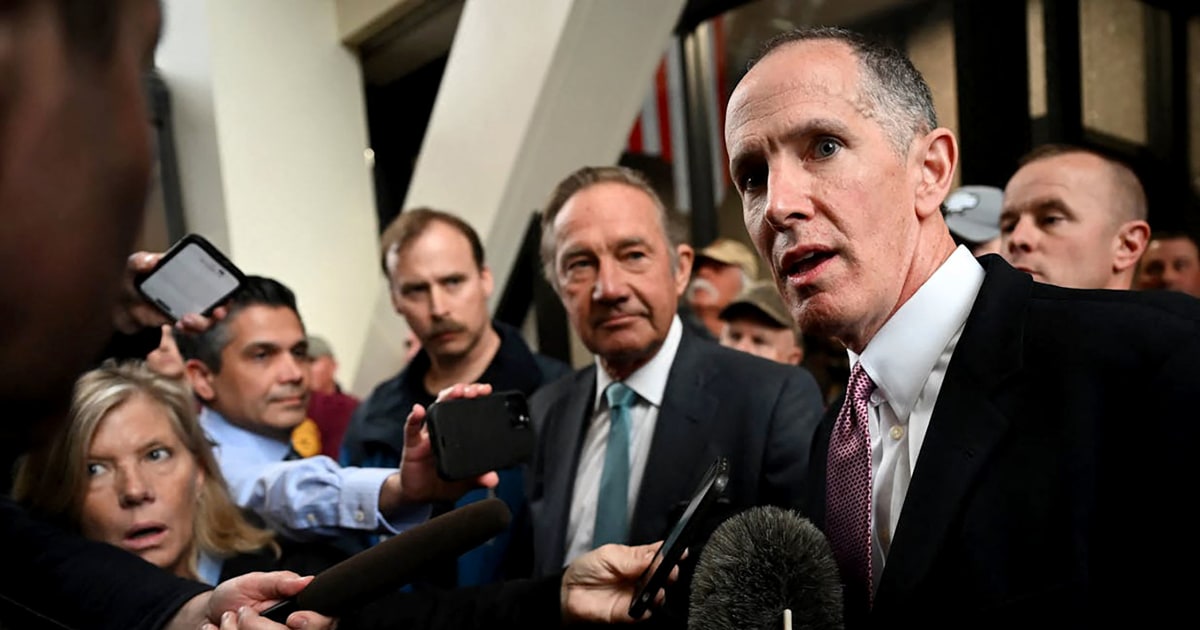
Trump Nominates Brett Matsumoto to Lead the BLS

Trump's New Pick for BLS Leadership
President Donald Trump has announced his intent to nominate Brett Matsumoto, a veteran economist with deep roots in the Bureau of Labor Statistics, to serve as its next commissioner. This move comes after a turbulent period for the agency, which has operated without a permanent leader since Trump fired previous chief Erika McEntarfer in August over a disappointing jobs report showing just 73,000 new positions and major downward revisions to prior months.[1][2][3]
Background on the Controversy
McEntarfer's dismissal followed Trump's claims of data manipulation, though no evidence supported political bias in the nonpartisan agency's releases. An earlier nominee, E.J. Antoni from the Heritage Foundation, was withdrawn amid criticism over his lack of government experience and limited research credentials. Matsumoto, a former supervisory research economist at BLS and current senior economist on the Council of Economic Advisers, brings proven expertise in data measurement, earning praise from economists for promising stability.[1][2][3]
Implications for Economic Data
Trump hailed Matsumoto as a "brilliant" figure to swiftly address longstanding BLS issues and restore trust. With the agency producing key reports on employment, inflation via the Consumer Price Index, and more, this appointment could reshape public confidence in vital economic indicators amid ongoing debates over job market accuracy.[1][3][4]
About the People Mentioned
Donald Trump
Donald John Trump, born June 14, 1946, in Queens, New York, is an American businessman, media personality, and politician. He graduated from the University of Pennsylvania’s Wharton School in 1968 with a degree in economics. In 1971, he took over his family’s real estate business, renaming it the Trump Organization, through which he expanded into building and managing skyscrapers, hotels, casinos, and golf courses. Trump gained widespread fame as the host of the reality TV show *The Apprentice* from 2004 to 2015, which helped establish his public persona as a successful entrepreneur. Trump entered politics as a Republican and was elected the 45th president of the United States, serving from 2017 to 2021. His presidency was marked by significant policy actions including tax cuts, deregulation, the appointment of three Supreme Court justices, renegotiation of trade agreements (notably replacing NAFTA with the USMCA), and a focus on immigration control including border wall expansion. He withdrew the U.S. from international agreements such as the Paris Climate Accord and the Iran nuclear deal, and engaged in a trade war with China. His administration’s response to the COVID-19 pandemic was criticized for downplaying the virus’s severity. Trump was impeached twice by the House of Representatives—first in 2019 for abuse of power and obstruction, and again in 2021 for incitement of insurrection—but was acquitted by the Senate both times. After losing the 2020 election to Joe Biden, Trump challenged the results, culminating in the January 6, 2021, Capitol riot. He remains a central figure in American politics, having won the 2024 presidential election and returned as the 47th president in 2025, continuing to promote policies aimed at economic growth, border security, and military strength[1][2][3][4].
E.J. Antoni
E.J. Antoni is an economist and public policy analyst currently serving as Chief Economist and Richard Aster Fellow at The Heritage Foundation’s Grover M. Hermann Center for the Federal Budget[4]. Born in October 1987, Antoni is 37 years old as of 2025[5]. He holds both master’s and doctoral degrees in economics from Northern Illinois University[1][3][5]. Antoni’s academic and professional work focuses primarily on fiscal and monetary policy, with a particular emphasis on issues affecting the federal budget[1][3][4]. Antoni has held several notable roles in conservative policy circles. Prior to his current position at The Heritage Foundation, he was an economist at the Texas Public Policy Foundation and has served as a senior fellow at the Committee to Unleash Prosperity, a research organization co-founded by longtime Trump advisor Stephen Moore[1][3][4]. He has also worked as an economic consultant for FreedomWorks and has taught courses in labor economics and money and banking[3][4]. Antoni is a frequent commentator in media, regularly appearing on news outlets such as Fox News, Fox Business, The Wall Street Journal, National Review, CNBC, and others[1][3][4]. He is also a daily guest on business television and podcasts, including the nationally syndicated VINCE Show, where he serves as the in-house economist[4]. Antoni’s research and commentary have been featured by a wide range of think tanks and policy institutes, and he has presented testimony before both the U.S. Congress and state legislatures[3][4]. His work is known for its focus on free-market principles, skepticism of government intervention in the economy, and critiques of federal data collection practices, particularly those of the Bureau of Labor Statistics (BLS)[2]. In 2025, Antoni was nominated to lead the BLS, a move that drew attention given his previous public criticisms of the agency’s data methodologies[2][5]. Supporters highlight his commitment to accurate, timely economic data and free enterprise, while his nomination has sparked discussion about the potential direction of federal economic statistics under his leadership[2]. Antoni remains a prominent voice in debates over U.S. economic policy, regularly contributing analysis on federal spending, inflation, labor markets, and monetary policy[1][3][4]. His current relevance is underscored by his media presence, congressional testimony, and key role at one of the nation’s leading conservative think tanks[4].
About the Organizations Mentioned
Bureau of Labor Statistics
The **Bureau of Labor Statistics (BLS)** is a pivotal federal agency within the United States Department of Labor, serving as the primary source for labor market and economic data. Established to provide unbiased, timely, and accurate information, the BLS plays a crucial role in shaping economic policies and business decisions. ## What Does the BLS Do? The BLS collects, analyzes, and publishes data on employment, unemployment, wages, inflation, productivity, and working conditions. Key reports include the **Employment Situation** (monthly jobs report), **U.S. Consumer Price Index (CPI)**, **U.S. Producer Price Index (PPI)**, and **Job Openings and Labor Turnover Survey (JOLTS)**. These reports are essential for policymakers, businesses, and the public, influencing decisions such as interest rates and wage negotiations[2][3]. ## History and Key Achievements The BLS was founded with the mission to provide "the fearless publication of the facts," a principle that guides its operations to this day. Over the years, it has expanded its scope to include a wide range of economic indicators, making significant contributions to understanding the U.S. economy. Notably, the BLS has been instrumental in defining and computing the unemployment rate, a key macroeconomic metric[5]. ## Current Status Today, the BLS continues to operate independently within the Department of Labor, maintaining its commitment to impartiality and high-quality data. It serves as a critical resource for researchers, policymakers, and businesses, providing insights into labor market trends and economic conditions[3][4]. ## Notable Aspects - **Independence and Objectivity**: The BLS is known for its independence in data collection and reporting, ensuring that its findings are free from political influence[1][3]. - **Data Impact**: BLS data impacts various sectors, including cost-of-living adjustments for Social Security recipients and business hiring strategies[2]. - **Publications and Resources
Council of Economic Advisers
The **Council of Economic Advisers (CEA)** is a key agency within the U.S. Executive Office of the President, established in 1946 by the Employment Act to provide the President with objective economic analysis and advice on both domestic and international economic policy[1][2][6]. Its core mission is to promote *maximum employment, production, and purchasing power* by offering data-driven insights that inform policy decisions[1][6]. The CEA is composed of a Chair and typically two to three additional economists, all appointed by the President, with the Chair requiring Senate confirmation[2]. Supported by a team of professional economists and staff, the Council analyzes complex economic indicators such as GDP, inflation, and unemployment to forecast economic trends and assess the impacts of proposed legislation or executive actions[1][4]. A fundamental output of the CEA is the **annual Economic Report of the President**, a comprehensive publication reviewing the previous year’s economic performance and outlining policy goals aligned with the administration’s agenda[2][3]. This report relies on authoritative data from sources like the Bureau of Economic Analysis and Bureau of Labor Statistics, making it a vital resource for policymakers, economists, and the public[2]. Historically, the CEA’s formation was rooted in post-World War II concerns about returning to economic depression, aiming to institutionalize Keynesian fiscal policy principles to maintain economic stability and growth[6]. Early internal disagreements about the Council’s role reflected differing views on whether it should be strictly impartial or politically engaged, but over time it has become an indispensable part of the policy process. The CEA not only advises the President directly but also participates in inter-agency deliberations, shaping economic policy proposals and public understanding through briefings, memos, and media engagement[4][5]. It often acts as a safeguard against poorly conceived policies by evaluating potential unintended consequences[8]. Notably, the CEA has been a training ground for prominent economists, including Nobel laureates like Paul Kru
Heritage Foundation
The Heritage Foundation is a prominent conservative think tank based in Washington, D.C., founded in 1973 by Edwin Feulner and Paul Weyrich. Its mission is to develop and promote conservative public policies rooted in principles such as free enterprise, limited government, individual freedom, traditional American values, and a strong national defense[1][3][9]. The organization seeks to empower the American people by advocating for policies that return power from government to individuals, rather than advancing special interests or political parties[1]. Throughout its history, particularly during the Reagan administration, the Heritage Foundation has played a pivotal role in shaping U.S. policy. Its influential publication, *Mandate for Leadership* (1981), provided a comprehensive conservative agenda that guided many Reagan-era reforms, including defense initiatives like the Strategic Defense Initiative and withdrawal from the Anti-Ballistic Missile Treaty[2][3][9]. Other key achievements include contributing to the 1996 welfare reform that reduced child poverty and expanded employment, as well as advancing school choice policies via education savings accounts across multiple states[2]. Today, the Heritage Foundation remains a leading force in conservative policy advocacy, with over 100 experts working on complex issues such as economic freedom, national security, education, and technology regulation. The organization emphasizes research independence and integrity, ensuring its policy recommendations are based solely on its mission without undue donor influence[8]. It also engages in activism through its sister group Heritage Action and media outreach via The Daily Signal[2]. Currently, the Foundation is driving Project 2025, a comprehensive blueprint aimed at reshaping the federal government under a future conservative administration. This project includes appointing ideologically aligned officials, restricting abortion access, transforming federal agencies, imposing strict immigration policies, and countering challenges from China and Big Tech[3][9]. Notably influential in business and technology policy debates, the Heritage Foundation continues to advocate for limited government intervention, market-driven solutions, and strong national defense, positioning itself as a key player i