Trump's Bold Promises: One Year In
Trump's Bold Promises: One Year In
A year into his second term, President Donald Trump has delivered on several jaw-dropping campaign pledges, transforming America's landscape. From border walls to economic booms, his aggressive executive actions—over 225 signed—have reshaped policy at record speed. Yet some ambitious ideas linger amid legal battles and global shifts.
Key Wins Across Borders and Economy
Immigration triumphs shine brightest: illegal crossings plummeted 92%, with 37,660 deportations in month one and Tren de Aragua leaders expelled under the Alien Enemies Act. Economically, tariffs raked in $200 billion, fueling job surges—687,000 private sector roles—and stock records. Foreign policy feats include ceasefires in India-Pakistan and Israel-Iran, plus NATO's 5% GDP defense hike. Bureaucracy shrank via DOGE, with mass layoffs and DEI program cuts saving billions.
Promises Fulfilled, Stalled, and Brewing
Not all dazzlers materialized—like Qatar's Air Force One gift, overshadowed by military deals with India. Education shifted to states, EV mandates vanished, and AI investments topped $1 trillion. Approval hit 53%, with 70% promises kept, though mass deportations and gold cards face hurdles. Trump's term proves bold visions can ignite real change.
About the People Mentioned
Donald Trump
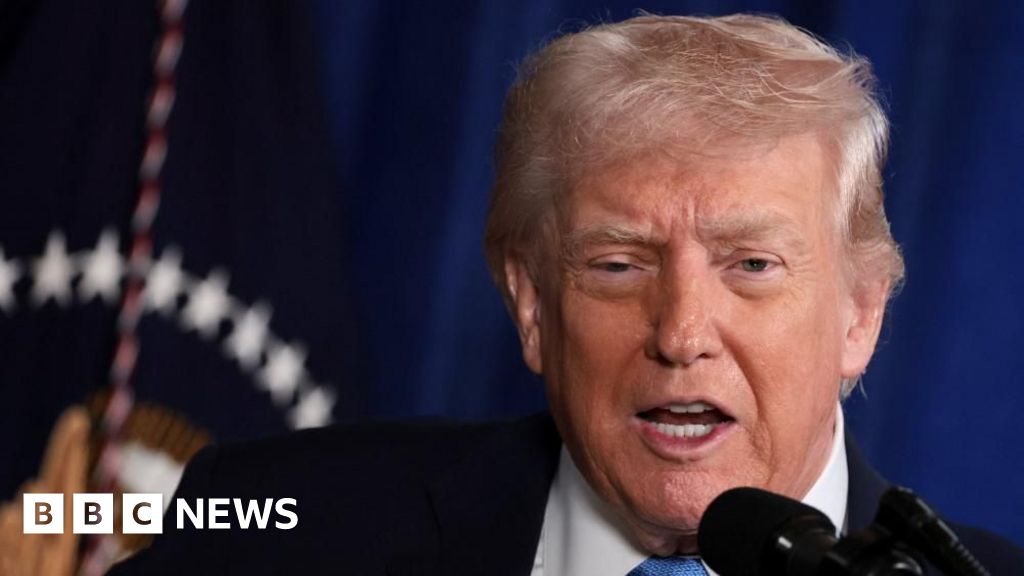
Donald John Trump, born June 14, 1946, in Queens, New York, is an American businessman, media personality, and politician. He graduated from the University of Pennsylvania’s Wharton School in 1968 with a degree in economics. In 1971, he took over his family’s real estate business, renaming it the Trump Organization, through which he expanded into building and managing skyscrapers, hotels, casinos, and golf courses. Trump gained widespread fame as the host of the reality TV show *The Apprentice* from 2004 to 2015, which helped establish his public persona as a successful entrepreneur. Trump entered politics as a Republican and was elected the 45th president of the United States, serving from 2017 to 2021. His presidency was marked by significant policy actions including tax cuts, deregulation, the appointment of three Supreme Court justices, renegotiation of trade agreements (notably replacing NAFTA with the USMCA), and a focus on immigration control including border wall expansion. He withdrew the U.S. from international agreements such as the Paris Climate Accord and the Iran nuclear deal, and engaged in a trade war with China. His administration’s response to the COVID-19 pandemic was criticized for downplaying the virus’s severity. Trump was impeached twice by the House of Representatives—first in 2019 for abuse of power and obstruction, and again in 2021 for incitement of insurrection—but was acquitted by the Senate both times. After losing the 2020 election to Joe Biden, Trump challenged the results, culminating in the January 6, 2021, Capitol riot. He remains a central figure in American politics, having won the 2024 presidential election and returned as the 47th president in 2025, continuing to promote policies aimed at economic growth, border security, and military strength[1][2][3][4].
About the Organizations Mentioned
NATO
The **North Atlantic Treaty Organization (NATO)** is a transatlantic military alliance founded in 1949 to secure peace in Europe and protect democratic nations from Soviet aggression. It began with 12 founding members and has expanded to include 32 countries across North America and Europe as of 2025, including recent additions Finland (2023) and Sweden (2024)[1][3]. NATO's core principle is collective defense, meaning an attack against one ally is considered an attack against all, enshrined in Article 5 of its founding treaty[3]. Originally established as a Cold War bulwark, NATO has evolved beyond its initial Euro-Atlantic focus, engaging in missions worldwide, such as in Afghanistan and Libya[1]. The alliance remains central to U.S.-Europe military cooperation and has adapted to new security challenges, particularly Russia’s 2022 invasion of Ukraine, which has significantly reshaped NATO’s priorities. This aggression has spurred increased defense spending, stronger collective deterrence efforts, and accelerated Ukraine’s path toward potential membership[1][4]. In June 2025, NATO held its first summit in the Netherlands, where leaders agreed on raising defense spending targets to 5% of GDP—split between 3.5% for core defense and 1.5% for related security costs, including support for Ukraine. This marked a historic commitment to bolster the alliance’s military capabilities amid evolving global threats. The summit also emphasized eliminating defense trade barriers and reaffirmed the ironclad commitment to collective defense[2][5]. NATO’s ongoing significance lies in its role as a strategic security platform fostering cooperation among member states, responding to geopolitical instability, and adapting to emerging threats like terrorism and cyber warfare[4]. Its "open door" policy continues to invite eligible European democracies to join, reinforcing its mission to safeguard peace, democracy, and shared technological and defense innovations across allied nations[1][4].
Tren de Aragua
**Tren de Aragua** is a transnational criminal organization originating from Venezuela, primarily involved in drug trafficking, racketeering, sex trafficking, robbery, and firearms offenses. It is led by Héctor Rusthenford Guerrero Flores, known as "Niño Guerrero," who has been involved in criminal activities for over two decades[1][2][4]. The gang's origins trace back to the Tocorón prison (Aragua Penitentiary Center) in Venezuela, which served as its *de facto* headquarters. Despite Venezuelan security forces retaking this prison in 2023, the leadership managed to escape, allowing the organization to expand significantly. This expansion has been fueled by the mass migration of Venezuelans fleeing political and economic instability under President Nicolás Maduro’s regime, spreading Tren de Aragua's influence throughout Latin America and into the United States[1]. Tren de Aragua has become a major security concern internationally. For example, in Peru, the gang's presence in Lima led to xenophobic tensions against Venezuelan migrants. The gang's "Los Gallegos" chapter issued threats against Peruvians supporting xenophobia, escalating violence in local communities. In 2023 alone, authorities arrested at least 183 suspected members in Peru[1]. Recognizing the threat posed by Tren de Aragua, the U.S. government designated it as a Foreign Terrorist Organization in February 2025, following an executive order signed by former President Donald Trump. This designation enables the U.S. Treasury Department’s Office of Foreign Assets Control (OFAC) to freeze and block the gang’s assets in the United States and prohibit transactions with U.S. persons. Additionally, the U.S. has taken legal action against multiple members for their criminal activities, highlighting the ongoing effort to dismantle this organization[1][2][3][4]. Notable aspects of Tren de Aragua include its prison-based origins, transnational reach, and its role in exacer