U.S. Imposes Sanctions on U.N. Official Investigating Israel over Gaza

U.S. Imposes Sanctions on U.N. Official Investigating Israel over Gaza
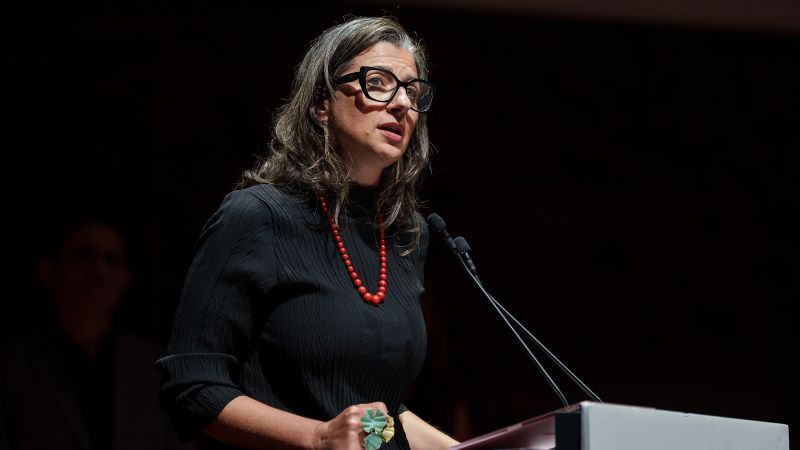
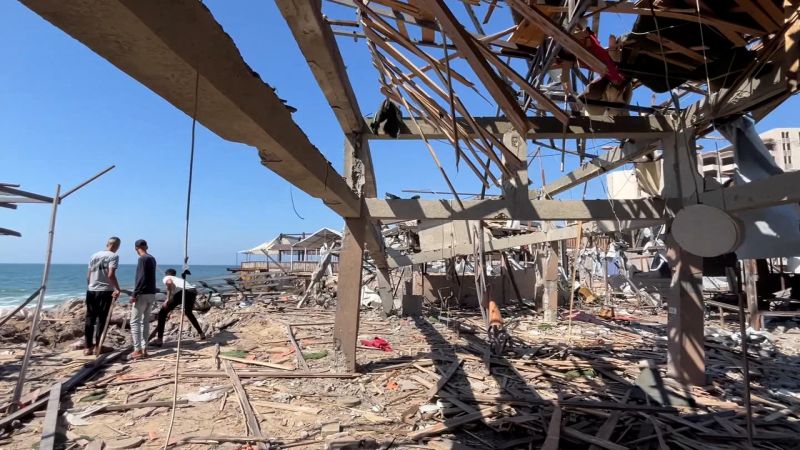
In a move that has sparked controversy and debate, the United States has imposed sanctions on Francesca Albanese, a lawyer and independent U.N. official for human rights in Gaza and the West Bank. Albanese has been outspoken in her criticism of Israel's actions in Gaza, describing the ongoing conflict as nothing short of "genocide." These sanctions come at a time when tensions between the U.S. and the U.N. have been strained, with the U.S. recently pulling out of the U.N. Human Rights Council. The decision to impose sanctions on Albanese has only added fuel to the fire, raising questions about the role of the U.N. in international conflicts.
About the People Mentioned
Francesca Albanese
Francesca Albanese is an Italian international lawyer and human rights expert specializing in the Middle East, born in 1977 in Ariano Irpino.[1][3] She has over two decades of experience, including a decade with UN agencies such as the Office of the UN High Commissioner for Human Rights in Geneva, the UN Relief and Works Agency for Palestine Refugees (UNRWA) in Jerusalem, and the UN Development Programme in Morocco.[1][2][3] Albanese served as a human rights officer and advisor on issues affecting refugees, migrants, and vulnerable groups across the Middle East, North Africa, and Asia-Pacific regions.[1] From 2013 to 2015, she worked with Project Concern International in Washington on protection during the West Africa Ebola outbreak.[2] She later became an affiliate scholar at Georgetown University's Institute for the Study of International Migration and has taught at universities in Europe and the Middle East.[2] Albanese co-authored books including *Palestinian Refugees in International Law* (2020) and *J’Accuse* (2024), and co-founded the Global Network on the Question of Palestine.[3] In May 2022, she was appointed UN Special Rapporteur on human rights in the Palestinian territories occupied since 1967, becoming the first woman and second Italian in the role.[1][8] Her reports have criticized Israel's occupation as "settler-colonial" and "apartheid," recommending UN member states develop plans to end it.[1] Following the October 2023 Hamas attacks and Israel's Gaza operations, she called for ceasefires, warned of ethnic cleansing risks, and reported to the UN Human Rights Council in March 2024 that Israel's actions amounted to genocide, citing mass killings and infrastructure destruction.[1][3][7] Her mandate has drawn controversy: past comments on the "Jewish lobby" in the US (later regretted) and justifications of Palestinian resistance sparked criticism for antisemitism and bias from groups like the ADL.[1][4] In recent events, the US sanctioned her for her scrutiny of abuses in Palestinian territories, a move condemned by UN High Commissioner Volker Türk; the Trump administration also called for her removal.[2][3] She was nominated for the 2026 Nobel Peace Prize and spoke at Princeton in October 2024.[5][6] Albanese remains active, with her latest report in October 2024 framing Gaza events as "genocide as colonial erasure."[7]
About the Organizations Mentioned
U.S.
The term "U.S." typically refers to the United States government, a complex federal organization established by the Constitution to govern the country through three branches: legislative, executive, and judicial. This separation of powers ensures a system of checks and balances to prevent any one branch from gaining too much control[1][3][8]. **What the U.S. government does:** The government is responsible for creating and enforcing laws, conducting foreign policy, managing national defense, administering justice, and providing public services across diverse sectors including health, education, and infrastructure. It operates through multiple agencies and departments that implement policies and programs affecting citizens’ daily lives[3][6]. **History:** Founded in 1789, the U.S. government’s structure is rooted in the Constitution, which created a federal system balancing power between national and state authorities. Over more than two centuries, it has evolved to meet changing political, social, and technological challenges, exemplified by the enduring publication of the *United States Government Manual* since the New Deal era[3][9]. **Key achievements:** The U.S. government has played a critical role in shaping global democracy, promoting civil rights, pioneering technological innovation, and fostering economic growth. Landmark legislation and executive actions have addressed healthcare reform, environmental protection, and technological advancement. Recent administrations continue to impact sectors like technology, health, and taxation through executive orders and budget reconciliation processes[4][5]. **Current status:** As of 2025, the U.S. government remains a vast and multifaceted institution with approximately thousands of state and local government units documented by the Census Bureau, reflecting its scale and complexity[2]. Contemporary challenges include adapting governance to rapid technological changes, maintaining public trust, and managing policy across federal and state lines. **Notable aspects:** The government’s commitment to transparency is demonstrated through publicly accessible resources like the *Government Manual* and detailed organizational charts. Its federal structure facilitates responsive governance while balancing power through constitutional check
United Nations
The United Nations (UN) is a pivotal international organization established in 1945, following the devastation of World War II, with the primary goal of maintaining global peace and security, fostering international cooperation, and promoting social progress. The UN Charter, signed by 51 founding member states, including the United States, the United Kingdom, China, and the Soviet Union, laid the foundation for this ambitious endeavor[1][3]. ## History and Structure The UN was born out of the failures of its predecessor, the League of Nations, which failed to prevent World War II. Key planning meetings, such as the Dumbarton Oaks Conference in 1944, defined the UN's structure, which includes the General Assembly, the Security Council, the Economic and Social Council, the Trusteeship Council, the International Court of Justice, and the Secretariat[1][6]. The Security Council, with five permanent members (the United States, China, France, Russia, and the United Kingdom), holds significant influence due to its veto power[2]. ## Key Achievements Over the years, the UN has played a crucial role in conflict resolution, human rights advocacy, and sustainable development. Notable achievements include the establishment of the Universal Declaration of Human Rights in 1948 and the implementation of numerous peacekeeping missions worldwide[3][4]. The UN has also been instrumental in addressing global challenges such as climate change and pandemics through its various programs and agencies. ## Current Status Today, the UN comprises 193 member states, with its most recent addition being South Sudan in 2011[5]. The organization continues to evolve, addressing emerging issues like digital governance and cybersecurity. Despite challenges, the UN remains a cornerstone of international diplomacy and cooperation. ## Notable Aspects The UN's work is not limited to politics; it also impacts business and technology through initiatives that promote sustainable development and digital inclusion. Its role in setting global standards and fostering international cooperation makes it a significant player in shaping the
U.N. Human Rights Council
The **United Nations Human Rights Council (UNHRC)** is the principal intergovernmental body within the UN system responsible for promoting and protecting human rights worldwide. Established on March 15, 2006, by UN General Assembly Resolution 60/251, it replaced the discredited UN Commission on Human Rights to address politicization issues and strengthen human rights oversight[3][5][6]. The Council is headquartered at the United Nations Office in Geneva, Switzerland, and comprises 47 member states elected for staggered three-year terms based on regional groupings[3][6]. The UNHRC functions as a multilateral forum where UN member states, independent experts, civil society, and the Office of the High Commissioner for Human Rights (OHCHR) convene three times annually to discuss a broad spectrum of human rights issues, including political, civil, economic, social, and cultural rights[4][7]. A key innovation is the **Universal Periodic Review (UPR)**, a cooperative, state-driven process that examines the human rights records of all 193 UN member states every four years, effectively serving as a global human rights "report card"[4][5]. This mechanism encourages states to improve compliance with international human rights standards. The Council also deploys fact-finding missions and commissions of inquiry to investigate serious human rights violations in specific countries or thematic areas such as racial justice and law enforcement[4][7]. It appoints independent experts, known as Special Rapporteurs, to monitor, report, and advise on human rights situations worldwide[4][7]. These independent experts operate without UN remuneration, providing impartial oversight and acting as the Council’s “eyes and ears” on the ground. Despite criticisms about geopolitical influences and the membership of some countries with poor human rights records, the UNHRC’s strength lies in its visibility, agenda-setting power, and ability to mandate substantive investigations[8]. It works closely with the OHCHR, which serves as the operational arm b