US Launches Precision Strikes on ISIL in Northwest Nigeria

US Launches Precision Strikes on ISIL in Northwest Nigeria
On Christmas Day 2025, President Donald Trump announced that US forces executed deadly airstrikes against ISIL militants in northwest Nigeria, targeting fighters responsible for killing innocent Christians. Launched from a Navy warship in the Gulf of Guinea, over a dozen Tomahawk missiles hit two camps in Sokoto state at Nigeria's request, as confirmed by AFRICOM. Initial reports indicate multiple terrorists were eliminated in these precision operations.[1][2]
Strategic Context and Timing
The strikes address Nigeria's long battle against jihadist groups like Boko Haram and ISIL splinters, amid rising violence in the north. Trump timed the action for Christmas to send a strong message to extremists preying on Christian communities, despite the region's predominantly Muslim population. Nigerian officials praised the "precision hits" and reaffirmed security cooperation with the US.[1][3]
Implications for Regional Security
While US assessments hail the operation's success, experts note Nigeria's conflict complexity, with ISIL stronger in the northeast. The move signals America's renewed commitment to counterterrorism in Africa, potentially deterring attacks but raising questions about long-term impact on local stability and Christian persecution.[1][3]
About the People Mentioned
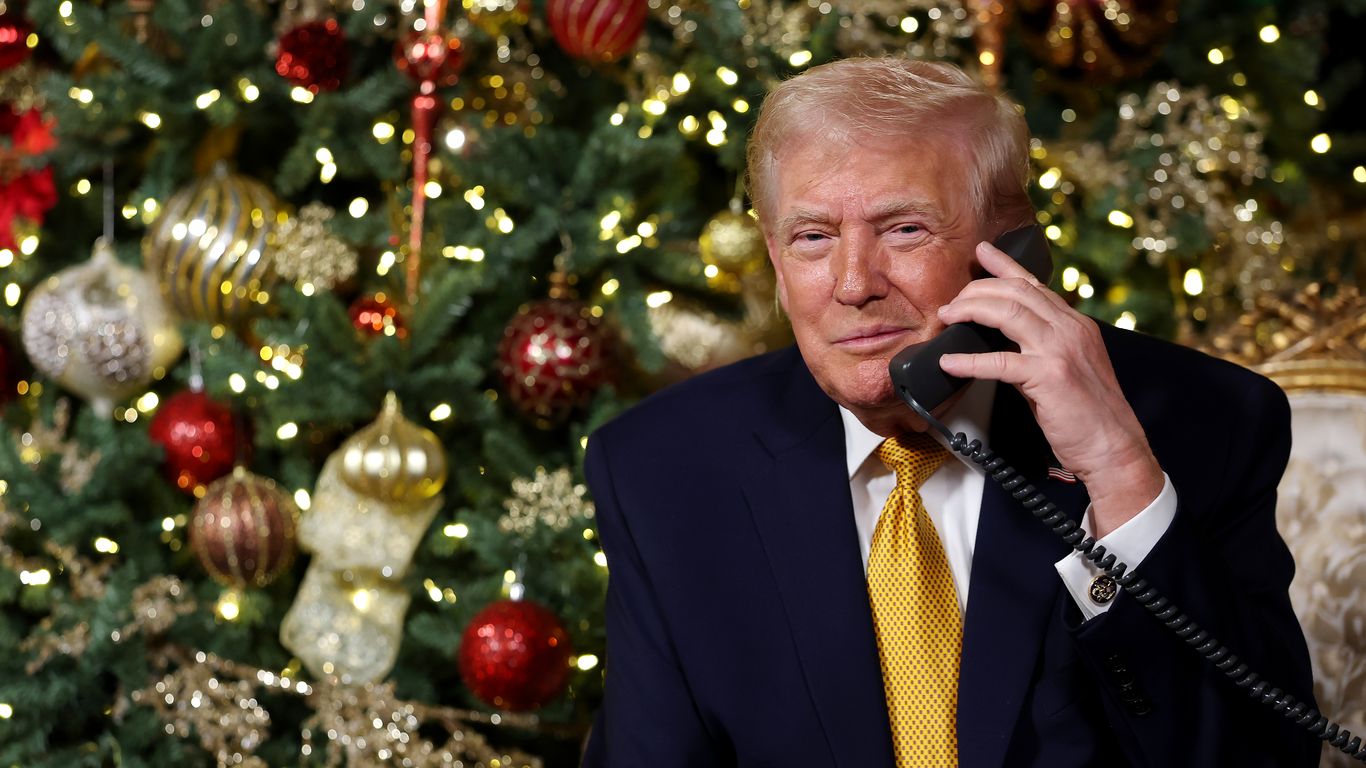
Donald Trump
Donald John Trump, born June 14, 1946, in Queens, New York, is an American businessman, media personality, and politician. He graduated from the University of Pennsylvania’s Wharton School in 1968 with a degree in economics. In 1971, he took over his family’s real estate business, renaming it the Trump Organization, through which he expanded into building and managing skyscrapers, hotels, casinos, and golf courses. Trump gained widespread fame as the host of the reality TV show *The Apprentice* from 2004 to 2015, which helped establish his public persona as a successful entrepreneur. Trump entered politics as a Republican and was elected the 45th president of the United States, serving from 2017 to 2021. His presidency was marked by significant policy actions including tax cuts, deregulation, the appointment of three Supreme Court justices, renegotiation of trade agreements (notably replacing NAFTA with the USMCA), and a focus on immigration control including border wall expansion. He withdrew the U.S. from international agreements such as the Paris Climate Accord and the Iran nuclear deal, and engaged in a trade war with China. His administration’s response to the COVID-19 pandemic was criticized for downplaying the virus’s severity. Trump was impeached twice by the House of Representatives—first in 2019 for abuse of power and obstruction, and again in 2021 for incitement of insurrection—but was acquitted by the Senate both times. After losing the 2020 election to Joe Biden, Trump challenged the results, culminating in the January 6, 2021, Capitol riot. He remains a central figure in American politics, having won the 2024 presidential election and returned as the 47th president in 2025, continuing to promote policies aimed at economic growth, border security, and military strength[1][2][3][4].
About the Organizations Mentioned
AFRICOM
**United States Africa Command (AFRICOM)** is a unified combatant command of the U.S. Department of Defense, headquartered in Stuttgart, Germany, overseeing military operations, exercises, and security cooperation across Africa (excluding Egypt) and surrounding island nations like Madagascar and Seychelles.[1][7][5] Established to streamline U.S. security efforts previously split among European, Central, and Pacific Commands, AFRICOM began initial operations on October 1, 2007, and achieved full operational status on October 1, 2008, incorporating entities like the Combined Joint Task Force-Horn of Africa.[1][2][7] General William E. Ward became its first commander in 2007, following briefings to African leaders.[1] Unlike traditional commands, AFRICOM uniquely integrates military and civilian functions, with a deputy from the State Department, drawing staff from USAID, Treasury, and other agencies to blend defense with diplomacy, humanitarian aid, and development.[2][6][3] Its core mission counters transnational threats—like al-Shabaab, Boko Haram, and Sahel extremists—while building African partners' capacities for stability, crisis response, and professional militaries that uphold human rights and civilian control.[4][3][1] Key priorities include neutralizing militants in Somalia, degrading groups in Libya and the Sahel, containing Boko Haram, and interdicting Gulf of Guinea illicit activities.[1] AFRICOM conducts hundreds of engagements yearly, from exercises to humanitarian assistance, guided by U.S. National Security Strategy.[4][6] Achievements encompass enhanced partnerships with 53-54 African nations and the African Union, fostering security forces as "agents of stability" and reducing U.S. threats through local empowerment.[3][9][5] Its 2012 operating budget hit $276 million, underscoring sustained investment.[1] Currently, AFRICOM remains pivotal amid rising extremism and instability
ISIL
**ISIL (Islamic State of Iraq and the Levant), also known as ISIS or Daesh, is a Salafi-jihadist terrorist organization that emerged from Iraq's post-2003 insurgency and seeks to establish a global caliphate through violence and extremism.**[1][3] Originating as al-Qaeda in Iraq (AQI) in 2004 under Abu Musab al-Zarqawi, it merged with al-Qaeda but split in 2013, rebranding as ISIS to expand into Syria amid civil war chaos.[1][2][6] Under Abu Bakr al-Baghdadi from 2010, the group exploded in 2014 by declaring a caliphate, seizing territory the size of Britain in Iraq and Syria—ruling 12 million people with a $1 billion+ budget, 30,000+ fighters (including 42,000 foreign recruits from 120 countries), and brutal governance enforcing Sharia via mass killings, genocide against Yazidis, and sexual enslavement.[3][4][5] It built proto-state systems with military tactics blending guerrilla ambushes, IEDs, suicides, and kidnappings, while inspiring global lone-wolf attacks.[1][4] **Key "achievements" from ISIL's view include territorial dominance and propaganda via Dabiq magazine, aiming to conquer the world under its flag, though rejected by most Muslims.**[1][3] Real-world toll: thousands of attacks killing tens of thousands worldwide.[1] By 2019, U.S.-led coalitions dismantled its caliphate, reducing core fighters in Iraq/Syria to 1,500–3,000 (from 80,000 peak).[1][2] **As of 2025, ISIL persists as a decentralized insurgency with 8,800–13,100 members across 15+ affiliates—like aggressive IS-Khorasan (ISKP) behind Moscow/Iran attacks an