Board of Peace: Countries Joined and Membership Details
#politics #international_relations #diplomacy #board_of_peace #countries
About the People Mentioned
Perplexity
**Perplexity AI** is an American software company founded in August 2022 by engineers Aravind Srinivas (CEO), Denis Yarats (CTO), Johnny Ho (Chief Strategy Officer), and Andy Konwinski, specializing in an AI-powered web search engine that delivers synthesized responses with real-time citations from internet sources.[1][2][3] The founders drew from experiences at OpenAI, Meta, Quora, and Databricks to address limitations in traditional search and early AI chatbots like ChatGPT, which often lacked verifiable sources.[1][2][3] Perplexity launched its flagship conversational "answer engine" on December 7, 2022, initially as a free public beta using OpenAI's GPT-3.5 and Microsoft Bing, later incorporating proprietary models based on Mistral-7B and LLaMA-2.[1][2][4] It pivoted from an earlier tool, Bird SQL, after Twitter's API changes in February 2023, focusing on direct answers over links.[1][2] Key achievements include rapid growth: 2 million monthly active users by March 2023, 10 million by January 2024, and 780 million queries processed monthly by 2025.[1][2][5] Funding milestones propelled valuations from $1 billion in April 2024 (after $165 million raised) to $14 billion in June 2025 ($500 million round), reaching $20 billion by September 2025.[3] Backed by investors like Jeff Bezos, Nvidia, and Shopify's Tobi Lutke, it introduced mobile apps, a Pro subscription, Chrome extension, and a publishers' revenue-sharing program in July 2024.[1][3][4] Recent events underscore ambition: In January 2025, Perplexity proposed merging with TikTok's U.S. operations ahead of a ban; in August 2025, it bid $34.5 billion for Google Chrome to address antitrust issues.[3] Today, Perplexity remains a leading AI search disruptor, blending LLMs like GPT-4, Claude, and Mistral for personalized, ad-free research, challenging Google with over 10 million users and unicorn status in under two years.[2][3][4][5] (Word count: 298)
About the Organizations Mentioned
Board of Peace
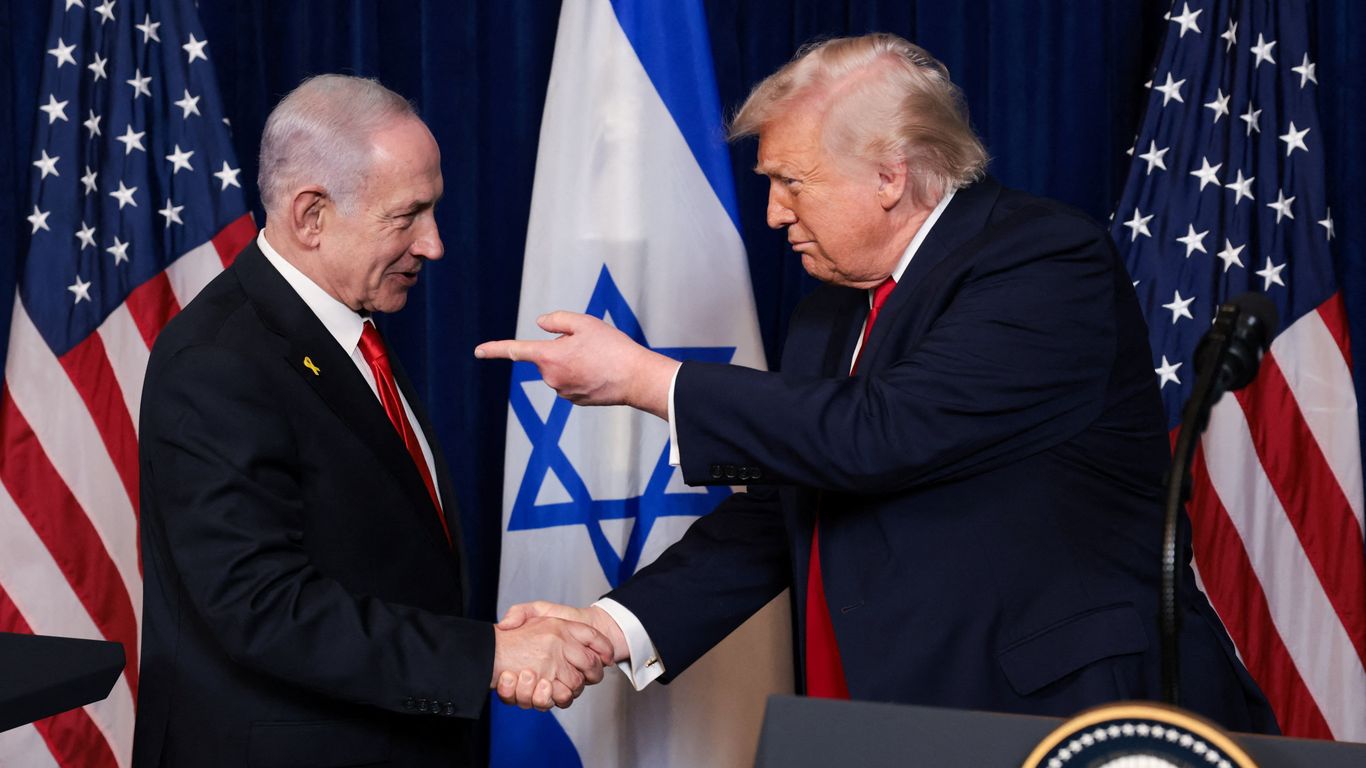
The **Board of Peace** is an international oversight body established as part of former U.S. President Donald Trump's Gaza peace plan introduced in 2025. Its primary role is to set the framework and monitor funding for the redevelopment and stabilization of Gaza following ongoing conflict. The Board operates under an international mandate to oversee transitional governance, security stabilization, and funding distribution in Gaza, aiming to facilitate a peaceful transition from war to stable civil administration[1]. Historically, the Board of Peace emerged within the broader context of multilateral efforts to resolve the Israeli-Palestinian conflict, which has seen numerous peace initiatives since the 1970s. Trump's Gaza peace plan represents a contemporary attempt to address both humanitarian and security challenges in Gaza by deploying an International Stabilization Force (ISF) and transitioning Gaza's governance to a temporary technocratic, apolitical Palestinian committee under the Board’s supervision[1][2]. One of the Board’s notable features is its international composition and leadership, with Trump serving as chair and former British Prime Minister Tony Blair holding a central, though undefined, role. This structure underscores the plan’s emphasis on neutral and technocratic governance, attempting to separate political factions like Hamas from administrative control in Gaza. The Board also coordinates demilitarization efforts via an independent monitoring group tasked with dismantling military infrastructure and implementing weapons buy-back programs—measures that face resistance from Hamas[1]. While the Board of Peace has been pivotal in stabilizing Gaza’s immediate post-conflict phase, sources indicate that the overall peace settlement remains incomplete and contingent on credible governance structures and broader political agreements[3]. The organization’s current status involves overseeing redevelopment funding and working alongside Palestinian authorities undergoing reform to enable governance of the Gaza Strip[1]. In essence, the Board of Peace represents a novel international governance model blending diplomacy, security, and reconstruction efforts aimed at fostering lasting peace and stability in a historically volatile region, garnering significant attention in business and technology circles for its ambitious, tech-enabled governanc