Tensions Spike: Saudi Strike on UAE Weapons at Yemen Port

Tensions Spike: Saudi Strike on UAE Weapons at Yemen Port
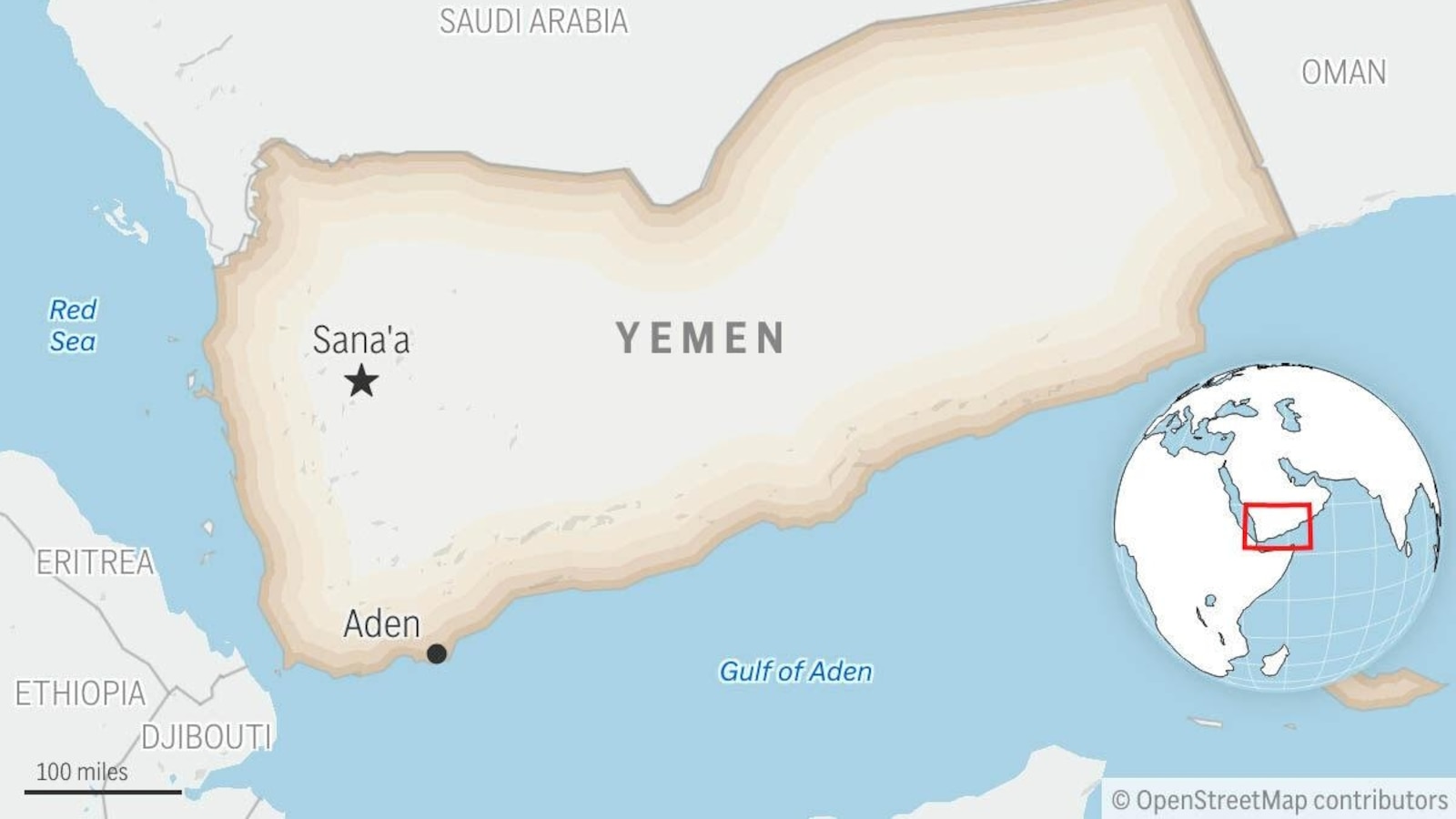
Saudi Arabia's airstrike on Mukalla port in Yemen has ignited unprecedented friction between Riyadh and Abu Dhabi, two key Gulf allies long united against Houthi rebels. Targeting an alleged UAE weapons shipment to separatist Southern Transitional Council forces, the December 30 attack marks a bold escalation in their rivalry over Yemen's fractured landscape.[1][2]
Deepening Fractures in the Coalition
Riyadh labeled the shipment "highly dangerous," prompting Yemen's government to declare a state of emergency, cancel its security pact with the UAE, and demand Emirati withdrawal within 24 hours. Aerial footage from the Saudi-led coalition shows precision strikes on military vehicles, with no reported casualties or port damage. The UAE vehemently denies involvement, exposing cracks in the decade-long anti-Houthi partnership.[1][2]
Implications for Regional Stability
This incident strains Saudi-UAE ties, as both back competing Yemeni factions amid the Iranian-backed Houthi war. Saudi demands for Abu Dhabi to halt military and financial support signal ticking tensions that could destabilize the Gulf, prolong Yemen's conflict, and invite broader proxy escalations.[1][2]
About the Organizations Mentioned
Saudi-led coalition
## Overview of the Saudi-led Coalition The **Saudi-led coalition** is a multinational military alliance formed in March 2015, spearheaded by Saudi Arabia and the United Arab Emirates (UAE), in response to the ousting of Yemeni President Abdrabbuh Mansur Hadi by Houthi rebels[1][3]. The coalition’s core mission was to restore Hadi’s government, counter the advance of the Houthi movement (which it viewed as an Iranian proxy), and stabilize Yemen amid escalating civil war[1][2][3]. At its inception, the coalition included nine to ten Arab states and received logistical and intelligence support from the United States and other Western allies[1][3]. ## History and Operations The intervention began with **Operation Decisive Storm**, a massive air campaign targeting Houthi positions and Yemen’s military infrastructure, followed by a land, sea, and air blockade to enforce a UN arms embargo[1][3]. Ground forces, including Saudi, Emirati, and Sudanese troops, were later deployed to support Yemeni resistance fighters[1]. The coalition retook key cities like Aden and Mukalla, and trained southern Yemeni militias that later formed the Southern Transitional Council[1]. Despite these efforts, the conflict quickly became a protracted proxy war between Saudi Arabia and Iran, with devastating humanitarian consequences[3][7]. ## Key Achievements and Challenges The coalition’s most notable achievement was halting the Houthi-Saleh alliance’s territorial expansion, particularly their advance into southern Yemen[2]. However, the intervention failed to decisively defeat the Houthis or restore the Yemeni government’s authority over the entire country[2]. The war caused widespread destruction, thousands of civilian casualties, and one of the world’s worst humanitarian crises, displacing millions and crippling Yemen’s infrastructure[7]. The coalition’s blockade and airstrikes drew international criticism for
Southern Transitional Council
The **Southern Transitional Council (STC)** is a UAE-backed secessionist organization founded in May 2017 by Aydarus al-Zubaydi to champion South Yemen's independence from the north, addressing decades of marginalization since the 1990 unification.[1][2][4] Emerging from the Southern Movement amid Yemen's civil war, it unites southern political, military, and social leaders to restore the former People's Democratic Republic of Yemen through self-determination, democratic governance, and stability.[1][4] **Key activities** include commanding the Southern Armed Forces, securing territory in Abyan, Hadramawt, and other southern provinces, and countering extremists like AQAP and IS-Yemen, positioning STC as the region's most effective indigenous anti-terror force despite resource constraints.[2][3][5] It advocates internationally via offices in the US and UN, fostering ties with policymakers, diaspora communities, and think tanks to promote southern rights and maritime security in the strategic Bab al-Mandab strait.[1][3] **Achievements** highlight its rapid ascent: the 2019 Riyadh Agreement granted STC ministries like Defense and Interior; it joined the Presidential Leadership Council (PLC) in April 2022, gaining formal political stake while retaining military autonomy; and by late 2025, it seized bases, checkpoints, and oil fields, launching operations like "Promising Future" in Hadramawt to stabilize areas and harness hydrocarbon revenues.[2][3][4][6] In May 2023, Zubaydi formed a Supreme Executive Leadership, integrating PLC ministers and Giants Brigades commanders to consolidate southern influence.[2] **Currently**, as of late 2025, STC controls swaths of the south, monitors Houthi threats, and rejects northern overreach, though its UAE dependency and rivalries within the Southern Movement limit broader consensus.[3][5][6] With the PLC stalled b
Yemen government
The **Yemen government**, formally the Internationally Recognized Government (IRG), serves as the executive authority committed to restoring national unity, combating Houthi rebels, and advancing peace under frameworks like UN Security Council Resolution 2216, the GCC Initiative, and National Dialogue Conference outcomes[2][3][4]. Established through Yemen's 1990 unification of North and South Yemen, the government evolved into a presidential system dominated by the General People's Congress party, with a president, prime minister, and 301-seat Assembly of Representatives[2]. The 2014 Houthi seizure of Sana’a triggered civil war, prompting Saudi-led intervention in 2015 to back the IRG. In April 2022, President Abdrabbuh Mansur Hadi transferred power to the eight-member **Presidential Leadership Council (PLC)**, chaired by Rashad al-Alimi, aiming to unify anti-Houthi factions including military leaders like Tariq Saleh and Southern Transitional Council (STC) head Aidarus al-Zubaydi[1][2][3]. Key achievements include a 2022 power-sharing cabinet with STC representation, a UN-mediated truce, and 2023 commitments to nationwide ceasefires[3]. The PLC renewed UN sanctions via Resolution 2801 in November 2025, targeting arms flows and enhancing maritime enforcement until 2026[4]. As of early 2026, the IRG controls limited southern territories amid stalled reforms and intra-coalition tensions over unity versus southern secession[1][3][5]. Prime Minister Salem Saleh bin Braik leads since May 2025, but separatist advances by UAE-backed STC prompted emergency declarations and pact cancellations[2][6]. Priorities for 2026 focus on capacity-building in the Central Bank, Defense Ministry, and judiciary to bolster strategic institutions[1]. No central authority governs fully, with pervasive insecurity and humanitarian crises persisting
Houthi rebels
The **Houthis**, officially **Ansar Allah**, are a Zaydi Shia Islamist political and military organization originating in Yemen's 1990s, led by the al-Houthi family and rooted in opposition to corruption, Saudi influence, and U.S.-Israeli policies.[1][3] Emerging under Hussein al-Houthi, they adopted Hezbollah-inspired slogans like "Death to America, Death to Israel" and clashed with Yemen's government from 2004, expanding during the 2011 revolution.[1][2] **Key achievements** include seizing Sanaa in 2014 with ex-President Saleh's aid, controlling northern Yemen by 2016, and forming a rival governance council despite rejecting UN peace deals.[1][3][4] Their advances reached Marib and Aden in 2015 before Saudi-led pushback stabilized frontlines.[4] Portrayed as defenders against foreign aggression and marginalization, they advocate Zaydi autonomy, anti-corruption, and democracy—though criticized for human rights abuses like child soldiers.[1] Currently, as of early 2025, Houthis maintain Red Sea disruptions, targeting Israel-linked ships in Gaza solidarity, prompting U.S. airstrikes under Trump, who re-designated them terrorists after Biden's 2021 reversal.[2][5] Iran provides arms and training, integrating them into the "Axis of Resistance" with Hezbollah and Hamas, amid Yemen's stalled civil war and threats from al-Qaeda.[3][4] A January 2025 email warned of resuming sanctions post-Gaza ceasefire if aggressed.[5] For **business and technology readers**, Houthi attacks have spiked shipping insurance premiums 20-50%, rerouted $1 trillion in annual trade via the Cape of Good Hope, delaying tech supply chains (e.g., semiconductors), and escalated cyber risks from Iran-aligned hacks on maritime firms. U.S. drone shootdowns signal rising drone warfare tech proliferation, while their missil