EU Halts US Trade Deal Amid Greenland Tensions
EU Halts US Trade Deal Amid Greenland Tensions
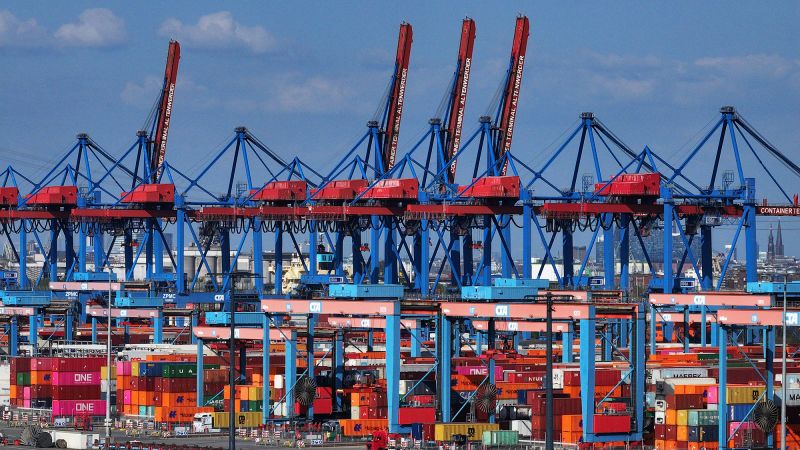
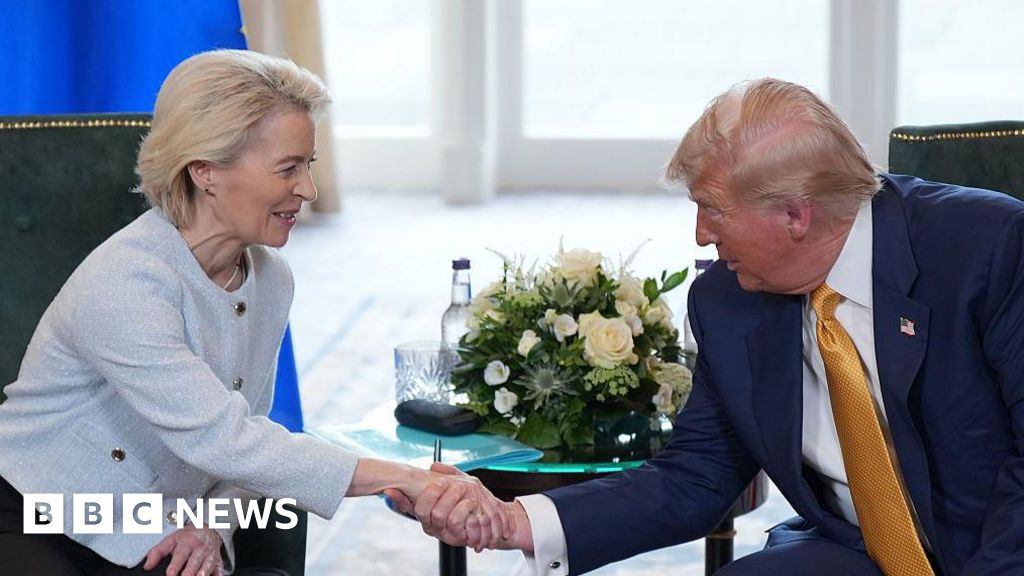
The European Union has suspended approval of a key trade agreement with the United States, sparked by President Donald Trump's aggressive push to acquire Greenland. This dramatic move follows Trump's recent tariff threats against eight nations, including Denmark, France, and Germany, escalating transatlantic friction just months after a July pact aimed at stabilizing commerce.
Roots of the Dispute
Trump reiterated his Greenland ambitions during a World Economic Forum speech in Davos, linking them to proposed 10% tariffs starting February 1, rising to 25% by June. EU Parliament's International Trade Committee chair Bernd Lange condemned this as coercion undermining sovereignty, pausing ratification of the deal that cut tariffs on European goods and boosted US exports. The €1.6 trillion partnership now teeters on the brink.
Potential Global Fallout
With retaliation measures and the EU's "trade bazooka" anti-coercion tool in discussion, a full trade war looms, risking higher costs for autos, investments, and beyond. This suspension highlights fragile post-July gains, urging diplomatic resolution to avert economic turmoil across continents.
About the People Mentioned
Donald Trump
Donald John Trump, born June 14, 1946, in Queens, New York, is an American businessman, media personality, and politician. He graduated from the University of Pennsylvania’s Wharton School in 1968 with a degree in economics. In 1971, he took over his family’s real estate business, renaming it the Trump Organization, through which he expanded into building and managing skyscrapers, hotels, casinos, and golf courses. Trump gained widespread fame as the host of the reality TV show *The Apprentice* from 2004 to 2015, which helped establish his public persona as a successful entrepreneur. Trump entered politics as a Republican and was elected the 45th president of the United States, serving from 2017 to 2021. His presidency was marked by significant policy actions including tax cuts, deregulation, the appointment of three Supreme Court justices, renegotiation of trade agreements (notably replacing NAFTA with the USMCA), and a focus on immigration control including border wall expansion. He withdrew the U.S. from international agreements such as the Paris Climate Accord and the Iran nuclear deal, and engaged in a trade war with China. His administration’s response to the COVID-19 pandemic was criticized for downplaying the virus’s severity. Trump was impeached twice by the House of Representatives—first in 2019 for abuse of power and obstruction, and again in 2021 for incitement of insurrection—but was acquitted by the Senate both times. After losing the 2020 election to Joe Biden, Trump challenged the results, culminating in the January 6, 2021, Capitol riot. He remains a central figure in American politics, having won the 2024 presidential election and returned as the 47th president in 2025, continuing to promote policies aimed at economic growth, border security, and military strength[1][2][3][4].
About the Organizations Mentioned
European Union
The European Union (EU) is a unique economic and political partnership between 27 European countries, aiming to promote peace, stability, and economic cooperation. Established in 1993, the EU has evolved significantly since its inception, with key milestones including the introduction of the euro currency in 1999 and the expansion to include 27 member states. **History and Key Achievements:** - **Founding:** The EU's origins trace back to the European Coal and Steel Community (ECSC) in 1951, which evolved into the European Economic Community (EEC) in 1957. Over time, it expanded into the European Union with the Maastricht Treaty in 1992. - **Economic Integration:** The EU has fostered economic integration through the Single Market, allowing free movement of goods, services, and people among member states. - **Common Currency:** The euro, introduced in 1999, is used by 20 of the 27 member states, promoting economic stability and facilitating trade. **Current Status:** - **Challenges:** The EU faces ongoing challenges, including climate change, migration, and geopolitical tensions, particularly with Russia's aggression in Ukraine. - **Economic Outlook:** Euro area growth is forecast to remain weak in 2025, with GDP projected to expand by less than 1%[8]. - **Innovative Initiatives:** The EU is actively working on enhancing its technological and economic competitiveness, with initiatives like the Clean Industrial Deal and the Competitiveness Compass[4]. **Notable Aspects:** - **State of the Union Address:** The annual State of the Union address by the European Commission President outlines key priorities and initiatives for the year ahead, such as Ursula von der Leyen's 2025 address focusing on security, Ukraine support, and climate action[1][5]. - **Global Influence:** The EU is a significant player in global affairs, with initiatives like the Global Gateway aimed at sustainable development
World Economic Forum
The **World Economic Forum (WEF)** is an independent, not-for-profit foundation headquartered in Geneva, Switzerland, founded in 1971 by Klaus Schwab, a German-born professor at the University of Geneva, to convene global leaders from business, government, civil society, and academia for dialogue on pressing economic, social, and technological challenges.[1][5][6] Initially launched as the **European Management Forum**, it brought together 400 European CEOs in Davos, Switzerland, to enhance competitiveness against U.S. firms, leveraging the town's isolation for candid discussions.[1][2] By 1976, it expanded to include political and social agendas, becoming a membership organization for the top 1,000 global companies, and adopted the WEF name in 1987 to reflect its worldwide focus on issues like poverty, environment, and conflict.[1][3][4] Over five decades, annual Davos meetings have evolved into high-profile gatherings shaping agendas on **growth, resilience, innovation, geopolitics, technology, people, and planet**.[6][7] Key **achievements** include brokering the 1988 Davos Declaration averting Greco-Turkish war, facilitating North-South Korea talks (1989), Nelson Mandela's pivotal 1992 meeting with F.W. de Klerk aiding apartheid's end, and the 1994 Gaza-Jericho Agreement.[1][4] It spurred German reunification efforts post-Berlin Wall (1990), bridged Arab-West ties via UNIDO (1976), and catalyzed the G20's formation in 1998 amid Asian financial crises.[3][4] Today, the WEF drives public-private initiatives, produces flagship reports like **Global Risks** and **Future of Jobs**, and fosters foresight through its Global Foresight Network, emphasizing sustainable development in health, education, and tech amid geopolitical shifts.[6][7] Critics note its elite "
European Parliament
The **European Parliament (EP)** is the European Union's directly elected legislative body, comprising **720 Members of the European Parliament (MEPs)** who represent over 450 million citizens across 27 member states.[1][2][4] Elected every five years—most recently in 2024—it shares **equal legislative and budgetary powers** with the Council of the EU, approving laws proposed by the European Commission, international agreements, EU enlargements, and the multiannual budget.[1][4][5] Founded in **1952** as the Common Assembly of the European Coal and Steel Community, it was renamed the European Parliament in **1962**, with the first direct elections held in **1979**—a milestone enhancing democratic legitimacy.[1][2] Over decades, treaties like Maastricht expanded its clout: from advisory roles to **co-decision** (now ordinary legislative procedure) across key areas like the internal market, environment, digital tech, data protection (e.g., GDPR), energy transition, and AI regulation—vital for businesses navigating EU-wide standards.[2][5][6] Key achievements include electing Commission Presidents via the **Spitzenkandidaten** process (e.g., Jean-Claude Juncker in 2014), scrutinizing executive actions through inquiries (mad cow disease led to a veterinary agency), and vetoing trade deals or budget misuse.[2][6] It approves Commission rosters post-hearings, ensuring accountability, and monitors monetary policy with the European Central Bank.[1][2] Currently led by **President Roberta Metsola** (since 2022), the EP operates via **20 committees** (e.g., on Industry, Research, and Energy; Internal Market and Consumer Protection) that draft amendments, feeding into monthly plenary sessions in **Strasbourg** (plenary votes) and **Brussels** (committees).[1][3] Its **supervisory powers**—questio