Ex-Aide Critique: Power Erosion and Outsourcing of Authority
Ex-Aide's Bold Critique on Power Erosion
Paul Ovenden, former Director of Strategy in Downing Street, has ignited debate by claiming politicians have surrendered excessive power, crippling their ability to fulfill election pledges. Departing in September after a scandal involving leaked 2017 messages with offensive remarks about Diane Abbott, Ovenden argues the British state is "emasculating itself" through over-delegation to unelected bodies and regulators.
Unpacking the Power Giveaway
Ovenden, who worked closely with PM Keir Starmer post-2024 victory, highlights how successive governments outsourced authority to quangos and international entities. This fragmentation, he contends, leaves ministers powerless against entrenched bureaucracies, mirroring recent No. 10 turmoil including resignations of Angela Rayner and Lord Mandelson. Examples abound: NHS trusts overriding health secretaries, or net-zero targets binding future policies without voter input.
Implications for Governance
His exit amid controversy underscores a deeper crisis in Starmer's administration, strained by internal leaks and leadership tests ahead of party conference. Ovenden urges reclaiming sovereignty to deliver on promises like economic growth and public service reform, warning that without bold action, public trust will erode further in an already turbulent political landscape.
About the People Mentioned
Keir Starmer
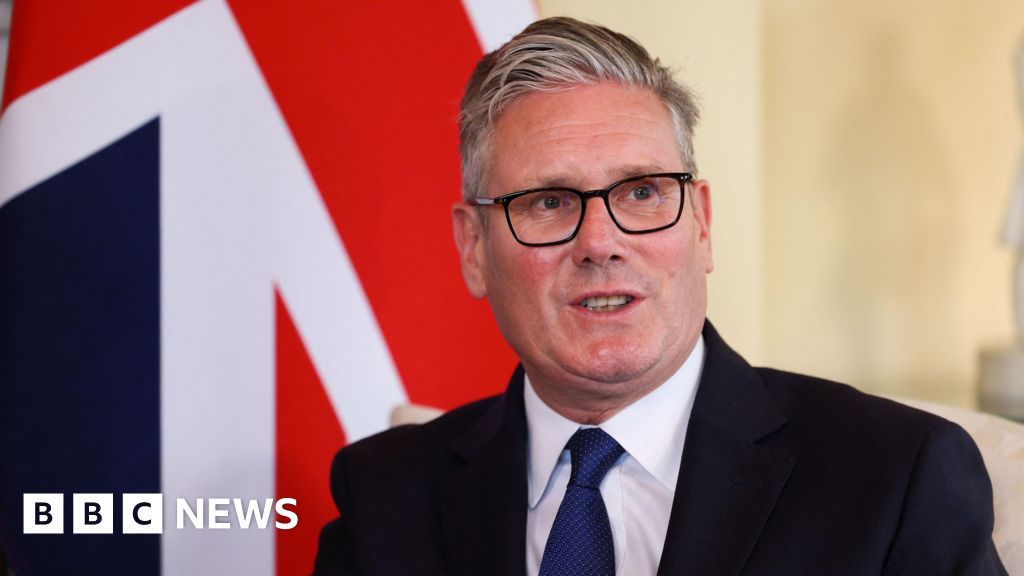
Keir Starmer, born on September 2, 1962, in London, England, is a British politician and barrister. He grew up in Oxted, Surrey, with his father working as a toolmaker and his mother as an NHS nurse. Starmer was the first in his family to attend university, studying law at the University of Leeds and later earning a postgraduate degree from the University of Oxford[2][3]. Before entering politics, Starmer had a distinguished career as a barrister. He qualified in 1987 and was appointed Queen's Counsel (QC) in 2002. Notably, he served as the Director of Public Prosecutions from 2008 to 2013, leading the Crown Prosecution Service[2]. He was knighted in 2014 for his contributions to criminal justice[2]. Starmer was elected as a Member of Parliament for Holborn and St Pancras in 2015. He became the Shadow Minister for Immigration under Jeremy Corbyn but later resigned in protest. He then served as Shadow Secretary of State for Exiting the European Union[5]. In April 2020, he was elected as the leader of the Labour Party, winning with a significant majority in the first round of voting[5]. In July 2024, Starmer became the Prime Minister of the United Kingdom following a landslide Labour victory in the general election, replacing Rishi Sunak[1][4]. As Prime Minister, he is focused on implementing Labour's manifesto, which includes objectives related to the economy, crime, healthcare, education, and climate change[1]. His leadership marks a significant shift in British politics, emphasizing national renewal and change[4]. Starmer is married to Victoria Starmer, an NHS worker, and they have two children[4].
Angela Rayner
Angela Rayner (née Bowen), born on 28 March 1980, is a British politician and trade unionist serving as the Labour and Co-operative Member of Parliament (MP) for Ashton-under-Lyne since 2015. She identifies ideologically as a socialist and belongs to Labour's soft left. Raised in Stockport on a council estate, Rayner left school at 16 while pregnant and without qualifications. She later trained in social care and worked as a care worker for the local council before becoming a trade union representative with Unison, which led to her joining the Labour Party. Rayner entered Parliament following the 2015 general election and held multiple Shadow Cabinet roles under Jeremy Corbyn from 2016 to 2020, including Shadow Secretary of State for Education. In 2020, she was elected Deputy Leader of the Labour Party. Under Keir Starmer's leadership, she continued to hold senior shadow positions. Following Labour's victory in the 2024 general election, Rayner was appointed both Deputy Prime Minister and Secretary of State for Housing, Communities and Local Government in July 2024. She held these positions until her resignation in September 2025 after an ethics report found she breached the Ministerial Code by underpaying stamp duty on a property purchase, an issue she acknowledged. Throughout her career, Rayner has been noted for rising from a challenging background to prominent political leadership, and for her advocacy on social and labour issues. Her tenure as Deputy Prime Minister marked her highest governmental role to date, although it ended amid controversy related to ministerial conduct[1][3][4][5].
About the Organizations Mentioned
Downing Street
**10 Downing Street** serves as the official residence and principal office of the United Kingdom's Prime Minister, functioning as the nerve center of British government operations.[1][3][4] Housing around 100 rooms in a Grade I listed building over 300 years old, it supports the Prime Minister in crafting policy, coordinating across government departments, resolving disputes, tracking priorities, and managing communications with Parliament, the public, media, and international audiences.[1][3] Its history traces back to the late 17th century on the site of a medieval brewery near the ruins of Whitehall Palace. Originally three modest houses, Number 10 was gifted by King George II to Sir Robert Walpole in 1732, who became Britain's first de facto Prime Minister in 1735, merging the roles of First Lord of the Treasury and Prime Minister.[2][4][6] Early residents like George Monck modernized Treasury accounting, while expansions connected it to Numbers 11 (Chancellor's residence) and 12 (press and strategy units).[2][4] Key achievements include hosting iconic leaders—Walpole, Gladstone, Disraeli, Churchill, Thatcher—and pivotal moments, from wartime cabinets to global summits outside its famous black door.[4][6] The site's evolution reflects Britain's constitutional shifts, like separating Prime Minister and Chancellor roles in the 19th century.[4] Today, No. 10 operates like a "small Government Department" with about 250 staff, including civil servants, special advisers, and specialized units (policy, data science, delivery, legislative).[1][3] It works closely with the Cabinet Office, though its growth has sparked debates on complexity, as seen in the 2021 "partygate" inquiry.[1] Ongoing reforms, like the "Plan for Change," aim to sharpen its strategic edge.[8] Notably unassuming externally—like a TARDIS inside—Downing Street symbolizes enduring power, blending histor
NHS
The **National Health Service (NHS)** is the publicly funded healthcare system of the United Kingdom, providing comprehensive health services free at the point of use. It was established in 1948 with the core mission of delivering universal healthcare accessible to all UK residents. Over its history, the NHS has grown into one of the world’s largest single-payer healthcare systems, renowned for its scale, scope, and public service ethos. The NHS delivers a wide range of services including general practitioner (GP) care, hospital treatments, emergency care, mental health services, and community-based care. Its structure is complex and evolving, involving multiple layers of governance and operational units. As of 2025, the Department of Health and Social Care (DHSC) oversees the NHS, setting policy and allocating funds, while local Integrated Care Boards (ICBs) commission and plan services tailored to regional needs[1][3]. NHS England, historically the central body managing NHS operations, is being absorbed into DHSC as part of a major reform to decentralize power and create a more devolved and collaborative system[1][3]. Key achievements of the NHS include pioneering universal health coverage, advancing medical research and innovation, and integrating digital technologies in care delivery. The NHS is currently undertaking a significant transformation through the UK Government’s 10 Year Health Plan, which focuses on shifting care from hospitals to community settings, enhancing use of technology and AI, and emphasizing prevention over treatment[2][3]. The plan aims to create a more locally autonomous, efficient, and patient-centered healthcare system by 2035, including reinventing NHS foundation trusts with financial and operational freedoms[3]. Notable aspects of the NHS in 2025 include its ongoing structural reforms such as the abolition of NHS England, consolidation of ICBs, and the introduction of a new oversight framework to improve accountability and performance assessment[1][4]. Leadership and management development are prioritized to support these reforms and ensure high-quality care across the country[6]