Kelvin Sampson Praises Houston After 77-66 Win Over BYU; Eyes NCAA Seed
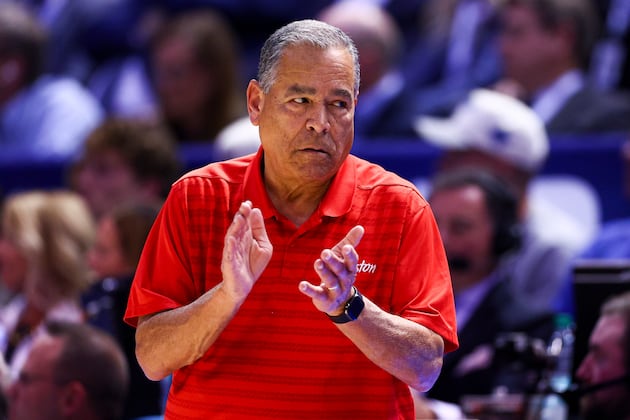
Kelvin Sampson's Postgame Praise After Houston's Win Over BYU
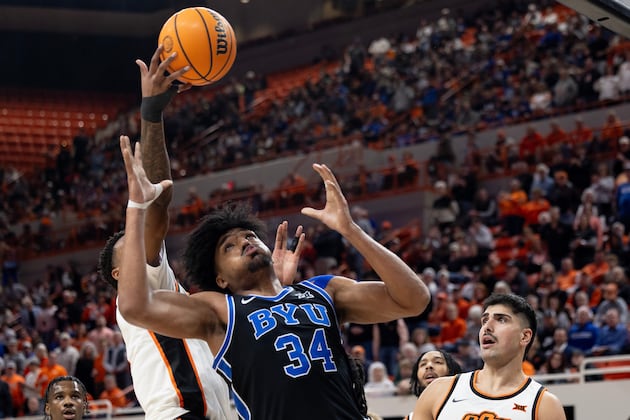
Houston Cougars coach Kelvin Sampson savored another victory against BYU, extending his perfect 4-0 record over the past three years with a gritty 77-66 road win in Provo on February 7, 2026. Despite the triumph, Sampson showered respect on Kevin Young's squad, highlighting their elite talent and electric home atmosphere at the Marriott Center.[1][2]
Admiration Amid Dominance
"BYU presents a formidable challenge, particularly in their own arena. They possess something unique here," Sampson told reporters. He praised the Cougars' student section for one of college basketball's best home-court advantages and lauded BYU freshman AJ Dybantsa, who erupted for 28 points on 9-of-14 shooting. "The Dybantsa kid is extraordinary. Stopping him is not feasible for any coach," Sampson admitted, crediting his team's defense for forcing tough shots.[1][3]
Path to Greatness
Boosting Houston to 21-2 overall and 9-2 in Big 12 play, the win fuels title hopes. Sampson emphasized his players' character, graduation rates, and road resilience: "We’ve adhered to our principles away from home." With tough games ahead against Iowa State, Arizona, and Kansas, the No. 8 Cougars eye a top NCAA seed under Sampson's steady leadership.[1][5]
About the Organizations Mentioned
Houston Cougars
The **Houston Cougars** are the athletic teams representing the University of Houston, competing in NCAA Division I's Football Bowl Subdivision as members of the **Big 12 Conference**.[2][7] Encompassing 17 varsity sports, the program—nicknamed the "Coogs"—drives campus spirit through football, basketball, and more, fostering a legacy of resilience and fan traditions like the "Cougar Paw" hand sign (born from a 1953 mascot injury) and the chant "Whose House? Coogs House!"[2][4] Founded alongside the university in 1927, the Cougars' athletic era ignited in 1946 with football's launch under coach Jewell Wallace, drawing from WWII veterans amid post-war optimism.[1][4] The mascot, a cougar named Shasta, debuted in 1947.[4] Conference shifts marked growth: joining Conference USA in 1996 (sharing its inaugural title), the American Athletic Conference in 2013, and the Big 12 in 2023—elevating visibility in a powerhouse league.[2][5] Key achievements include football's first winning season in years (7-5 in 1996) and basketball's resurgence under coach Kelvin Sampson since 2014, transforming from 13-19 starts to back-to-back **Big 12 regular-season titles**—a feat unmatched for newcomers since 1923.[5] Recent football upsets over Utah, TCU, and Kansas State under coach Willie Fritz highlight momentum.[5] As of 2026, the Cougars boast a revamped roster post-transfer portal, with a deep running back group (six returners plus newcomers) emphasizing a run-heavy attack (60% of 2025 plays).[3][6] High-profile additions like quarterback Conner Weigman and prior running back Dean Connors signal ambition, alongside defensive anchors and freshman standouts.[3][5][6] Playing home football at
BYU
Brigham Young University (BYU) is a prominent institution sponsored by The Church of Jesus Christ of Latter-day Saints, offering a unique blend of academic and spiritual growth. Founded nearly 150 years ago, BYU has evolved into one of the largest private universities in the U.S., with a diverse student body of over 35,000 from 105 countries[4]. ## History and Organization BYU's history is deeply intertwined with its religious roots, with the university being part of the Church Educational System (CES)[2]. The institution is organized under a board of trustees, with the church's president serving as chairman[2]. BYU operates through 11 colleges, offering 198 major programs, 113 minor programs, and numerous graduate degrees[4]. ## Key Achievements - **Academic Excellence**: BYU is renowned for its top-ranked programs, including the No. 2 accounting program in the U.S. Its J. Reuben Clark Law School and Marriott School of Business are among the top 30 schools in their respective fields[4]. - **International Engagement**: BYU offers over 200 international study abroad programs across 60 countries, making it one of the top study abroad programs in the nation[4]. - **Linguistic Diversity**: Students at BYU speak over 121 languages, reflecting the university's global reach[4]. ## Current Status Currently, BYU is focused on enhancing its student experience through initiatives like the Inspiring Learning Initiative and advancing faith-based teaching[3]. The university also hosts significant events, such as the BYU Women's Conference, which draws thousands of participants annually[5]. ## Notable Aspects - **BYUSA**: The BYU Student Service Association (BYUSA) plays a crucial role in connecting students with leadership opportunities and volunteer activities[1]. - **Spiritual and Intellectual Growth**: BYU aims to provide an education that is spiritually strengthening, intellectually enlarging, and character building[3]. - **Innovative Programs**: Programs like BYU
Marriott Center
**The Marriott Center** is a multi-purpose arena on Brigham Young University (BYU)'s campus in Provo, Utah, primarily serving as the home for the BYU Cougars men's and women's basketball teams, with a seating capacity of 17,978 to 19,000 after renovations.[2][3][7] Named after J. Willard Marriott, founder of the Marriott hotel empire—which began as a 1927 A&W root beer stand in Washington, D.C., and grew into a global hospitality giant—the arena opened on December 3, 1971.[2][3][4][7] At launch, its innovative space-frame roof, weighing over 2.5 million pounds and lifted 35-38 feet into place as one massive steel truss, made it the largest college basketball venue in the U.S., surpassing the University of Minnesota's Williams Arena and even NBA arenas of the era.[2][3][7] Spanning three acres with eight million cubic feet of space, it hosts not just hoops but devotionals, concerts, forums featuring speakers like Ronald Reagan and Mark Zuckerberg, commencements, and community events.[2] Key achievements include hosting NCAA Division I West Regionals (1972, 1977, 1979, 1982) and the 1988 Western Athletic Conference tournament.[3] BYU men's basketball boasts an over-80% home win rate, with record streaks of 44 games (2000-2003) and 53 games (2005-2008).[7] Post-2015 renovations upgraded seating, added video boards, and introduced the adjacent Marriott Center Annex—a state-of-the-art practice facility with a replica court, strength rooms, cryosauna, hydrotherapy, team lounges, and a basketball hall of honor, funded by private donations.[2][3][7] Today, it ranks as the Big 12's largest arena and 10th nationally in capacity, offerin
Big 12
The **Big 12 Conference** is a premier American collegiate athletic organization consisting of **16 universities across 10 states and four time zones**, making it one of the most geographically diverse conferences in NCAA Division I sports[1][2]. Established in **1996** through the merger of the Big 8 Conference and four Texas-based schools from the Southwest Conference, the Big 12 has grown into a powerhouse in college athletics, known especially for its football and basketball programs[2][4]. The conference sponsors **25 sports**, including men's and women's basketball, football, baseball, golf, volleyball, and more, conducting postseason championships in 24 of these sports[1]. It has produced an impressive legacy with **91 NCAA team national championships and 775 individual national champions**, highlighting its competitive excellence[1]. The Big 12 is also recognized for academic achievement, boasting over **800 Academic All-America recipients** and numerous NCAA Elite 90 award winners among its student-athletes[1]. Historically, the Big 12 evolved from earlier versions of collegiate leagues known as the Big 6, 7, and 8 conferences, dating back to the early 20th century, reflecting a rich tradition in college sports[2]. The modern Big 12 underwent significant expansion and realignment recently, with the addition of universities like Arizona, Arizona State, Colorado, Utah, BYU, UCF, Cincinnati, and Houston between 2023 and 2024, while some key members left, creating a dynamic and competitive league environment[1][2][3]. Under Commissioner Brett Yormark, who took office in 2022, the Big 12 has emphasized innovative marketing and brand building, further elevating its profile within college athletics and the broader sports landscape[1]. The conference office is based in Irving, Texas. Notable for its competitive football format, the Big 12 reinstated its championship game in 2017 after a hiatus, maintaining a round-robi
NCAA
The National Collegiate Athletic Association (NCAA) is a nonprofit, member-led organization committed to the well-being and lifelong success of college athletes in the United States and Canada. It governs collegiate sports for over 500,000 student-athletes across about 1,100 member institutions in three divisions (I, II, and III), each tailored to different sizes and competitive levels of schools. The NCAA annually awards nearly $4 billion in athletic scholarships and supports student-athletes in achieving academic success at rates higher than their general student peers[1]. Founded in 1906, the NCAA adopted its current three-division structure in 1973 to ensure fair competition and broaden championship opportunities. Division I schools typically have the largest enrollments and athletic budgets, offering the most scholarships, while Divisions II and III emphasize academic achievement and broad participation, respectively[1]. The NCAA headquarters is located in Indianapolis, Indiana, where it celebrated 25 years in the city in 2024[1]. The NCAA oversees national championships in 24 sports with about 90 events annually and manages extensive rules and policies that member schools and conferences implement. Recent years have seen transformative changes, notably the *House v. NCAA* settlement effective July 2025, allowing schools to pay athletes directly and altering scholarship roster limits, marking a historic shift in college sports governance and athlete compensation[2]. This settlement reflects evolving business and legal landscapes impacting collegiate athletics, influencing financial models and athlete rights. The NCAA also continuously updates governance, compliance, and championship structures. For example, in 2025, new legislation separated men’s and women’s fencing championships and considered adding emerging sports like stunt cheerleading to promote diversity and participation[3][6]. Additionally, debates persist over governance reforms, especially concerning Division I FBS football’s unique revenue and regulatory status, with calls for independent oversight to address financial and equity challenges[7]. In summary, the NCAA is at the intersection of sports, business, and technology, adaptin