New Images Reveal Trump's Ambitious White House Ballroom Vision

New Images Reveal Trump's Ambitious White House Ballroom Vision
Stunning new renderings of President Trump's proposed 90,000-square-foot East Wing ballroom offer the clearest glimpse yet into this transformative project, set to reshape the White House grounds dramatically. These detailed plans, submitted to the National Capital Planning Commission, depict a grand structure with boxwood hedges, brick pavers, and a glass bridge linking it to the Executive Residence, dwarfing the demolished East Wing.[1][2]
Careful Demolition and Bold Design Choices
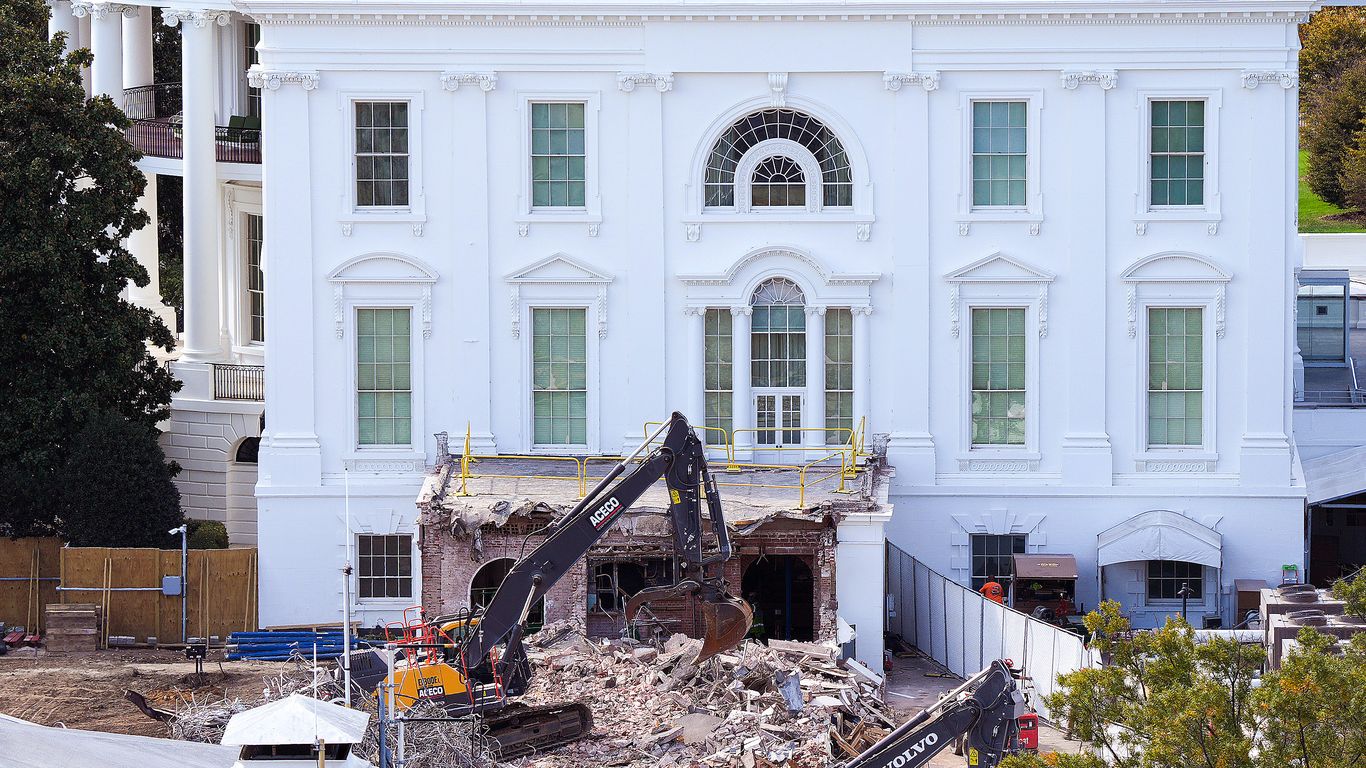
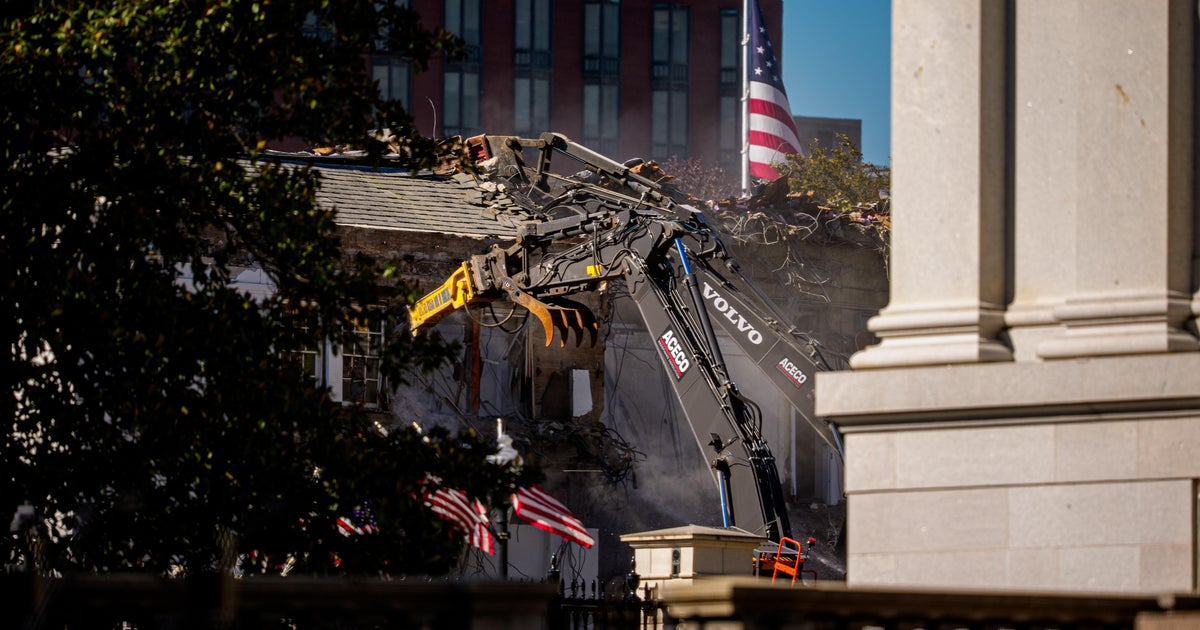
Demolition of the aging East Wing proceeded methodically last October, with heavy equipment kept distant and portions removed by hand to safeguard the mansion's eastern facade, which officials describe as excellently preserved. Vibration monitoring ensured no damage, while historic magnolia trees were relocated. The ballroom, designed for up to 999 guests, will feature an upgraded visitors center, reducing event-related road closures.[1][3]
Legal Hurdles and Future Symmetry
Facing court challenges and Capitol Hill scrutiny, the administration cites national security to defend progress, eyeing completion by 2029 despite experts calling the timeline optimistic. Engineers are assessing the West Colonnade for a second story to match the new East design, promising long-term enhancements.[2][4]
About the People Mentioned
Donald Trump
Donald John Trump, born June 14, 1946, in Queens, New York, is an American businessman, media personality, and politician. He graduated from the University of Pennsylvania’s Wharton School in 1968 with a degree in economics. In 1971, he took over his family’s real estate business, renaming it the Trump Organization, through which he expanded into building and managing skyscrapers, hotels, casinos, and golf courses. Trump gained widespread fame as the host of the reality TV show *The Apprentice* from 2004 to 2015, which helped establish his public persona as a successful entrepreneur. Trump entered politics as a Republican and was elected the 45th president of the United States, serving from 2017 to 2021. His presidency was marked by significant policy actions including tax cuts, deregulation, the appointment of three Supreme Court justices, renegotiation of trade agreements (notably replacing NAFTA with the USMCA), and a focus on immigration control including border wall expansion. He withdrew the U.S. from international agreements such as the Paris Climate Accord and the Iran nuclear deal, and engaged in a trade war with China. His administration’s response to the COVID-19 pandemic was criticized for downplaying the virus’s severity. Trump was impeached twice by the House of Representatives—first in 2019 for abuse of power and obstruction, and again in 2021 for incitement of insurrection—but was acquitted by the Senate both times. After losing the 2020 election to Joe Biden, Trump challenged the results, culminating in the January 6, 2021, Capitol riot. He remains a central figure in American politics, having won the 2024 presidential election and returned as the 47th president in 2025, continuing to promote policies aimed at economic growth, border security, and military strength[1][2][3][4].
About the Organizations Mentioned
National Capital Planning Commission
The **National Capital Planning Commission (NCPC)** is a U.S. federal agency responsible for guiding and overseeing planning and development in the National Capital Region, which includes Washington, D.C., and surrounding counties in Maryland and Virginia. Its mission is to protect and enhance the capital’s natural, historic, and architectural resources while ensuring orderly federal development[1][4]. Founded in 1924 initially as the National Capital Park Commission to acquire parkland and preserve natural scenery, it expanded in 1926 to include comprehensive regional planning. The 1952 National Capital Planning Act gave it its current name and formalized its role as the central planning agency for federal and District government development in the capital area. Though the 1973 Home Rule Act granted some local planning authority to D.C.’s government, NCPC retains exclusive authority over federal land and buildings and advises on key District land use decisions[1][2][4]. The Commission consists of 12 members, including presidential appointees from Maryland, Virginia, and the U.S., the Mayor of D.C., District Council Chair, congressional committee chairs, and leaders of major federal landholding agencies such as the Departments of Defense and Interior. It is supported by a professional staff of planners, architects, urban designers, and preservation experts[1][3][4]. NCPC’s key functions include comprehensive planning, review and approval of federal development projects, and preparation of the Federal Capital Improvements Program. It ensures federal projects align with the comprehensive plan, which balances development with the preservation of historic sites, parks, and natural features. The Commission meets monthly to review plans and projects impacting the capital region[1][2][6][8]. Notable achievements include its long-standing role in preserving iconic landscapes and landmarks of Washington, D.C., and coordinating federal and local planning efforts. The agency’s impact is critical in maintaining the capital’s aesthetic, historic, and environmental integrity amid ongoing urban growth and modernization[1][4]. As of October