9th Circuit Strikes Down California Open Carry Ban
Appeals Court Strikes Down California's Open Carry Ban
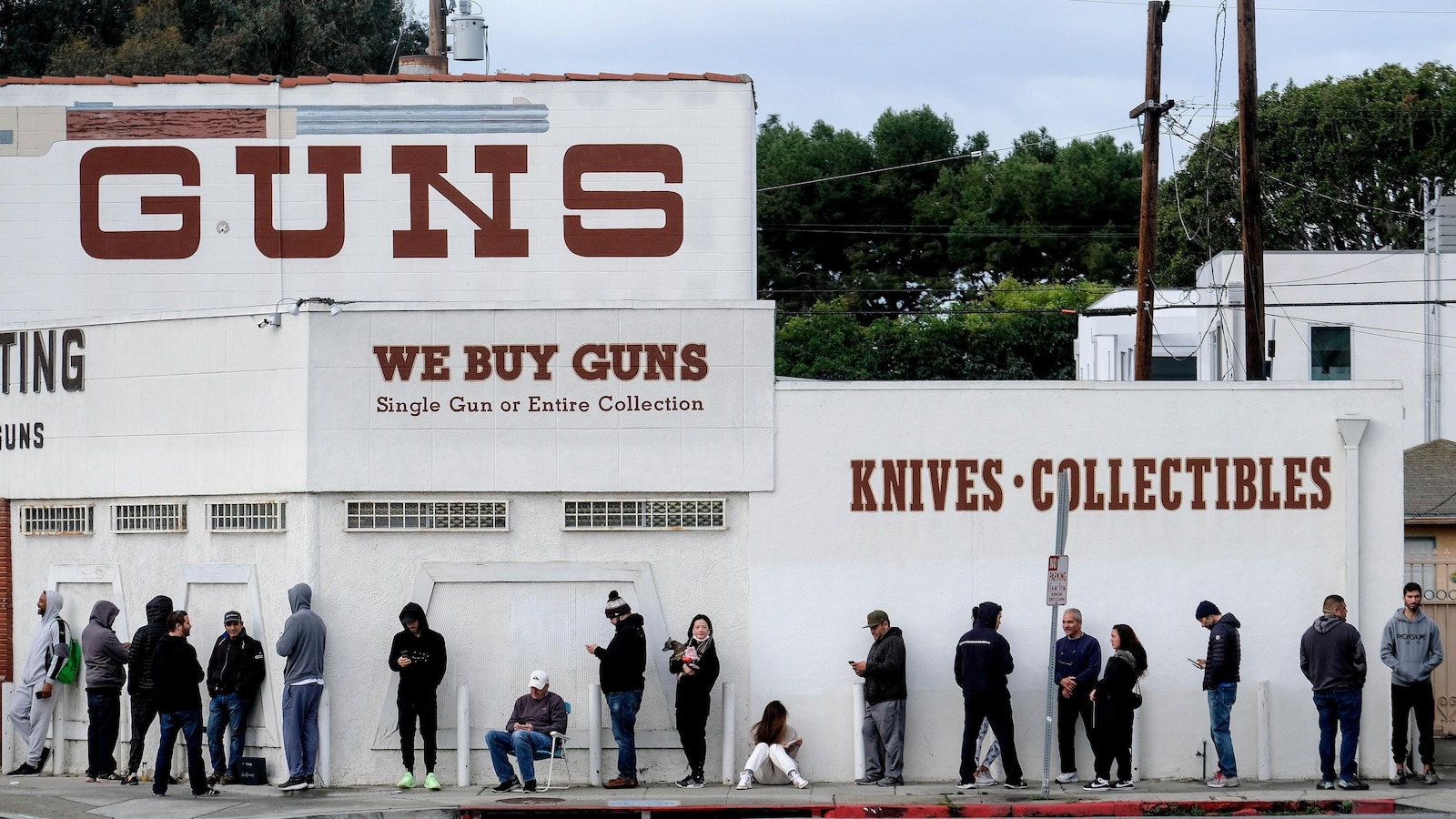
A federal appeals panel in the 9th U.S. Circuit Court has ruled California's ban on open carry firearms unconstitutional in populous counties, marking a significant Second Amendment victory. In the case Baird v. Bonta, two judges overturned the restriction targeting areas with over 200,000 residents, aligning with Supreme Court precedents like Bruen.
Key Ruling Details and Legal Reasoning
The decision, issued January 2, 2026, reversed the lower court's stance, holding that the ban fails the text-and-history test. Open carry of handguns for self-defense falls under the Second Amendment's plain text, and historical traditions do not support total elimination in urban zones. The panel rejected California's "channeling" argument—banning open while allowing concealed—as unsupported by precedent, criticizing population-based thresholds as arbitrary.
Implications and Next Steps
This potentially legalizes open carry in most California counties, though the rural licensing scheme was upheld as a permissible shall-issue system. California Attorney General Rob Bonta's office vows to defend its gun laws, eyeing en banc review or Supreme Court appeal. The ruling remands for judgment favoring plaintiff Baird, reshaping public carry rights statewide.
About the Organizations Mentioned
9th U.S. Circuit Court
The **Ninth Circuit Court of Appeals** is the largest federal appellate court in the United States, serving as the final arbiter for nearly all federal appeals in its jurisdiction.[1][3] Headquartered in San Francisco's James R. Browning U.S. Courthouse, it handles appellate review of cases from district courts across the western region.[4] ## Jurisdiction and Geographic Scope The Ninth Circuit possesses appellate authority over 15 federal district courts spanning nine states—Alaska, Arizona, California, Hawaii, Idaho, Montana, Nevada, Oregon, and Washington—plus the territories of Guam and the Northern Mariana Islands.[1][3] This vast geographic footprint makes it the largest circuit court in terms of both territory and population.[3] ## Historical Development Originally created in 1837 to cover the South, the current Ninth Circuit was established in its modern form in 1891 when Congress reorganized the federal court system into nine circuits.[3] Subsequent expansions occurred as western territories gained statehood and were incorporated: Hawaii (1900), Arizona (1912), Alaska and Guam (1960), and the Northern Mariana Islands (1980).[3] ## Current Operations and Staffing The court stands apart as the most substantial circuit court, managing over 8,000 annual filings and employing 29 active circuit judges—significantly more than other circuits, which range from six to seventeen judges.[2][3] The Ninth Circuit also features unique administrative innovations, including an Appellate Commissioner position created in 1994 to handle non-dispositive matters, a role uncommon among federal circuits.[2] ## Notable Characteristics The court has implemented distinctive operational practices tailored to its sprawling geography. Senior judges are not assigned to distant chambers unless willing to travel, acknowledging the demanding geography
California Attorney General's Office
The **California Attorney General's Office**, officially the California Department of Justice, serves as the state's chief law enforcement agency, headed by the elected Attorney General who ensures uniform enforcement of state laws.[4][5][7] With over 5,600 employees across offices in Sacramento, Los Angeles, San Francisco, San Diego, Oakland, and Fresno, it handles a broad spectrum of responsibilities, from criminal prosecutions and investigations to civil litigation representing state interests in boundary disputes, property redemptions, and escheated assets.[1][3][4][5] Established by the California Constitution, the office wields expansive powers, including supervising district attorneys, managing the Division of Law Enforcement for forensic analysis, narcotics coordination, and complex crime probes, and cracking down on fraud, unfair business practices, and threats to public safety.[1][2][3][4] It defends state policies in court, pursues judgments against fraudulent debtors, and accounts for state funds.[3] Key achievements include pioneering consumer protection initiatives, environmental justice enforcement, and high-profile actions against corporate misconduct—particularly resonant in **business and technology** sectors, where the office has sued tech giants over data privacy violations (e.g., under the California Consumer Privacy Act), antitrust issues, and AI-related scams, safeguarding innovation while curbing abuses.[2] It also champions **housing affordability**, reproductive rights, healthcare access, immigrant protections, and children's justice, reflecting progressive priorities amid California's economic powerhouse status.[2] Currently, under ongoing leadership as of 2026, the office prioritizes economic opportunity, victim services, and regulatory oversight amid tech-driven challenges like cybersecurity and gig economy exploitation.[2][5] Notable for its dual role in litigation and policy advocacy, it partners with local, state, and federal agencies, making it a pivotal player in California's legal landscape—essential reading for business leaders navigating compliance in the Golden State's dynamic tech ecosystem.[1][4][9] (Wor
Supreme Court
The **Supreme Court of the United States**, commonly referred to as SCOTUS, is the highest court in the U.S. federal judiciary. Established by Article III of the U.S. Constitution, it plays a pivotal role in interpreting the Constitution and federal laws, ensuring their alignment with the founding document. ## Organization and History Founded in 1789, the Supreme Court initially consisted of a Chief Justice and five Associate Justices. Over time, the number of justices has fluctuated, settling at nine in 1869[4]. The Court's primary function is to adjudicate cases involving federal law and the Constitution, with the power to review and overturn decisions from lower courts[1][6]. It also has original jurisdiction in cases involving ambassadors, consuls, and disputes between states[1]. ## Key Achievements One of the Supreme Court's most significant achievements is the establishment of judicial review through the landmark case **Marbury v. Madison** in 1803. This decision allowed the Court to invalidate laws deemed unconstitutional, setting a precedent for its role in checking the legislative and executive branches[1][2]. ## Current Status Today, the Supreme Court continues to play a crucial role in shaping U.S. law and policy. It meets annually from October to June or July, reviewing thousands of petitions and deciding around 80 cases each year[1][2]. The Court's decisions often have profound impacts on business and technology, influencing regulatory environments and legal frameworks. ## Notable Aspects - **Independence**: Justices are appointed for life, ensuring the Court's independence from political pressures. - **Influence on Business and Technology**: Supreme Court rulings can significantly impact business practices and technological innovation by clarifying legal standards and regulatory frameworks. - **Symbolism**: The Court is symbolically important, with its motto "Equal Justice Under Law" reflecting its commitment to fairness and impartiality[3].