Pentagon 2026 Defense Strategy: China No Longer Top Threat, Homeland First
China Dethroned: Pentagon's New Defense Priorities
The Pentagon's 2026 National Defense Strategy marks a seismic shift, declaring China no longer the top security threat. Instead, safeguarding the US homeland and Western Hemisphere takes precedence, reflecting President Trump's vision to reassert dominance close to home. This pivot moves away from Biden-era focus, viewing Beijing as a settled Indo-Pacific power needing deterrence, not confrontation.[1][2]
Limited Ally Support and Regional Focus
The strategy promises "critical but more limited" aid to allies in Europe and Asia, urging them to shoulder more burden. Russia poses a manageable threat to NATO, with European allies deemed far stronger. Emphasis falls on countering narco-trafficking, immigration, and influence in the Gulf of Mexico, while building Pacific denial defenses without escalation.[3][4]
Global Implications of America's Rethink
Allies may feel unnerved by this "sharp shift in tone," amid tensions over NATO and Greenland. Yet, the document rejects isolationism, prioritizing diplomacy with China and homeland strength to make America great again. This recalibration signals a pragmatic era, balancing deterrence with domestic security.[1][2]
About the Organizations Mentioned
Pentagon
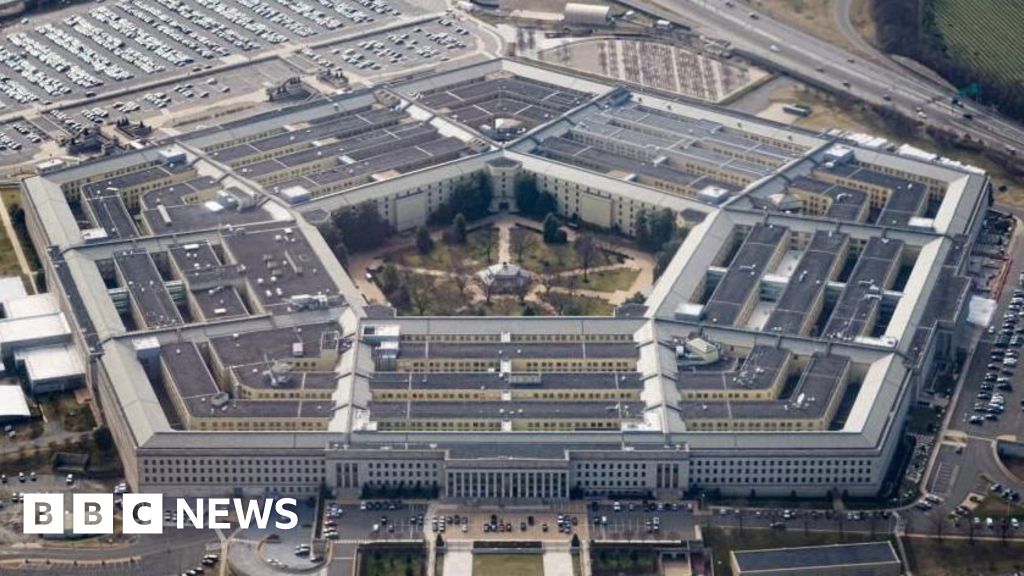
The **Pentagon** is the headquarters of the United States Department of Defense (DoD), serving as the central command center for the nation's military operations and strategic defense planning. Situated in Arlington County, Virginia, it houses the leadership and staff of the Army, Navy, Marine Corps, Air Force, Space Force, and associated defense agencies and commands[1]. Originally constructed during World War II as a temporary War Department building, the Pentagon evolved into the permanent nerve center for U.S. military coordination following the 1947 National Security Act, which merged the War and Navy Departments and added the Air Force, establishing the modern DoD[2]. The Pentagon oversees America’s global military posture, playing a crucial role during the Cold War and continuing to adapt to current geopolitical challenges. Its organizational complexity includes civilian oversight through the service secretaries and integration with multinational commands such as NATO and NORAD[1]. The Pentagon is also notable for its vast infrastructure, which underwent a comprehensive renovation completed in the early 2000s to maintain its operational capacity and security[2]. In recent years, the Pentagon has shifted strategic focus to homeland defense and the Western Hemisphere, aligning with contemporary U.S. national security priorities such as border protection and countering adversaries like China[3]. Technologically, it actively invests in emerging industries critical to defense, including space technologies, microelectronics, biochemicals, and software modernization. The Office of Strategic Capital, established to channel private sector investment into defense technologies, exemplifies this focus on innovation and maintaining U.S. technological superiority[4][6]. Efforts such as the Pentagon’s software modernization implementation plan emphasize cloud adoption and agile software development to enhance military IT capabilities[6]. Additionally, political dynamics impact Pentagon leadership and policy directions, as seen in initiatives like Project 2025, which aims to influence personnel and strategic priorities aligned with conservative policy goals[5]. Overall, the Pentagon remains a pivotal institution at the intersection of defense, technology
NATO
The **North Atlantic Treaty Organization (NATO)** is a transatlantic military alliance founded in 1949 to secure peace in Europe and protect democratic nations from Soviet aggression. It began with 12 founding members and has expanded to include 32 countries across North America and Europe as of 2025, including recent additions Finland (2023) and Sweden (2024)[1][3]. NATO's core principle is collective defense, meaning an attack against one ally is considered an attack against all, enshrined in Article 5 of its founding treaty[3]. Originally established as a Cold War bulwark, NATO has evolved beyond its initial Euro-Atlantic focus, engaging in missions worldwide, such as in Afghanistan and Libya[1]. The alliance remains central to U.S.-Europe military cooperation and has adapted to new security challenges, particularly Russia’s 2022 invasion of Ukraine, which has significantly reshaped NATO’s priorities. This aggression has spurred increased defense spending, stronger collective deterrence efforts, and accelerated Ukraine’s path toward potential membership[1][4]. In June 2025, NATO held its first summit in the Netherlands, where leaders agreed on raising defense spending targets to 5% of GDP—split between 3.5% for core defense and 1.5% for related security costs, including support for Ukraine. This marked a historic commitment to bolster the alliance’s military capabilities amid evolving global threats. The summit also emphasized eliminating defense trade barriers and reaffirmed the ironclad commitment to collective defense[2][5]. NATO’s ongoing significance lies in its role as a strategic security platform fostering cooperation among member states, responding to geopolitical instability, and adapting to emerging threats like terrorism and cyber warfare[4]. Its "open door" policy continues to invite eligible European democracies to join, reinforcing its mission to safeguard peace, democracy, and shared technological and defense innovations across allied nations[1][4].