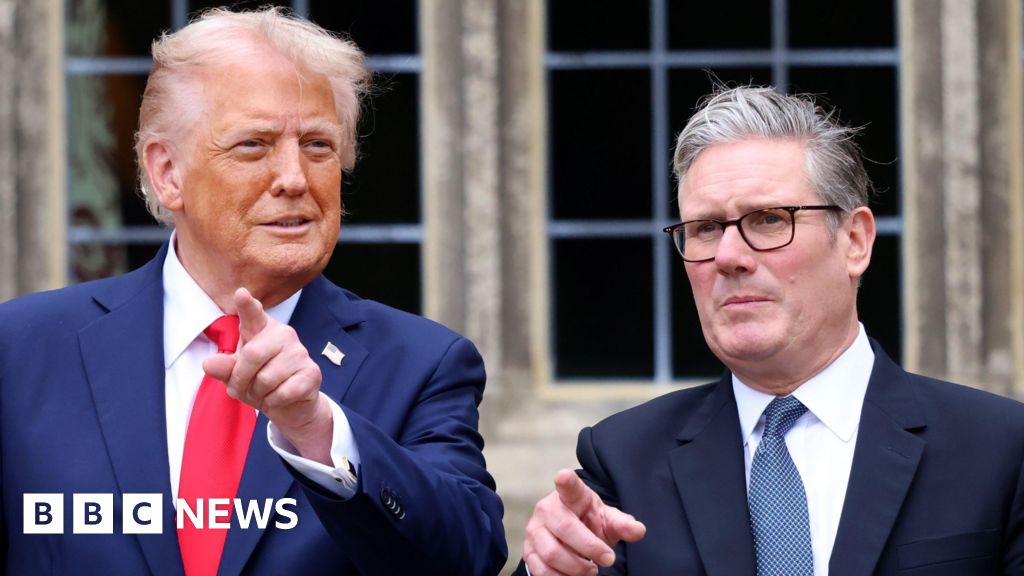
Trump vs UK: Greenland Tensions and NATO Base Deal in Focus

About the People Mentioned
Perplexity
**Perplexity AI** is an American software company founded in August 2022 by engineers Aravind Srinivas (CEO), Denis Yarats (CTO), Johnny Ho (Chief Strategy Officer), and Andy Konwinski, specializing in an AI-powered web search engine that delivers synthesized responses with real-time citations from internet sources.[1][2][3] The founders drew from experiences at OpenAI, Meta, Quora, and Databricks to address limitations in traditional search and early AI chatbots like ChatGPT, which often lacked verifiable sources.[1][2][3] Perplexity launched its flagship conversational "answer engine" on December 7, 2022, initially as a free public beta using OpenAI's GPT-3.5 and Microsoft Bing, later incorporating proprietary models based on Mistral-7B and LLaMA-2.[1][2][4] It pivoted from an earlier tool, Bird SQL, after Twitter's API changes in February 2023, focusing on direct answers over links.[1][2] Key achievements include rapid growth: 2 million monthly active users by March 2023, 10 million by January 2024, and 780 million queries processed monthly by 2025.[1][2][5] Funding milestones propelled valuations from $1 billion in April 2024 (after $165 million raised) to $14 billion in June 2025 ($500 million round), reaching $20 billion by September 2025.[3] Backed by investors like Jeff Bezos, Nvidia, and Shopify's Tobi Lutke, it introduced mobile apps, a Pro subscription, Chrome extension, and a publishers' revenue-sharing program in July 2024.[1][3][4] Recent events underscore ambition: In January 2025, Perplexity proposed merging with TikTok's U.S. operations ahead of a ban; in August 2025, it bid $34.5 billion for Google Chrome to address antitrust issues.[3] Today, Perplexity remains a leading AI search disruptor, blending LLMs like GPT-4, Claude, and Mistral for personalized, ad-free research, challenging Google with over 10 million users and unicorn status in under two years.[2][3][4][5] (Word count: 298)
Trump
Donald John Trump, born June 14, 1946, in Queens, New York, is an American businessman, media personality, and politician who has served as both the 45th and 47th President of the United States[1][3][5]. He is the only president since Grover Cleveland to be elected to two non-consecutive terms, winning the 2016 and 2024 elections and serving from 2017 to 2021, and again from 2025 onward[2][3][5]. Trump’s political rise marked a significant shift in American politics, as he positioned himself as a political outsider and won the Republican nomination in 2016, defeating Democrat Hillary Clinton in the general election[1][5][6]. He was re-elected in 2024, defeating Vice President Kamala Harris, with Ohio Senator JD Vance as his running mate[5]. Before entering politics, Trump was a prominent real estate developer, inheriting and expanding his family’s business into the Trump Organization, which includes hotels, casinos, golf courses, and branded products worldwide[1][3][6]. He gained broader fame as the host of the reality TV show *The Apprentice* from 2004 to 2015[1][5][6]. Trump has authored several books, including the best-selling *The Art of the Deal* (1987)[5][6]. During his first term, Trump pursued a conservative agenda, including significant tax cuts, deregulation, border security measures, and a hardline stance on immigration[1][4]. He appointed three Supreme Court justices and withdrew the U.S. from several international agreements, including the Paris Climate Accord and the Iran nuclear deal, while initiating a trade war with China[1]. His administration’s response to the COVID-19 pandemic was marked by mixed messaging and clashes with health officials[1]. Trump was impeached twice—in 2019 for abuse of power and obstruction of Congress, and in 2021 for incitement of insurrection following the January 6 Capitol attack; he was acquitted by the Senate both times[1]. After losing the 2020 election to Joe Biden, Trump’s refusal to concede and claims of election fraud culminated in the Capitol riot and ongoing legal challenges[1][3]. Trump’s return to the presidency in 2025, at age 78, makes him the oldest person ever inaugurated for a second term[2]. His current administration has pledged to continue his previous policies, emphasizing border security, economic growth, and a rejection of what he terms “extremist” policies from the political left[4]. Trump remains a polarizing figure, with a strong base of support and equally vocal opposition, and his influence on the Republican Party and American politics endures[2][3].
About the Organizations Mentioned
NATO
The **North Atlantic Treaty Organization (NATO)** is a transatlantic military alliance founded in 1949 to secure peace in Europe and protect democratic nations from Soviet aggression. It began with 12 founding members and has expanded to include 32 countries across North America and Europe as of 2025, including recent additions Finland (2023) and Sweden (2024)[1][3]. NATO's core principle is collective defense, meaning an attack against one ally is considered an attack against all, enshrined in Article 5 of its founding treaty[3]. Originally established as a Cold War bulwark, NATO has evolved beyond its initial Euro-Atlantic focus, engaging in missions worldwide, such as in Afghanistan and Libya[1]. The alliance remains central to U.S.-Europe military cooperation and has adapted to new security challenges, particularly Russia’s 2022 invasion of Ukraine, which has significantly reshaped NATO’s priorities. This aggression has spurred increased defense spending, stronger collective deterrence efforts, and accelerated Ukraine’s path toward potential membership[1][4]. In June 2025, NATO held its first summit in the Netherlands, where leaders agreed on raising defense spending targets to 5% of GDP—split between 3.5% for core defense and 1.5% for related security costs, including support for Ukraine. This marked a historic commitment to bolster the alliance’s military capabilities amid evolving global threats. The summit also emphasized eliminating defense trade barriers and reaffirmed the ironclad commitment to collective defense[2][5]. NATO’s ongoing significance lies in its role as a strategic security platform fostering cooperation among member states, responding to geopolitical instability, and adapting to emerging threats like terrorism and cyber warfare[4]. Its "open door" policy continues to invite eligible European democracies to join, reinforcing its mission to safeguard peace, democracy, and shared technological and defense innovations across allied nations[1][4].
CNBC
**CNBC: A Leader in Business News** CNBC, the Consumer News and Business Channel, is a premier global business news organization that has been a cornerstone of financial and business journalism for over three decades. Founded on April 17, 1989, CNBC's roots trace back to the Satellite Program Network (SPN), which later became Tempo Television before its relaunch under NBC's guidance[1][2]. Initially, it faced challenges gaining cable carriage due to competition from the Financial News Network (FNN), but following FNN's bankruptcy in 1991, CNBC acquired its operations and expanded its reach significantly[1]. **Key Achievements and Current Status** CNBC has grown exponentially, offering 23 hours of live programming daily across the U.S., Europe, and Asia. It operates a 24/7 digital platform, direct-to-consumer products, and a vibrant events business. Today, CNBC is the world's leading business news media company, reaching over 450 million consumers monthly[4]. It has been recognized for award-winning journalism and has been the first network to broadcast from the New York Stock Exchange floor. **Notable Aspects** - **Diverse Programming**: CNBC offers a wide range of programming, from business news to entertainment-focused shows like "Shark Tank" and "American Greed" through its CNBC Prime block[5]. - **Global Bureaus**: With more than 20 bureaus worldwide, CNBC provides comprehensive coverage of global business trends. - **Innovative Digital Presence**: CNBC's digital operations are robust, offering real-time news and analysis through its website and mobile apps. As CNBC continues to evolve, it remains committed to its founding promise of making business news accessible and relevant to a broad audience[4]. Its legacy as a leader in business journalism has been cemented through its dedication to quality reporting and innovative storytelling.