Snap Election Gamble for Japan's Iron Lady
Snap Election Gamble for Japan's Iron Lady
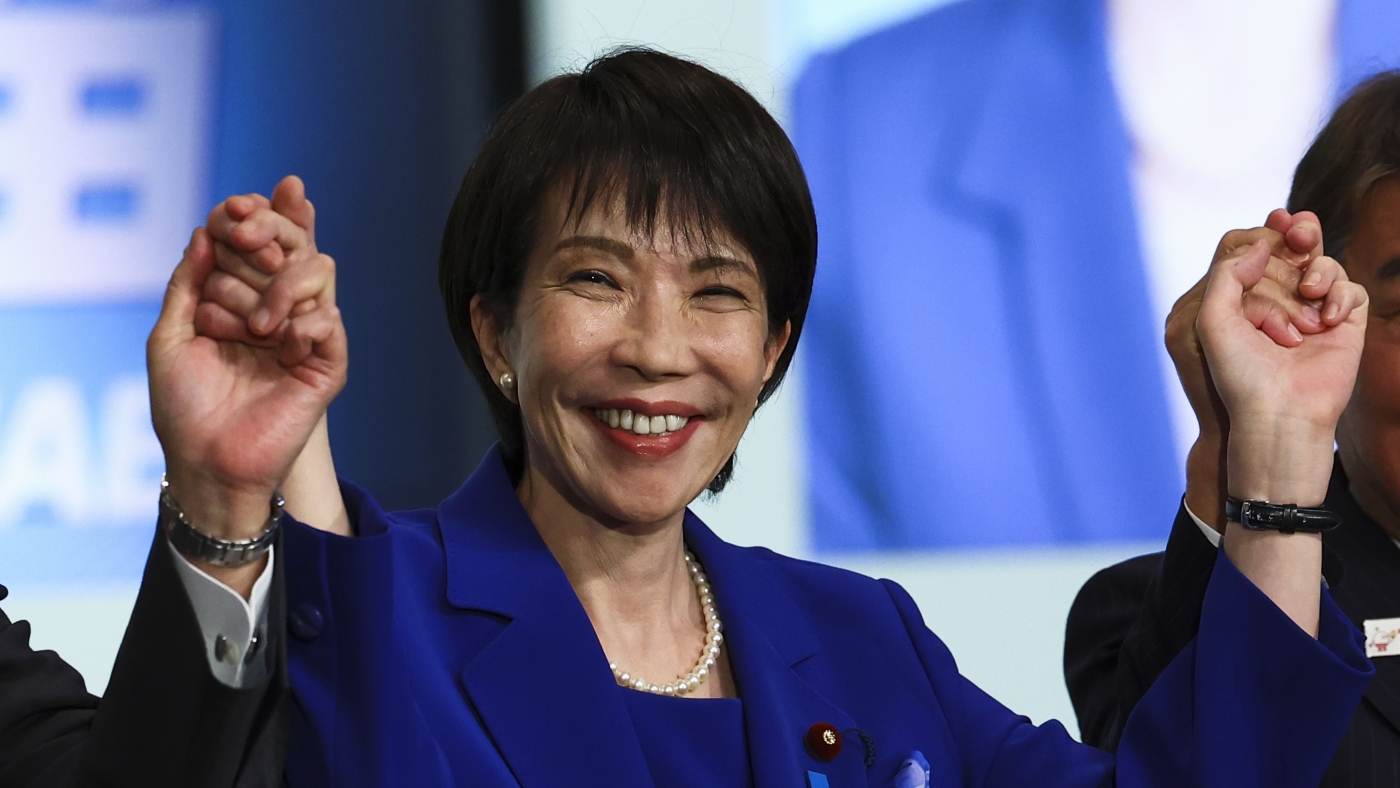
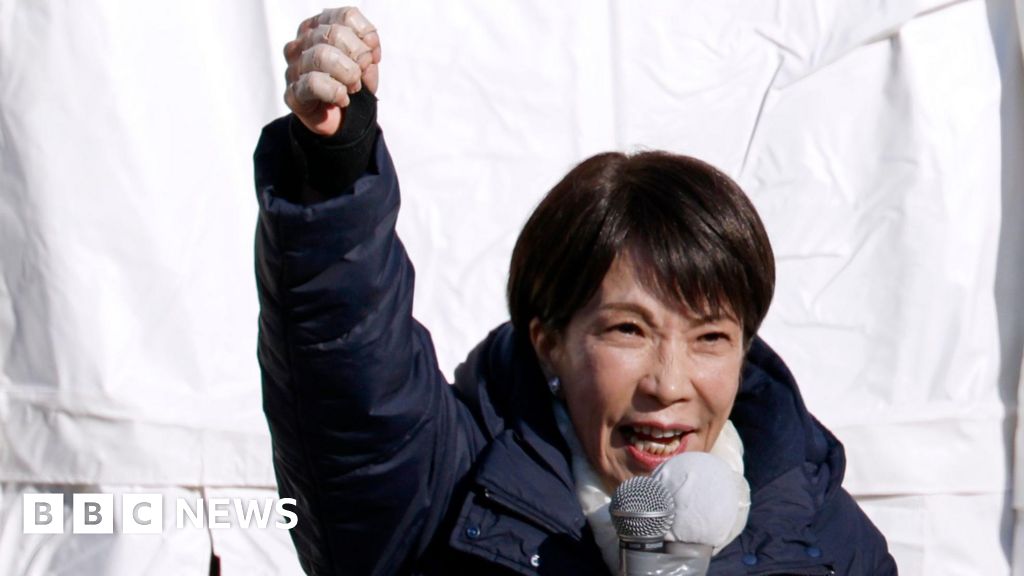
Japan's first female prime minister, Sanae Takaichi, stakes her future on today's snap election, betting her personal popularity will deliver a landslide for her Liberal Democratic Party coalition. Polls forecast around 300 seats in the 465-member lower house, up from 233, potentially securing power to override the upper chamber.[1][2] Despite snowstorms curbing turnout at 7.17%, Takaichi's bold call aims to cement her conservative agenda amid economic pressures like inflation.[1]
Popularity Boosts Amid Diplomatic Tensions
Takaichi's appeal soars among youth via 'sanakatsu' trends featuring her pink pen and handbag, while U.S. President Trump's endorsement energizes right-leaning voters.[1][4] Yet, a fiery row with China over security threats and military buildup has split opinions, though polls show 55-56% public support for her firm stance.[3] Her pledges for doubled defense spending to 2% of GDP and sales-tax cuts unsettle markets but counter voter cost-of-living woes.[2][3]
High Stakes and Rightward Shift
A coalition majority with ally Ishin could enable constitutional revisions, lifting pacifist limits and boosting offensive capabilities against China.[2][5] Failure means resignation, risking instability after recent PM churn.[1] This vote tests if Takaichi's gamble transforms fragility into dominance, steering Japan right on security and immigration.[4]
About the People Mentioned
Sanae Takaichi
Sanae Takaichi is a Japanese politician of the Liberal Democratic Party (LDP) who became Japan’s first female prime minister after winning the LDP leadership and being elected by the National Diet in 2025[2][3]. She was first elected to the House of Representatives in 1993 and has held multiple cabinet posts, notably Minister for Internal Affairs and Communications and Minister of State for Economic Security[5][3]. Takaichi is widely described as a conservative and a protégé of former prime minister Shinzō Abe, advocating traditionalist cultural policies, stronger defence and economic-security measures, and limits on immigration[5][3]. Her tenure as a senior minister included controversial moves such as seeking greater government influence over public broadcasting and visiting the Yasukuni Shrine while in office[5]. After several attempts at party leadership, she secured the LDP presidency in 2025 and led a minority government formed with the Japan Innovation Party amid a fractured Diet and the end of the long-standing LDP–Kōmeitō alliance[2][3]. Key challenges cited for her government include restoring public trust after LDP funding scandals, addressing Japan’s demographic decline and low growth, high public debt, inflation and wage issues, and navigating a tense regional security environment involving China and North Korea[2][3]. Analysts note her policy priorities include expansionary fiscal measures, tighter control over monetary policy levers, and strengthening the U.S.–Japan alliance and economic-security ties[2][5]. Takaichi’s rise is significant both for breaking gender barriers in Japanese national leadership and for shifting the LDP toward more conservative, security-focused policies during a period of domestic political realignment[3][5].
Donald Trump
Donald John Trump, born June 14, 1946, in Queens, New York, is an American businessman, media personality, and politician. He graduated from the University of Pennsylvania’s Wharton School in 1968 with a degree in economics. In 1971, he took over his family’s real estate business, renaming it the Trump Organization, through which he expanded into building and managing skyscrapers, hotels, casinos, and golf courses. Trump gained widespread fame as the host of the reality TV show *The Apprentice* from 2004 to 2015, which helped establish his public persona as a successful entrepreneur. Trump entered politics as a Republican and was elected the 45th president of the United States, serving from 2017 to 2021. His presidency was marked by significant policy actions including tax cuts, deregulation, the appointment of three Supreme Court justices, renegotiation of trade agreements (notably replacing NAFTA with the USMCA), and a focus on immigration control including border wall expansion. He withdrew the U.S. from international agreements such as the Paris Climate Accord and the Iran nuclear deal, and engaged in a trade war with China. His administration’s response to the COVID-19 pandemic was criticized for downplaying the virus’s severity. Trump was impeached twice by the House of Representatives—first in 2019 for abuse of power and obstruction, and again in 2021 for incitement of insurrection—but was acquitted by the Senate both times. After losing the 2020 election to Joe Biden, Trump challenged the results, culminating in the January 6, 2021, Capitol riot. He remains a central figure in American politics, having won the 2024 presidential election and returned as the 47th president in 2025, continuing to promote policies aimed at economic growth, border security, and military strength[1][2][3][4].
About the Organizations Mentioned
Liberal Democratic Party
## Overview The Liberal Democratic Party (LDP; Jiyū-Minshutō) is Japan’s largest and most influential political party, having dominated the country’s political landscape for nearly seven decades since its founding in 1955[1][5][7]. As a conservative to moderate force, the LDP has shaped Japan’s post-war recovery, guided its transformation into a global economic powerhouse, and maintained a steadfast alliance with the United States[2][4][7]. The party’s broad appeal—encompassing both nationalist and progressive factions—allows it to adapt to shifting political and economic climates, much like major U.S. parties[4]. ## What the Organization Does The LDP’s core mission is to promote economic growth, national security, and social stability through policies that favor business, low taxes, and government support for industry[4][5]. It prioritizes a close relationship with the U.S., advocates for export-driven growth, and has historically resisted sweeping social reforms such as the legalization of same-sex marriage[1]. The party also supports constitutional revision to expand Japan’s military role internationally, reflecting evolving national security priorities[4]. ## History Formed in 1955 through the merger of the Liberal Party and the Japan Democratic Party, the LDP was created to counter the rising influence of socialist parties[3][6]. It quickly established itself as the dominant political force, overseeing Japan’s remarkable post-war economic recovery and industrialization[7]. The LDP’s uninterrupted rule from 1955 to 1993 was punctuated only by brief opposition-led governments in 1993–94 and 2009–12[2][7]. Its longevity is attributed not only to policy successes but also to a robust political machine built on patronage and close ties with business and agricultural interests[6]. ## Key Achievements Under LDP leadership, Japan became the world’s second-largest economy by the 198
Ishin
**Japan Innovation Party (Nippon Ishin no Kai)**, commonly known as **Ishin**, is a conservative, centre-right to right-wing populist political party in Japan focused on bold reforms for future generations.[1][2] Founded in 2015 by former Osaka Mayor Tōru Hashimoto and Ichirō Matsui as **Initiatives from Osaka** (Ōsaka Ishin no Kai), it emerged from the Osaka Restoration Association amid a push to challenge traditional "Nagatacho-style politics."[1][2] The party quickly expanded nationally, emphasizing three pillars: serving the next generation, implementing a **dōshū system** (merging prefectures into regional states for decentralization), and overhauling social security. Key policies include nationwide free education from early childhood to high school, tax reforms to sustain social security amid Japan's aging population, and positioning Osaka as a "second capital" to build disaster-resilient governance.[1][2] Ishin has notched notable achievements, such as forging electoral alliances—like with Tokyo Governor Yuriko Koike's Party of Hope in 2017—and influencing national debates on devolution and constitutional changes.[2] In 2025, it entered a coalition with the Liberal Democratic Party (LDP), agreeing to form a committee revising **Article 9** (on military forces), which began deliberations that November and aimed for a Diet draft by March 2026. This marked a shift from its early hawkish reputation to concrete security policy input.[3] As of early 2026, Ishin remains active in Diet politics, advocating constitutional amendments for free education, devolution, and imperial succession while pushing regional economic strength. Its populist appeal resonates in Osaka, though Tokyo electoral gains have been modest.[2][3] Challenges persist, including internal shifts like the 2017 Party of Hope merger attempt, but Ishin's focus on decentralization and generational equity position