South Korea Court Sentences Ex-President Yoon Suk Yeol to Five Years in Martial Law Case

South Korea Court Sentences Ex-President Yoon to 5 Years in Martial Law Case
A South Korean court has sentenced former President Yoon Suk Yeol to five years in prison for charges including obstructing his arrest and mishandling the 2024 martial law declaration, marking a pivotal moment in the nation's political saga[1]. This verdict, the first to deem the emergency measure illegal, stems from Yoon's mobilization of security to block a lawful arrest at his residence and his selective convening of ministers to bypass full cabinet deliberation[1].
Details of the Controversial Declaration
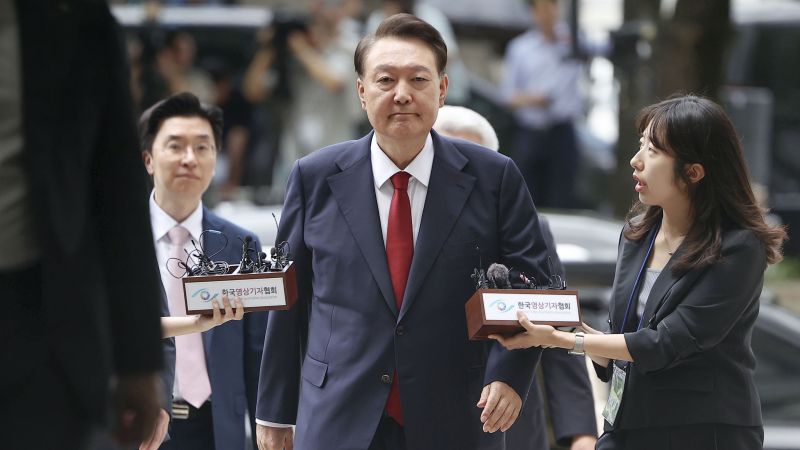
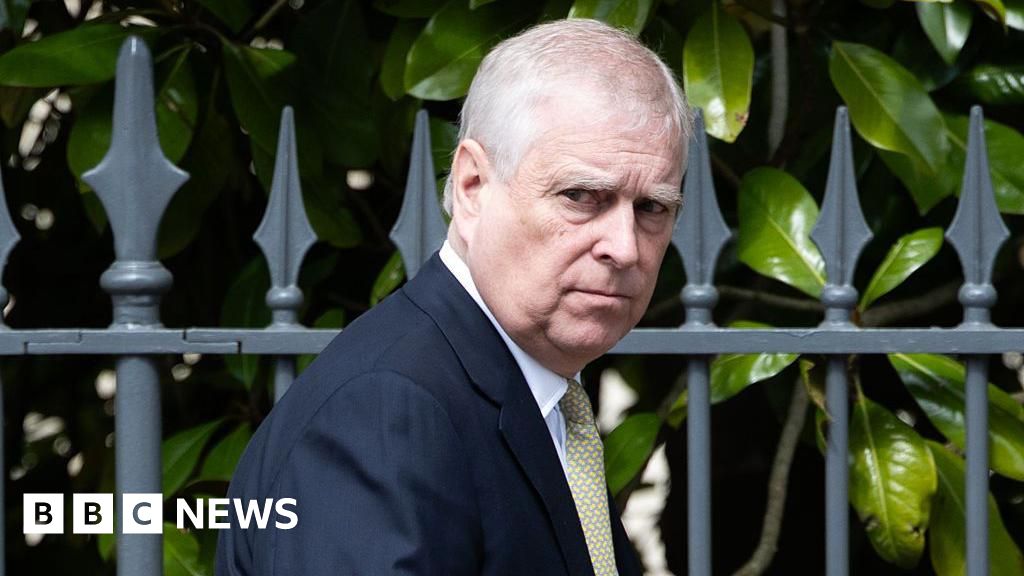
In December 2024, Yoon's abrupt martial law order sent troops to streets without parliamentary approval, sparking nationwide turmoil and his eventual impeachment[2]. The court criticized him for disregarding constitutional safeguards, emphasizing his duty to uphold the law as president[1]. Yoon attended the hearing stoically in a navy suit, showing no reaction to the sentence[1].
Broader Implications and Ongoing Trials
Prosecutors seek the death penalty in a separate insurrection case, highlighting threats to democratic order[1]. Supporters wept outside the Seoul court, underscoring deep divisions[2]. This ruling could reshape South Korea's political landscape, deterring future overreaches while testing judicial independence[1].
About the People Mentioned
Yoon Suk Yeol
Yoon Suk Yeol, born December 18, 1960, in Seoul, South Korea, is a lawyer and former public official who served as prosecutor general from 2019 to 2021 and as South Korea's president from 2022 to 2025.[1][2][5] Rising through a 26-year prosecutorial career, he gained prominence for investigating corruption during the Park Geun-hye and Lee Myung-bak presidencies, earning a reputation as a hardline anti-corruption figure.[1][2][4] In 2016, he contributed to the impeachment and conviction of President Park by working with Special Counsel Park Young-Soo, making him a national symbol of justice.[1] Appointed chief prosecutor of the Seoul Central District Prosecutors’ Office in 2017 by President Moon Jae-in, Yoon later clashed with Moon's administration, notably by probing Justice Minister Cho Kuk’s alleged corruption, which boosted his conservative popularity and led to his 2021 resignation.[1][2][4] As a political novice, Yoon won the March 9, 2022, presidential election for the People Power Party by the narrowest margin in South Korean history—48.56% to Lee Jae-myung’s 47.83%—and was sworn in on May 10.[1][2][3][4] He relocated the presidential office from the Blue House to Yongsan’s Defense Ministry compound, converting the former into a public park to symbolize reduced imperial power, though the move drew controversy.[1][2] Yoon adopted a hawkish stance on North Korea, prioritizing denuclearization over end-of-war declarations, enhancing U.S. alliance defenses, and responding firmly to provocations.[4] His presidency ended amid crisis: on December 3, 2024, Yoon briefly declared martial law to counter alleged “pro-North Korean” forces but reversed it hours later after National Assembly opposition.[1][3] Impeached on December 14, 2024, by a 204-85 vote after some party members defected, his powers were suspended, with Prime Minister Han Duck-soo acting as president; Yoon’s approval had plummeted to 11%.[1][3] (298 words)
About the Organizations Mentioned
Seoul court
**Seoul Central District Court** serves as South Korea's premier trial court, handling first-instance civil, criminal, and administrative cases in the capital region, while hosting key specialized branches like the Administrative Court and Seoul Bankruptcy Court.[1][2][3] Established within South Korea's three-tier judiciary under the Court Organization Act, it forms part of the 18 district courts nationwide, with roots tracing to post-1948 constitutional frameworks that separated judicial power from executive control.[1][5] The broader system evolved with milestones like the 1963 launch of the first Family Court in Seoul for domestic and juvenile matters, the 1998 creation of the Seoul-based Administrative Court to streamline tax, eminent domain, and labor disputes (bypassing prior administrative remedies), and the 2017 establishment of the Seoul Bankruptcy Court as Korea's inaugural insolvency specialist, tackling corporate rehabilitation, individual bankruptcies, and cross-border cases.[2][3] Key achievements include bolstering judicial efficiency and specialization amid South Korea's tech-driven economy. The Bankruptcy Court's focus on restructuring has enhanced trust in corporate insolvency processes, vital for tech giants and startups navigating IP disputes—often appealed to the Patent Court—and financial recoveries post-global crises.[3][4] High-profile cases, from chaebol restructurings to administrative challenges against regulatory bodies, underscore its role in business stability. Currently, under the National Court Administration (NCA) led by a Supreme Court Justice, it operates with single-judge or three-judge panels for high-stakes matters (e.g., civil claims over KRW 500 million or serious crimes).[1][6] With 102 courts total, Seoul Central remains central, supported by branch and municipal courts.[7] Notable for tech-business watchers: its proximity to innovation hubs positions it for IP, antitrust, and fintech litigation, fostering a rule-of-law environment that attracts global investment. Ongoing NCA reforms address judge independence concerns, ensurin