Trump Directs Emergency Auction to Bolster US Power Grid for AI Data Centers

Trump Directs Emergency Auction for US Power Grid
President Donald Trump, alongside governors from Northeastern states, is directing PJM Interconnection, the key grid operator for a 13-state region, to launch an emergency wholesale electricity auction. This bold move targets soaring power demands from AI data centers, compelling tech giants like Microsoft and Amazon to fund new generation capacity through 15-year contracts.[1][2]
Addressing Skyrocketing Prices and Grid Strain
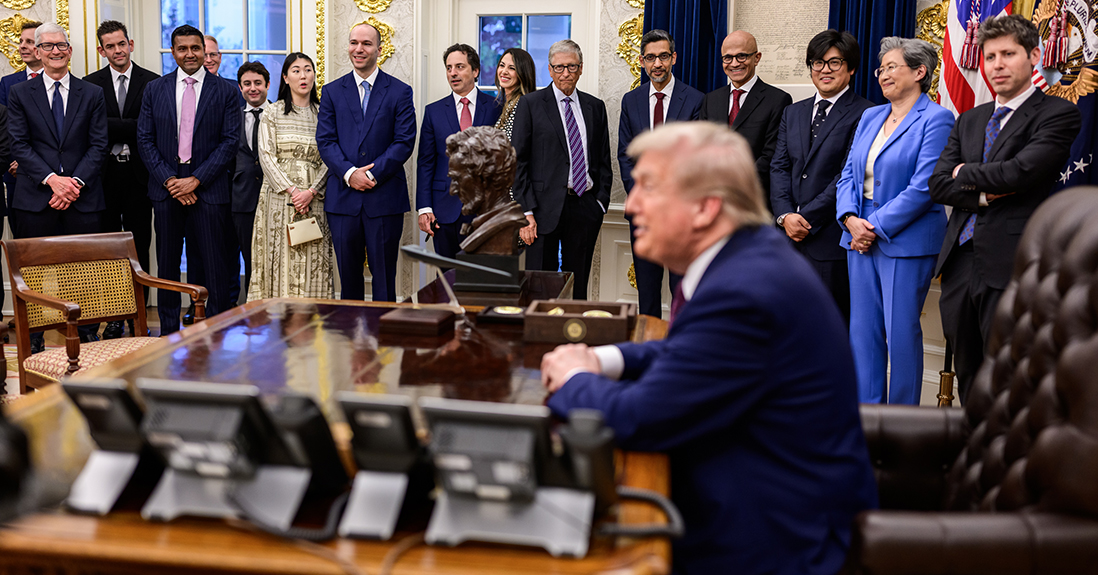
In a White House meeting, bipartisan leaders including Pennsylvania's Josh Shapiro criticized PJM for delays in adding new plants amid rising demand. The plan promises $15 billion in baseload power projects, caps residential rates, and ensures data centers bear costs without burdening families. Energy Secretary Chris Wright emphasized building generation to curb price hikes and spur jobs across Ohio, Virginia, and beyond.[1][3]
Tech's Willing Role and Broader Impacts
Tech firms welcome the auction, preferring stable grid contracts over direct builds, as they invest billions in AI infrastructure equivalent to multiple nuclear plants. This intervention eases political backlash on bills and emissions, stabilizing supplies for economic growth while prioritizing reliability in high-demand manufacturing hubs.[4][5]
About the People Mentioned
Donald Trump
Donald John Trump, born June 14, 1946, in Queens, New York, is an American businessman, media personality, and politician. He graduated from the University of Pennsylvania’s Wharton School in 1968 with a degree in economics. In 1971, he took over his family’s real estate business, renaming it the Trump Organization, through which he expanded into building and managing skyscrapers, hotels, casinos, and golf courses. Trump gained widespread fame as the host of the reality TV show *The Apprentice* from 2004 to 2015, which helped establish his public persona as a successful entrepreneur. Trump entered politics as a Republican and was elected the 45th president of the United States, serving from 2017 to 2021. His presidency was marked by significant policy actions including tax cuts, deregulation, the appointment of three Supreme Court justices, renegotiation of trade agreements (notably replacing NAFTA with the USMCA), and a focus on immigration control including border wall expansion. He withdrew the U.S. from international agreements such as the Paris Climate Accord and the Iran nuclear deal, and engaged in a trade war with China. His administration’s response to the COVID-19 pandemic was criticized for downplaying the virus’s severity. Trump was impeached twice by the House of Representatives—first in 2019 for abuse of power and obstruction, and again in 2021 for incitement of insurrection—but was acquitted by the Senate both times. After losing the 2020 election to Joe Biden, Trump challenged the results, culminating in the January 6, 2021, Capitol riot. He remains a central figure in American politics, having won the 2024 presidential election and returned as the 47th president in 2025, continuing to promote policies aimed at economic growth, border security, and military strength[1][2][3][4].
Chris Wright
Chris Wright is best known as the founder and Chief Executive Officer of Liberty Energy, a prominent oilfield services company specializing in hydraulic fracturing (fracking) operations[4]. A self-described “tech nerd turned energy entrepreneur,” Wright has built a career at the intersection of technology and energy, with experience spanning oil and gas, nuclear, solar, and geothermal sectors[4]. He holds an undergraduate degree in Mechanical Engineering from the Massachusetts Institute of Technology (MIT) and pursued graduate studies in Electrical Engineering at both the University of California, Berkeley and MIT[4]. Wright’s professional journey began with hands-on work in solar and geothermal engineering, later shifting to the oil and gas industry, where he founded Liberty Energy in 2011[3][4]. Under his leadership, Liberty Energy has grown into a significant player in the energy services sector, known for its focus on innovation and operational efficiency. Wright has also been involved in next-generation energy ventures, including investments in geothermal technology and a board position at the nuclear company Oklo[3]. Beyond his corporate roles, Wright is an active participant in the broader energy and climate conversation, frequently speaking on topics related to energy, climate, poverty, and prosperity[4]. He identifies as both an energy and climate “nerd,” reflecting a long-standing personal interest in the technical and policy dimensions of energy systems[3]. Despite his technical expertise and advocacy for diverse energy sources, Wright’s positions—particularly his leadership in the fracking industry—have drawn criticism from some environmental groups[3]. Recently, Wright has been in the public eye as a nominee for U.S. Secretary of Energy under the Trump administration, a nomination that highlighted his extensive industry experience but also sparked debate due to his ties to fossil fuels[3]. He continues to lead Liberty Energy, advocating for what he describes as pragmatic, technology-driven solutions to global energy challenges[4]. Wright is based in Colorado, where he is also known for his outdoor pursuits and community involvement[4]. His career exemplifies the complex interplay between entrepreneurship, technology, and energy policy in contemporary America.
About the Organizations Mentioned
PJM Interconnection
**PJM Interconnection** is the largest regional transmission organization (RTO) in North America, operating the high-voltage electric grid across all or parts of 13 states and Washington, D.C., serving over 67 million people.[2][3][4] Headquartered in Valley Forge, Pennsylvania, it acts as the "air traffic controller" for the transmission grid and a stock exchange for energy, matching supply with demand in real-time while ensuring reliability.[1][3] Founded decades ago as a power pool for utility sharing, PJM evolved into the nation's first fully functioning RTO in 2002, coordinating wholesale markets and grid operations.[3] Its core functions include operating day-ahead and real-time energy markets, Reliability Pricing Model (RPM) capacity auctions, Financial Transmission Rights (FTRs), and ancillary services like regulation and synchronized reserves.[1][7] PJM plans transmission expansions via its Regional Transmission Expansion Planning (RTEP) process over a 15-year horizon, addressing load growth, retirements, and congestion.[2] It monitors 1,400+ generators, 88,000+ miles of lines, and 6,038 substations, handling 56,500 GWh annually—26% of Eastern Interconnection generation and 19% of U.S. GDP.[1][4][5] Key achievements include maintaining grid balance around the clock, processing a massive interconnection queue (260,000 MW of renewables/storage by 2026), and facilitating decarbonization amid rising peaks from 147,820 MW (2022) to 167,567 MW (2038 forecast).[2][5] PJM recently shifted to a "first-ready, first-served" queue for faster renewables integration.[2] Today, PJM drives the energy transition with ~182,000 MW capacity across 369,000 square miles, emphasizing competitive markets, cross-border coordination (e.g., with Midwest ISO), and reliability for
Microsoft
Microsoft is a global technology leader that develops, licenses, and supports a broad range of software, services, devices, and solutions. Founded in 1975 by Bill Gates and Paul Allen, Microsoft initially gained prominence through its MS-DOS operating system and later Windows, which became the dominant PC operating system worldwide. Over time, the company expanded into cloud computing, productivity software, gaming, and AI, evolving from a software vendor into a comprehensive technology ecosystem[2][4]. Today, Microsoft’s core business revolves around its cloud platform, Azure, which supports enterprise digital transformation and AI innovation. In fiscal year 2025, Microsoft reported a strong financial performance with revenue reaching $76.4 billion, an 18% increase year-over-year, driven largely by a 27% growth in Microsoft Cloud revenue to $46.7 billion. Operating income rose 23%, and net income increased 24%, underscoring robust profitability. The company’s strategic focus on cloud and AI is central to its growth, with Azure surpassing $75 billion in revenue, reflecting broad adoption across industries[3][5]. Microsoft also leads in cybersecurity solutions, with Microsoft Sentinel recognized as a leader in Gartner’s 2025 Magic Quadrant for Security Information and Event Management (SIEM). This AI-powered cloud service enhances threat detection and response, reflecting Microsoft’s commitment to innovation in security and hybrid cloud environments[6]. The company employs over 220,000 people worldwide and continues to drive digital transformation both internally and for its customers. Its vision embraces the integration of AI and human intelligence, pioneering the “Frontier Firm” model—organizations that blend AI agents with human judgment to scale rapidly and innovate continuously[1][4]. With a diversified portfolio including Office 365, LinkedIn, Xbox, and Surface devices, Microsoft remains a dominant force in technology, shaping the future of work, security, and AI-enabled business transformation[2][3][6].
Amazon
Amazon.com, Inc. is a leading American multinational technology company specializing in **e-commerce, cloud computing, digital streaming, online advertising, and artificial intelligence**. Founded in 1994 by Jeff Bezos in Bellevue, Washington, Amazon initially launched as an online bookstore but rapidly expanded into a vast online marketplace known as "The Everything Store," selling a wide array of products across numerous categories[1]. Today, it stands as the **world's largest online retailer and marketplace**. Amazon operates multiple key business segments: Amazon Marketplace for retail sales, Amazon Web Services (AWS) for cloud computing, and Amazon Prime for subscription services, all contributing substantial revenue streams and synergistic benefits[3]. AWS is a powerhouse in scalable cloud infrastructure, serving businesses globally, while Amazon Prime offers fast delivery, streaming video, music, and exclusive deals to millions of subscribers[1][3]. The company’s growth strategy focuses heavily on technological innovation, particularly in **artificial intelligence and robotics**. Its AI-powered products include Alexa, the voice assistant embedded in Echo devices. Amazon’s warehouses employ over 45,000 robots, reflecting its commitment to automation and efficiency in logistics[4]. Capital expenditures for 2025 are projected at $118 billion, emphasizing AI and cloud expansion[4]. Amazon’s notable acquisitions have broadened its market reach and diversified offerings. Key acquisitions include **Whole Foods Market (2017), MGM Studios (2022), Twitch, Ring, and IMDb**, which have enhanced its physical retail presence, media content, and smart home technology portfolio[1][3]. These moves have helped Amazon maintain market dominance with over $574 billion in annual revenue and a market capitalization exceeding $2 trillion[3]. Despite strong retail and advertising performance, Amazon faces challenges such as narrowing AWS margins and increased AI infrastructure competition. However, its Q2 2025 financials showed robust revenue growth, with net sales rising 9% to $155.7 billion, underscoring its resilience and adap
White House
The **White House Office** is a central organizational component within the Executive Office of the President of the United States (EOP), tasked with supporting the President in managing day-to-day operations, policy formulation, and political affairs. It is headed by the White House Chief of Staff and staffed by senior aides who report directly to the President, including those with titles such as Assistant to the President and Deputy Assistant to the President. These staff members are mostly political appointees without the need for Senate confirmation, allowing the President considerable discretion in shaping the office to suit each administration's priorities[1]. Historically, the White House Office was established in 1939 through Reorganization Plan 1 and Executive Order 8248 to provide immediate assistance to the President. It functions as the nerve center for presidential staff, physically located primarily in the West Wing, and plays a pivotal role in managing the President’s policy agenda, communications, and political strategy. Its flexible organization allows each President to tailor the staff composition and roles according to their governance style and objectives[1]. In the current context of 2025, the White House Office operates under the administration of President Donald J. Trump, who returned to office after the 2024 election. His administration emphasizes rejecting prior policies deemed extremist and focuses on enhancing quality of life, economic growth, and American energy dominance. The administration includes Vice President JD Vance and First Lady Melania Trump, among others, with a Cabinet advising on various governmental functions[4][6]. Recent initiatives linked to the White House’s operational sphere include the establishment of a new **Department of Government Efficiency (DOGE)** aimed at modernizing federal technology and software to boost government productivity. The DOGE agenda is implemented through the renamed United States DOGE Service within the Executive Office, reflecting a concerted push to leverage technology for administrative modernization[5]. Notably, the White House Office also coordinates national security and homeland security functions through the National Security Council staff, underscoring its central role