Hegseth Weighs Releasing Second-Strike Video: Balancing Transparency and Security

Hegseth on Releasing Second Strike Video
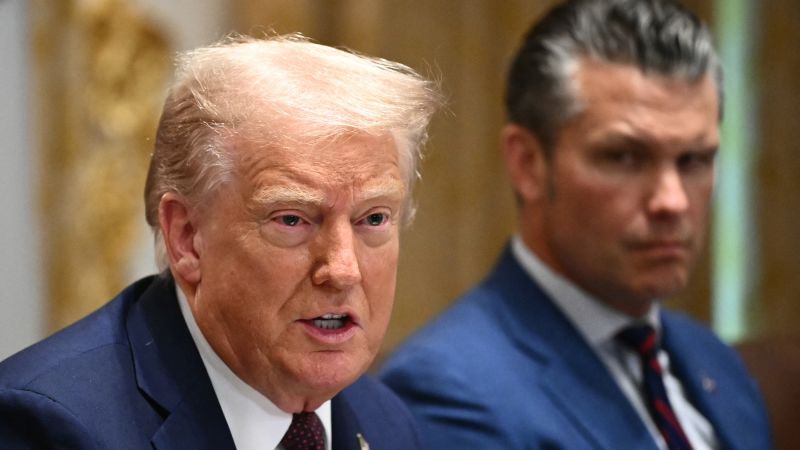
Defense Secretary Pete Hegseth remains noncommittal regarding the release of the video showing the second strike on an alleged drug boat. He emphasized that the Department of Defense is currently reviewing the process carefully before making any decisions. "Whatever we were to decide to release, we'd have to be very responsible about reviewing that right now," Hegseth stated, highlighting the need for thorough evaluation to balance transparency with operational security.
Context of the Incident
The strike in question is part of ongoing efforts to counter drug trafficking via maritime routes. As Secretary of Defense, Hegseth oversees such military actions which align with broader national security priorities, including defending the homeland and countering illicit activities. Given his military background and the sensitive nature of these operations, Hegseth’s cautious approach reflects the complexities involved in releasing military footage that may impact diplomatic and security considerations.
Implications of the Decision
The decision to release or withhold the video carries significant implications for public accountability and military transparency. It also affects how the Department of Defense manages sensitive information in an era of heightened scrutiny. Hegseth’s review process underscores a commitment to responsible governance while considering the potential consequences for ongoing operations and international relations.
About the People Mentioned
Pete Hegseth
Pete Hegseth is an American government official, author, and former television personality. Born on June 6, 1980, he graduated from Princeton University in 2003 and later earned a master's degree in Public Policy from Harvard University's John F. Kennedy School of Government in 2013[1][4]. Hegseth was commissioned as an infantry officer in the Minnesota Army National Guard, serving in Guantanamo Bay, Iraq, and Afghanistan. He received several military awards, including two Bronze Star Medals and the Combat Infantryman Badge[3][4]. After his military service, Hegseth worked with organizations such as Vets for Freedom and Concerned Veterans for America, where he served as executive director and CEO, respectively[1][7]. He became a contributor to Fox News in 2014 and later co-hosted *Fox & Friends Weekend* from 2017 to 2024[1][5]. Hegseth has written several books, including *American Crusade* and *The War on Warriors*, the latter being a New York Times bestseller[3][5]. In November 2024, Hegseth was nominated by President-elect Donald Trump to be the Secretary of Defense. He faced a contentious confirmation process, with allegations of misconduct and financial issues. Despite these challenges, Hegseth was confirmed by the Senate on January 25, 2025, with Vice President JD Vance casting a tie-breaking vote[1][2]. As Secretary of Defense, Hegseth has been involved in several significant events, including ordering budget cuts and firing top military officers to "focus our military on its core mission"[2]. He has also been at the center of controversy regarding the use of the Signal messaging app for sharing sensitive information[2]. In September 2025, Hegseth addressed senior military leaders, emphasizing the need for tighter fitness standards and opposition to certain policies he termed "woke garbage"[1].
About the Organizations Mentioned
Department of Defense
The **Department of Defense (DoD)** is a pivotal executive branch department of the U.S. government, responsible for coordinating and supervising all agencies and functions related to national security and the United States Armed Forces. Established by the National Security Act Amendments of 1949, the DoD is headquartered in the Pentagon and is led by the Secretary of Defense, who reports directly to the President of the United States[2][4]. ### History and Role The DoD was created to consolidate national defense efforts under a single entity, replacing the National Military Establishment. It plays a crucial role in maintaining and using armed forces to support and defend the Constitution, ensure national security, and uphold U.S. policies and interests[1][4]. The department oversees three major military departments: the Department of the Army, the Department of the Navy, and the Department of the Air Force, as well as newer additions like the Space Force[2][7]. ### Key Components and Achievements - **Military Departments**: Each branch has specific responsibilities, such as the Army focusing on land combat and the Navy on naval operations[6]. - **Agencies and Operations**: The DoD includes agencies like DARPA, NSA, and the Missile Defense Agency, contributing to technological advancements and strategic defense[2]. - **Current Status**: The DoD employs over 2.91 million personnel, including active-duty, reserve, and civilian workers, making it one of the world's largest bureaucracies[2]. ### Notable Aspects - **Global Influence**: The DoD plays a significant role in international security through its military operations and partnerships with allies[4]. - **Technological Innovation**: Agencies like DARPA have driven numerous technological breakthroughs, influencing both military and civilian sectors[2]. - **Government Contracting**: The DoD is a major player in government contracting, with significant implications for the business sector[7]. In summary, the Department of Defense is a cornerstone of U.S. national