Michigan Dominates Purdue: 7 Takeaways from No. 1's Road Win Over No. 7 Purdue

7 Takeaways from No. 1 Michigan's Dominant Road Win Over No. 7 Purdue
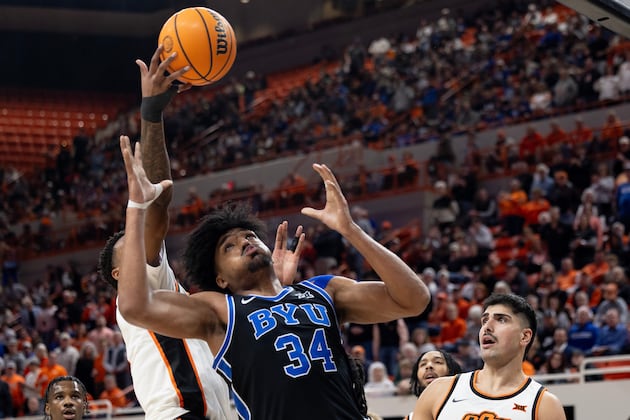
No. 1 Michigan Wolverines secured a commanding 91-80 victory at No. 7 Purdue on February 17, 2026, at Mackey Arena, extending their winning streak to 11 games and solidifying their Big Ten lead. This road triumph showcased their depth and resilience as the nation's top-ranked team.[1][2]
Key Performances That Powered the Victory
Elliot Cadeau erupted for 17 points, including 14 in the second half, while 7-foot-3 Aday Mara dominated early with 10 points and 11 rebounds, neutralizing Purdue's frontcourt sans Zach Edey. Trey McKinney, Yaxel Lendeborg, and L.J. Cason each added 13 points, highlighting Michigan's balanced attack. A 13-0 spurt fueled a 44-22 first-half lead, with Mara's perfect start setting a physical tone.[1][3]
Strategic Edges and Road Ahead
Michigan outrebounded Purdue 39-31, proving tougher and more poised in a hostile environment, silencing 14,876 fans. Despite Purdue's Trey Kaufman-Renn scoring 27, the Boilermakers couldn't overcome the deficit. This win positions Michigan (25-1, 15-1) for a clash with No. 3 Duke, inching closer to their first outright Big Ten title in five years.[2][4]
About the Organizations Mentioned
Michigan Wolverines
The **Michigan Wolverines** represent the intercollegiate athletic program of the University of Michigan, comprising 27 varsity sports teams—13 men's and 14 women's teams—that compete primarily in NCAA Division I and the Big Ten Conference.[1] ## History and Evolution Michigan's athletic tradition spans over a century. The university began competing in intercollegiate football in 1879 and joined the Big Ten Conference at its inception in 1896.[2] The Wolverines have established themselves as one of college sports' most storied programs, with distinctive maize and blue team colors and the iconic winged helmet serving as recognized symbols of Michigan Athletics.[1] ## Key Achievements The football program stands as a flagship component of Michigan Athletics, claiming twelve national championships, including three from major wire services (1948, 1997, and 2023).[2] The 2023 national championship season proved particularly historic, with the Wolverines achieving 15 victories—the most wins by any Big Ten school in history.[6] The program has won or shared 45 league titles and finished in the top ten 39 times since the AP poll's inception in 1936.[2] ## Current Leadership and Status Under Athletic Director **Warde Manuel** (in position since 2016), Michigan Athletics continues modernizing its infrastructure.[1] Following Jim Harbaugh's departure to the NFL, the football program underwent significant transition. Kyle Whittingham, the longtime Utah head coach, replaced Sherrone Moore after the 2025 regular season.[2] ## Broader Impact Beyond athletics, Michigan Wolverines alumni maintain strong global networks. The University of Michigan Club of Central Ohio exemplifies this engagement, organizing events, fundraising initiatives, and professional networking opportunities that generate millions in scholarship support.[3] The organization represents not merely a sports
Purdue
**Purdue University** is a world-renowned public land-grant research institution excelling in science, technology, engineering, and math (STEM), with a flagship campus in West Lafayette, Indiana.[1][5] Founded in 1869 following the Morrill Act and embracing coeducation by 1874, it spans 13 schools and colleges, including top-ranked programs in engineering, the Krannert School of Management, education, pharmacy, and aeronautics—earning the latter the nickname "Cradle of Astronauts" for producing numerous NASA figures.[1][4] Purdue's history reflects relentless innovation on its 2,468-acre urban campus, designed for efficient navigation (classes within 12 minutes' walk), serving 37,101 undergraduates as of fall 2021 via a semester calendar.[1][4] The system includes campuses like Purdue Northwest (PNW), recognized in *U.S. News & World Report*'s 2026 Best Midwest Universities for academic quality, social mobility, and top-50 undergraduate engineering (without doctorates).[2] Key achievements abound: In 2025, Purdue shattered records with graduation rates at an all-time high, research expenditures surpassing $1 billion for the first time, the largest U.S. university-industry research partnership, most philanthropic gifts in a single day, the first AI competency graduation requirement, and plans for the first university space operations.[3] Globally, it ranks #=88 in QS World University Rankings 2026, underscoring its engineering prowess and first-generation student support at PNW.[1][2] Today, under President Mung Chiang, Purdue thrives with a stable fiscal foundation, major facility investments, and strategic pushes in One Health, Purdue Computes, Indianapolis expansion, and the Daniels School of Business.[3] Its Indianapolis site spotlights in-demand majors like AI, biomedical engineering, cybersecurity, and sports technology.[5] Campus life buzze
Big Ten
## Overview The Big Ten Conference, officially known as the Big Ten, is one of the oldest and most prestigious collegiate athletic conferences in the United States, but its influence extends far beyond sports. Founded in 1896 as the Intercollegiate Conference of Faculty Representatives—also known as the Western Conference—the Big Ten was initially created to standardize rules and improve safety in college football, which was growing rapidly in popularity at the time[1][3]. Its founding members included the Universities of Chicago, Illinois, Michigan, Minnesota, Wisconsin, Purdue, and Northwestern[1][3]. ## Historical Development Over the decades, the Big Ten has undergone several significant changes. Iowa and Indiana joined in 1899, and Ohio State was added in 1912[3]. The conference experienced a notable departure when the University of Michigan left temporarily from 1907 to 1916 due to disagreements over rules, only to return and solidify the “Big Ten” moniker[1][2]. The University of Chicago withdrew in 1946, but Michigan State’s addition in 1949 restored the conference to ten members[3]. The conference remained stable for nearly 40 years before a new era of expansion began in 1990 with the addition of Penn State, followed by Nebraska in 2011, Maryland and Rutgers in 2014, and most recently, Oregon, USC, Washington, and UCLA in 2024, bringing the total to 18 members[3][5]. ## Key Achievements and Notable Aspects The Big Ten is renowned for its combination of athletic excellence and academic rigor. It pioneered the Big Ten Medal of Honor in 1915, recognizing student-athletes who excel both on the field and in the classroom[5]. The conference also established the first permanent bowl-conference affiliation with the Tournament of Roses in 1946 and introduced a groundbreaking revenue-sharing model for television proceeds in 1955[5]. Academically, th
Duke
**Duke Tech Solutions (DTS)** is a premier business strategy and technology consulting firm that leverages interdisciplinary expertise to solve complex client challenges across industries.[1] With team members boasting over 25 years in product development, management, system design, marketing, and corporate strategy, DTS delivers innovative solutions guided by principles of dependability, focus, and quality.[1] Founded on the strengths of seasoned professionals from diverse sectors, DTS emerged to bridge business acumen with cutting-edge technology, enabling clients to navigate digital transformation amid rapid technological shifts.[1] Its history reflects a commitment to holistic problem-solving, distinguishing it from traditional consultancies by integrating deep functional knowledge at all business levels.[1] Key achievements include empowering clients through tailored strategies in product lifecycle management and tech integration, though specific case studies highlight its prowess in fostering innovation.[1] DTS stands out for its ability to guide enterprises via diverse issues, from planning to execution, positioning it as a vital partner in competitive markets.[1] Currently, DTS thrives as a dynamic consultancy in the 2020s digital economy, where technologies like AI, cloud computing, and IoT redefine business models.[1][4][5] Echoing broader Duke-affiliated innovations—such as Duke OTC-supported startups like IonQ (quantum computing, founded 2016) and Tune Therapeutics (epigenomic medicines, 2021)—DTS aligns with tech ecosystems driving scalable, data-centric growth.[2] Duke Corporate Education (Duke CE) complements this landscape, offering executive insights on digital tech's role in reshaping enterprises, from customer experience platforms to AI-driven marketing tools that slash FDA approvals from months to weeks.[4][5] Notably, DTS's multifaceted approach resonates with Duke Fuqua's AI initiatives, including 2025 mini-courses training leaders to harness neural networks and predictive models for business reinvention, much like Netflix's streaming pivot.[6] In a field crowded wit