Portland Protests Against ICE Turn Chaotic as Tear Gas Fills the Streets

Thousands March Against ICE in Portland Amid Tear Gas Clashes
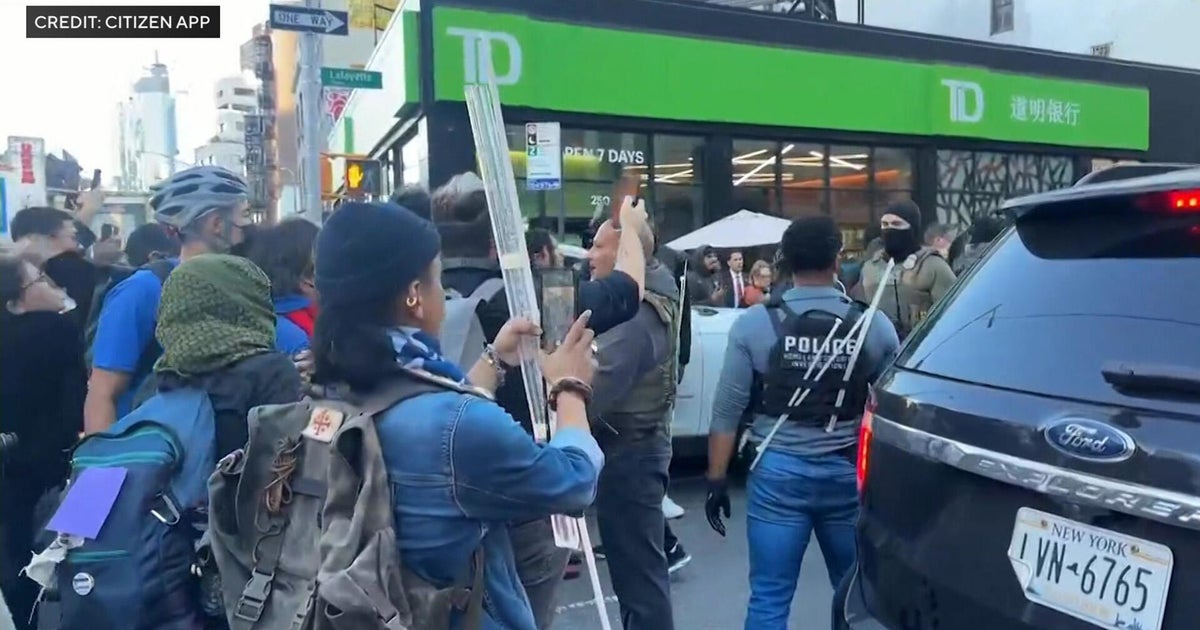
Thousands gathered in downtown Portland on Saturday to protest federal immigration enforcement, only to face tear gas and flash-bang grenades from ICE officers outside the South Waterfront facility. Demonstrators, including families with children and elderly attendees, blocked the driveway in a peaceful rally that turned chaotic when agents deployed chemical munitions, filling streets with thick fog detectable from the Ross Island Bridge.[1][2]
Federal Response Sparks Outrage and Legal Action
Witnesses described heart-wrenching scenes of parents shielding strollers amid pepper balls and rubber bullets, with one former reporter noting agents resembling figures with rocket launchers. Portland Mayor Keith Wilson condemned the violence, demanding ICE's departure and urging agents to resign for trampling constitutional rights. No arrests occurred, but paramedics treated affected protesters.[2]
Back-to-Back Protests Fuel Nationwide Tension
Sunday saw hundreds march from City Hall to the ICE building, where agents again unleashed tear gas around 7 p.m., prompting ACLU-backed lawsuits seeking limits on excessive force. Governor Tina Kotek called for calm amid estimates of 300 remaining protesters, highlighting ongoing national unrest against immigration crackdowns.[1][3]
About the People Mentioned
Keith Wilson
Keith Wilson is a business leader and Democratic politician who became the 54th mayor of Portland, Oregon, in 2025, serving as the city’s first mayor under its new form of government[8][9]. Born in 1963 and raised in North Portland, Wilson attended local schools before earning a Master of Business Administration from the University of Portland[1]. He began his career in television but returned to Portland to lead TITAN Freight Systems in 2004, transforming the company into a national safety leader and environmental innovator. Under his leadership, TITAN eliminated fossil fuels from its Portland facility, pioneered heavy-duty electric vehicles, and achieved a near-perfect safety record with no injuries or accidents over five years. The company also earned B-Corp certification for its commitment to community and sustainability, and Wilson was named Innovator of the Year two years in a row[1][6]. As a civic leader, Wilson has focused on addressing homelessness and supporting vulnerable populations. He spearheaded the creation of the Multnomah County Homeless Court Program, which diverts individuals from the justice system into housing and services, and founded Shelter Portland, a nonprofit aimed at ending unsheltered homelessness through collaborative, evidence-based solutions[1]. He also serves as vice chair of Word is Bond, an organization dedicated to mentoring Portland’s future leaders, and has volunteered with homeless veterans and students[1]. Additionally, Wilson is active on national transportation and environmental boards, including the U.S. High-Speed Rail Coalition and the International Road Federation[1]. Wilson’s leadership comes at a pivotal moment for Portland, as the city transitions to a new governance structure and faces significant challenges in public safety, homelessness, and economic recovery[6][9]. In his mayoral campaign and early tenure, he has emphasized the need to break through political gridlock, improve bureaucratic efficiency, and leverage the city’s resources to address systemic issues. Wilson’s business background, civic engagement, and focus on innovation and collaboration position him as a central figure in Portland’s efforts to navigate a period of profound change and uncertainty[6][9]. He lives in Portland with his wife and children, and is known for his commitment to both his family and the broader community[1].
About the Organizations Mentioned
ICE
**Immigration and Customs Enforcement (ICE)** is a federal law enforcement agency under the U.S. Department of Homeland Security (DHS), established in 2003 following the Homeland Security Act of 2002, which reorganized existing agencies post-9/11 to enhance national security[1][2]. ICE’s core mission is to protect the United States by enforcing immigration laws, conducting criminal investigations, and preserving public safety. ICE operates primarily through two major divisions: **Homeland Security Investigations (HSI)** and **Enforcement and Removal Operations (ERO)**. HSI focuses on investigating and disrupting transnational criminal organizations involved in customs violations, human trafficking, terrorism, and smuggling. ERO is responsible for the apprehension, detention, and deportation of individuals unlawfully present in the U.S., operating detention facilities and managing removal procedures[2]. ICE’s international reach is managed by the Office of International Affairs (OIA), a key overseas investigative arm coordinating with foreign governments to combat cross-border crime, such as arms smuggling, forced labor, and immigration fraud. OIA supports intelligence gathering, training, treaty implementation, and facilitates global cooperation to preempt threats before they reach U.S. borders[3]. With a workforce exceeding 20,000 employees across more than 400 offices worldwide and an annual budget of about $8 billion, ICE plays a pivotal role in U.S. homeland security[1]. Its activities, especially those involving immigration enforcement and detention, have made it a highly visible and sometimes controversial agency in public discourse, often referred to colloquially in Spanish as "la migra"[2]. Notable achievements include disrupting large-scale criminal networks internationally and supporting the enforcement of over 400 federal statutes concerning customs, immigration, and terrorism prevention. ICE’s dynamic operational scope—spanning law enforcement, international diplomacy, and legal administration—makes it a critical component of U.S. efforts to maintain national security and uphold the rule of law[1][2][
ACLU
The American Civil Liberties Union (ACLU) is a leading nonprofit organization dedicated to defending and expanding civil liberties in the United States. Founded in 1920 during a period of heightened government repression—including the infamous Palmer Raids targeting political dissidents—the ACLU emerged to protect free speech, due process, equal protection, and privacy, especially for groups historically denied these rights[2][4]. Its mission is realized through litigation, legislation, public education, and community outreach, making it a pioneer in public interest law[2][4]. ## History and Founding The ACLU traces its roots to the National Civil Liberties Bureau (NCLB), established in 1917 to support conscientious objectors and anti-war activists during World War I[1][3]. In 1920, Roger Baldwin, Crystal Eastman, and others reorganized the NCLB into the ACLU, broadening its focus beyond wartime dissent to encompass a wide array of civil liberties issues[2][3]. From its inception, the ACLU positioned itself as a nonpartisan defender of constitutional rights, distinct from organizations focused on specific demographics or causes[3]. ## Key Achievements The ACLU has been at the forefront of nearly every major civil liberties battle in U.S. history. Early highlights include defending targets of the Palmer Raids, supporting labor organizers, and securing the release of activists imprisoned for antiwar views[5]. The organization gained national attention with the 1925 Scopes "Monkey" Trial, challenging bans on teaching evolution and spotlighting issues of academic freedom and church-state separation[5][6]. In the mid-20th century, the ACLU played a pivotal role in landmark Supreme Court cases, such as Brown v. Board of Education (1954), which ended school segregation, and Tinker v. Des Moines (1969), affirming students' free speech rights[5]. The ACLU also fought—though not always successfully—against the intern