RFK Jr. Reshapes the CDC: A Health Policy Shakeup

RFK Jr. reshapes the CDC
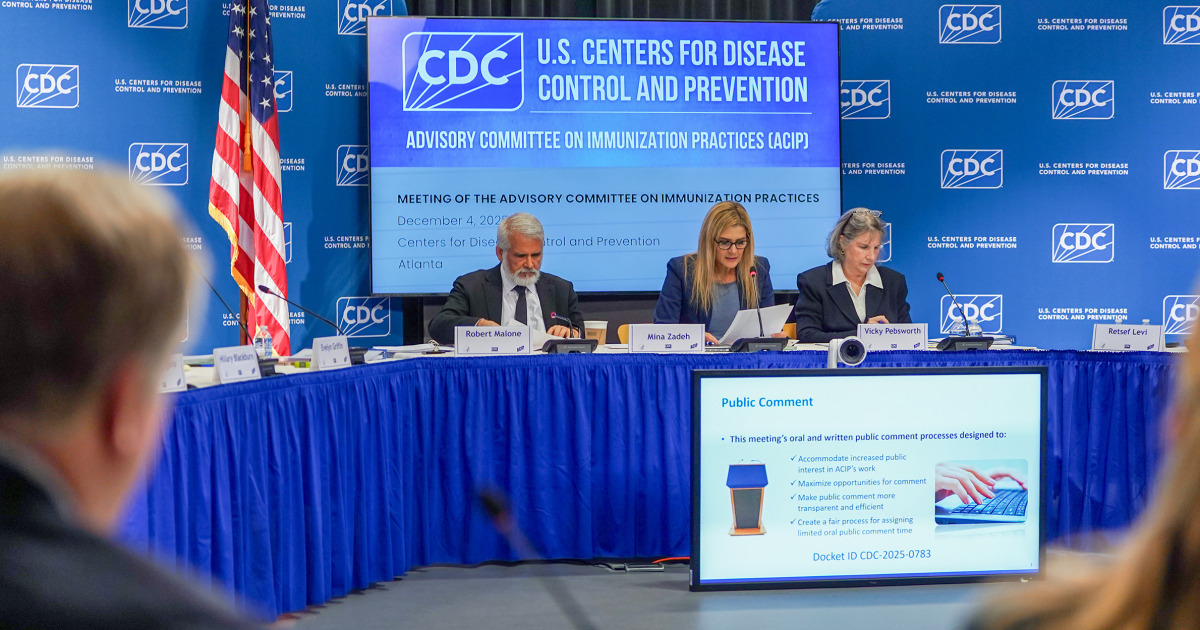
Robert F. Kennedy Jr.’s actions since taking charge of health policy have rapidly transformed the Centers for Disease Control and Prevention from a widely respected public-health authority into what critics describe as a weakened or “zombie” institution, amid staff firings, mass resignations, and the removal of established advisory panels that guided vaccine policy and outbreak response[1][4].
Consequences and concerns
Public-health experts warn that replacing vetted scientists with appointees aligned with vaccine skepticism, shortening public comment periods, and disrupting long-standing programs undermines trust, complicates vaccine distribution, and may hinder preparedness for future outbreaks; several former CDC leaders and medical groups have issued dire warnings and urged congressional scrutiny[3][4].
What to watch
Observers will follow upcoming committee hearings, legal challenges, and whether disrupted advisory processes produce policy shifts that affect immunization recommendations, public confidence, and the nation’s readiness for emerging health threats[2][5].
About the People Mentioned
Robert F. Kennedy Jr.
Robert F. Kennedy Jr. is an American politician, environmental lawyer, and author, born on January 17, 1954, in Washington, D.C. He is the third of eleven children of Robert F. Kennedy, the U.S. Attorney General, and Ethel Skakel Kennedy. His family's political legacy includes his uncle, President John F. Kennedy. Kennedy's early life was marked by personal struggles, including drug addiction, which led to his arrest for heroin possession in 1983. However, he later redirected his life towards environmental advocacy and public service. Kennedy graduated from Harvard University in 1976 with a degree in American history and literature and later earned a law degree from the University of Virginia in 1981. He began his career as an assistant district attorney in Manhattan but soon shifted his focus to environmental law. In 1987, he received a master's degree in environmental law from Pace University, where he taught environmental law from 1986 to 2018 and co-founded the Environmental Litigation Clinic. Notably, Kennedy is the founder of the Waterkeeper Alliance, a global clean water advocacy group, and Children's Health Defense, which focuses on childhood chronic diseases and environmental exposures. He has been recognized for his environmental activism, including being named TIME Magazine's "Hero for the Planet" for his efforts in restoring the Hudson River. Kennedy has also been involved in high-profile legal cases against companies like DuPont and Monsanto. In recent years, he has been a vocal figure in vaccine skepticism and public health controversies. In the 2024 U.S. presidential election, Kennedy initially ran as an independent candidate before endorsing Donald Trump. Currently, his involvement in public life includes controversial stances on health and environmental issues. Despite these controversies, his work in environmental law and advocacy has had significant impacts on public health and environmental protection.
About the Organizations Mentioned
Centers for Disease Control and Prevention
The Centers for Disease Control and Prevention (CDC) is a premier U.S. public health agency established on July 1, 1946, originally as the Communicable Disease Center. It evolved from the wartime Malaria Control in War Areas program (MCWA) created during World War II to combat malaria around military bases in the southern United States[1][3][7]. Headquartered in Atlanta, Georgia, the CDC has grown from a regional malaria control unit to a comprehensive national and global health protection agency. The CDC’s mission is to protect public health and safety through disease control and prevention, health promotion, and emergency preparedness. It investigates and responds to emerging health threats such as infectious diseases—including COVID-19, influenza, and bioterrorism agents—as well as chronic diseases, injuries, workplace hazards, environmental health threats, and more[2][6]. The agency conducts scientific research via over 200 specialized laboratories nationwide, supports public health workforce development, and communicates critical health information to the public[6][5]. Throughout its history, the CDC has expanded its scope and structure significantly. It was renamed the Center for Disease Control in 1970, then the Centers for Disease Control in 1980 as it incorporated multiple centers, and finally adopted the current name, Centers for Disease Control and Prevention, in 1992 to emphasize prevention efforts while retaining the CDC acronym for recognition[2][8]. Its organizational breadth now includes centers focused on infectious diseases, chronic diseases, environmental health, injury prevention, occupational safety, and health statistics. Notable achievements include leading vaccination campaigns against diseases like measles and rubella, advancing injury prevention, and mounting global efforts against infectious outbreaks. The CDC also played a pivotal role in combating antibiotic misuse and bioterrorism preparedness. Despite past controversies like the Tuskegee syphilis study, the agency remains a leader in epidemiology and public health innovation, employing a multidisciplinary workforce of scientists, clinicians, and public health experts dedicated t