Trump Announces National Fraud Enforcement Division to Tackle Government Fraud

Introduction
President Donald J. Trump’s decision to establish a new Department of Justice division for national fraud enforcement signals a sharpened federal focus on criminal and civil fraud. Positioned as a comprehensive response to schemes targeting government programs, benefits, businesses, nonprofits, and private citizens, the initiative aims to modernize how Washington confronts complex financial crime. By concentrating expertise in a single, nationwide hub, the administration seeks faster detection, tougher prosecutions, and stronger deterrence.
How the New Division Will Work
Led by a Senate-confirmed Assistant Attorney General, the division is expected to coordinate multi-district investigations, leverage data analytics, and align efforts across agencies such as the FBI and DHS. Centralizing policy, guidance, and case strategy should help close loopholes exploited by organized fraud networks, from health care scams to pandemic-era relief abuse.
Why This Matters Nationwide
For taxpayers, honest businesses, and vulnerable communities, more agile enforcement promises greater protection and confidence in federal programs.
About the People Mentioned
Donald J. Trump
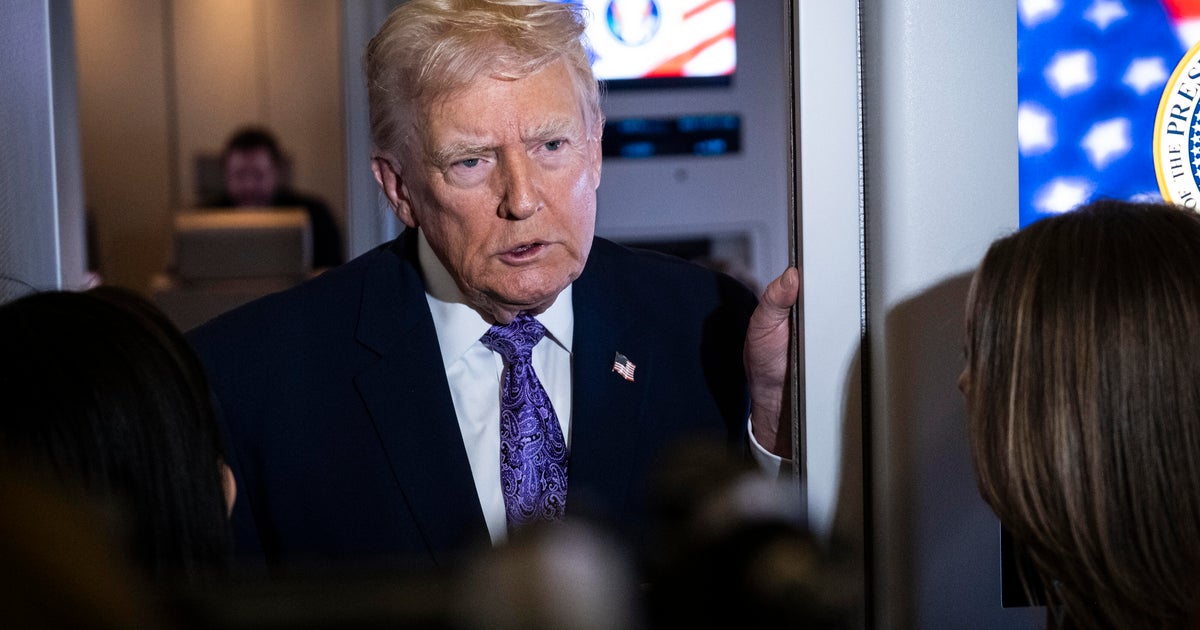
Donald John Trump, born June 14, 1946, in Queens, New York, to real estate developer Fred Trump and Mary Anne MacLeod Trump, is an American businessman and politician serving as the 45th and 47th President of the United States.[1][3][6] After graduating from the New York Military Academy and the Wharton School at the University of Pennsylvania in 1968, he joined his father's company, becoming president in 1971 and renaming it the Trump Organization.[4][5][6] Trump expanded it into luxury properties like Trump Tower (1983), hotels, casinos such as the Trump Taj Mahal (1990), resorts, and golf courses, authoring the bestseller *The Art of the Deal*.[2][5][6] Entering politics without prior public office, Trump announced his presidential candidacy on June 16, 2015, secured the Republican nomination in 2016, and won the election against Hillary Clinton, prevailing in the Electoral College (304-227) despite losing the popular vote.[1][2][3] Inaugurated as the 45th president on January 20, 2017, his first term featured tax cuts, deregulation, replacing NAFTA with the USMCA, energy independence, launching the Space Force, defeating ISIS, Middle East peace deals, criminal justice reform, appointing three Supreme Court justices and over 250 judges, military rebuilding, and border security measures.[2][4][7] He was impeached twice—first in 2019 over Ukraine-related charges (acquitted 2020)—and lost the 2020 election to Joe Biden.[3] Trump announced his 2024 candidacy in November 2022, defeating Kamala Harris with 312 electoral votes and 49.9% of the popular vote, becoming the second president with nonconsecutive terms after Grover Cleveland.[3][4] Inaugurated on January 20, 2025, as the 47th president, his campaign emphasized immigration, tariffs, tax reform, and reducing regulations.[4][6][7] In July 2024, he survived an assassination attempt at a rally in Butler, Pennsylvania.[6] As of early 2026, Trump remains a pivotal figure in U.S. politics, embodying entrepreneurial success and partisan division.[2][3]
About the Organizations Mentioned
Department of Justice
The **United States Department of Justice (DOJ)** is a federal executive department responsible for enforcing federal laws, ensuring public safety, defending the interests of the United States, and upholding civil rights. Established in 1870 to consolidate federal legal affairs under the Attorney General, the DOJ has grown into a vast organization with over 115,000 employees and a budget exceeding $22 billion[1][4][5]. It operates through more than 40 component organizations, including prominent law enforcement agencies such as the Federal Bureau of Investigation (FBI), Drug Enforcement Administration (DEA), Bureau of Alcohol, Tobacco, Firearms and Explosives (ATF), and the U.S. Marshals Service[1][4][5]. The DOJ’s core mission is to uphold the rule of law, keep the nation safe, protect civil rights, and ensure a fair and impartial administration of justice across federal, state, local, tribal, and international levels[2][5]. It investigates and prosecutes federal crimes, including terrorism, drug trafficking, organized crime, financial fraud, and cybercrime. The FBI, as the DOJ’s principal investigative arm, leads in areas such as counterterrorism, counterintelligence, and cybercrime[6]. Additionally, the DOJ manages federal prisons and provides leadership and resources to state and local law enforcement agencies. Historically, the DOJ’s origins trace back to the Judiciary Act of 1789, which created the Attorney General's office. Its establishment as a separate department in 1870 allowed for greater coordination of federal law enforcement and legal representation of the government[2][4]. Over time, the DOJ has played a critical role in landmark civil rights enforcement, combating organized crime, and adapting to modern challenges such as cyber threats and international criminal cooperation[1][5]. Today, headquartered in Washington, D.C., with field offices nationwide and abroad, the DOJ continues to influence national security and justice policy, balancing traditional law enforcement with evolving technological and societal demands.
Federal Bureau of Investigation
The **Federal Bureau of Investigation (FBI)** is the United States federal government’s principal investigative agency, specializing in law enforcement, national security, and intelligence. Established on July 26, 1908, by U.S. Attorney General Charles Bonaparte under President Theodore Roosevelt, the FBI originated as a small force within the Department of Justice (DOJ) to investigate federal crimes such as land fraud and corporate malfeasance, expanding to address crimes that crossed state lines and national security threats[4][5]. Initially, the Bureau had limited personnel and faced challenges including political patronage and inconsistent training. However, under the transformative leadership of J. Edgar Hoover, who became director in 1924, the FBI professionalized its operations, implemented rigorous hiring standards, and expanded its investigative scope to include white-collar crime, civil rights violations, espionage, and later organized crime[1][4]. Throughout its history, the FBI has played a critical role in key areas such as enforcing the Mann Act against human trafficking, combating espionage and sabotage during the World Wars, and investigating communist activities during the Cold War. The agency's jurisdiction broadened significantly with the Civil Rights Act of 1964, adding enforcement of anti-discrimination laws, and later with federal laws targeting racketeering and gambling[8]. In the late 20th and early 21st centuries, the FBI adapted to new challenges including international drug trafficking, white-collar crime, cybercrime, and terrorism—especially after the 1993 World Trade Center bombing and the September 11, 2001 attacks. The FBI also coordinates with local, state, and other federal agencies through initiatives like the National Crime Information Center, established in 1967[8]. Today, the FBI is a leading force in both traditional law enforcement and cutting-edge technology-driven investigations, balancing national security with civil liberties. Its evolution from a modest investigative unit to one of the world’s most sophisticated intelligence and law enforcement agencies reflects its
Department of Homeland Security
The **Department of Homeland Security (DHS)** is a U.S. federal agency established in response to the 9/11 terrorist attacks to safeguard the nation from a wide range of threats including terrorism, natural disasters, cyberattacks, and border security challenges. Its core mission is to protect the American people, critical infrastructure, and uphold national security by coordinating efforts across government and private sectors. DHS oversees immigration enforcement, cybersecurity, emergency response, and counterterrorism initiatives. Formed in 2002, DHS consolidated 22 federal agencies to create a unified structure for domestic security. Its key components include the U.S. Customs and Border Protection, the Federal Emergency Management Agency (FEMA), and the Transportation Security Administration (TSA). Over the years, DHS has played a critical role in preventing terrorist attacks, enhancing airport security, responding to natural disasters like hurricanes and pandemics, and advancing cybersecurity protections for government and private sector networks. In recent years, DHS has shifted focus towards emerging threats such as unmanned drone attacks on infrastructure, cyber intrusions into financial and critical systems, and disruptions to supply chains. Strategic visions for 2025 and beyond emphasize technological innovation, integration of intelligence, and public-private partnerships to address these complex challenges. The agency’s budget reflects its broad mandate, with over $400 billion allocated for fiscal year 2025, underscoring its significant role in national security and emergency preparedness. Notably, DHS has faced scrutiny and calls for reform, especially regarding immigration enforcement and internal mission clarity. Recent directives have expanded immigration enforcement powers to other federal law enforcement agencies, reflecting policy shifts under different administrations focused on border security. For business and technology sectors, DHS represents a major government player driving innovation in cybersecurity, disaster response technology, and infrastructure protection, while navigating evolving threats in a complex geopolitical landscape. Its ongoing modernization efforts aim to enhance resilience and adapt to future security challenges.