White House Sued by Preservationists Over East Wing Demolition
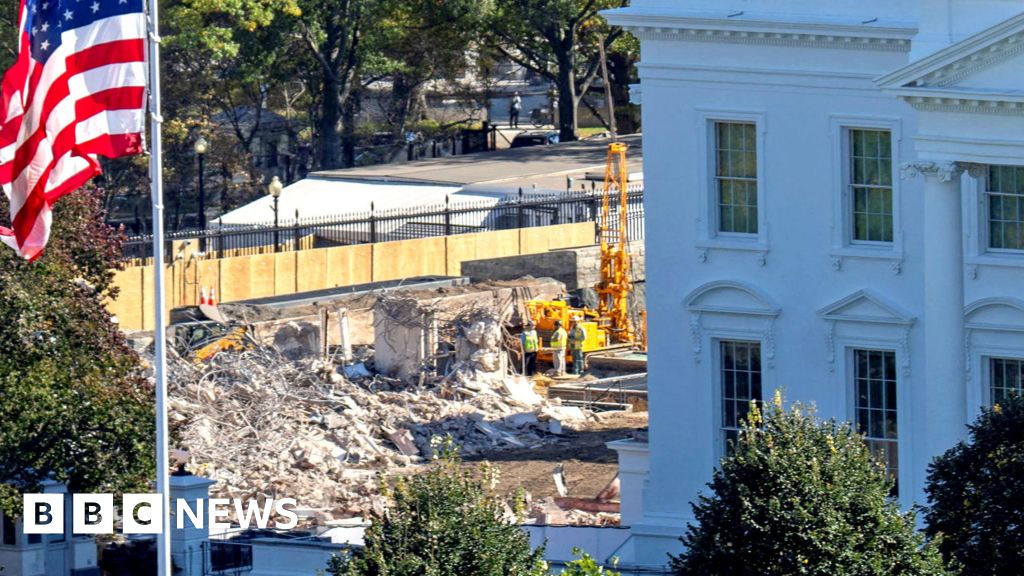
White House sued by preservationists
The National Trust for Historic Preservation has filed suit alleging the White House did not complete required reviews before demolishing a portion of the historic East Wing to reconfigure a ballroom. The complaint argues procedures under federal preservation law were skipped, raising concerns about precedent and transparency for national landmarks.
Legal and cultural implications
Beyond legal technicalities, the case spotlights tensions between modernization ambitions and conserving architectural heritage. Preservationists cite archival plans and prior restorations to show the ballroom held historical integrity, while officials contend safety and functional needs justified alterations. Both sides may seek expert testimony on historical significance, impact assessments, and feasible alternatives that preserve character while meeting contemporary uses.
What happens next
Court schedules, potential injunctions, and settlement talks will determine whether demolished elements are reconstructed or historic-review processes are reinforced, shaping future treatment of federally significant buildings.
About the Organizations Mentioned
National Trust for Historic Preservation
The **National Trust for Historic Preservation**, a privately funded nonprofit headquartered in Washington, D.C., champions the safeguarding and revitalization of America's historic sites to drive community economic growth and cultural vitality.[1][7] Chartered by Congress in 1949 under President Truman, it emerged from grassroots efforts to counter post-WWII demolition threats, initially focusing on acquiring and managing properties like Virginia's Woodlawn Plantation (1951).[1][3] Its mission evolved rapidly: by the 1960s, it influenced the pivotal **National Historic Preservation Act of 1966**, securing federal support (ended 1996) and expanding into advocacy, education, and policy.[1][2] Key programs include the **National Main Street Center** (1980), which has revitalized 1,600+ downtown business districts via preservation-led economic strategies; the Preservation Services Fund (1969) for local grants; and the annual "**Eleven Most Endangered Historic Places**" list, which has rallied funding and saved nearly all featured sites.[1][2][3] The 2011 National Treasures campaign targeted threatened landmarks, broadening public engagement.[3] Today, the Trust oversees **27 historic sites**—from South Carolina's Drayton Hall to Connecticut's Glass House and James Madison's Montpelier—open to the public with member perks.[1][2][4] It partners with the National Park Service on initiatives like Save America's Treasures (1999), funding 722 projects, and runs field offices for grassroots support.[1][2] Notable recent action: a 2025 lawsuit halting White House ballroom construction to enforce legal reviews, underscoring its watchdog role.[6] With strong governance—diverse board, equity-focused HR, and strategic plans—the Trust remains a preservation powerhouse, blending heritage stewardship with modern economic tools like affordable housing conversions.[5][2] For business-tech audiences, its data-driven revitalization model
White House
The **White House Office** is a central organizational component within the Executive Office of the President of the United States (EOP), tasked with supporting the President in managing day-to-day operations, policy formulation, and political affairs. It is headed by the White House Chief of Staff and staffed by senior aides who report directly to the President, including those with titles such as Assistant to the President and Deputy Assistant to the President. These staff members are mostly political appointees without the need for Senate confirmation, allowing the President considerable discretion in shaping the office to suit each administration's priorities[1]. Historically, the White House Office was established in 1939 through Reorganization Plan 1 and Executive Order 8248 to provide immediate assistance to the President. It functions as the nerve center for presidential staff, physically located primarily in the West Wing, and plays a pivotal role in managing the President’s policy agenda, communications, and political strategy. Its flexible organization allows each President to tailor the staff composition and roles according to their governance style and objectives[1]. In the current context of 2025, the White House Office operates under the administration of President Donald J. Trump, who returned to office after the 2024 election. His administration emphasizes rejecting prior policies deemed extremist and focuses on enhancing quality of life, economic growth, and American energy dominance. The administration includes Vice President JD Vance and First Lady Melania Trump, among others, with a Cabinet advising on various governmental functions[4][6]. Recent initiatives linked to the White House’s operational sphere include the establishment of a new **Department of Government Efficiency (DOGE)** aimed at modernizing federal technology and software to boost government productivity. The DOGE agenda is implemented through the renamed United States DOGE Service within the Executive Office, reflecting a concerted push to leverage technology for administrative modernization[5]. Notably, the White House Office also coordinates national security and homeland security functions through the National Security Council staff, underscoring its central role