Tense Clashes Erupt in DTLA After ICE Out Protest
Tense Clashes Erupt in DTLA After ICE Out Protest
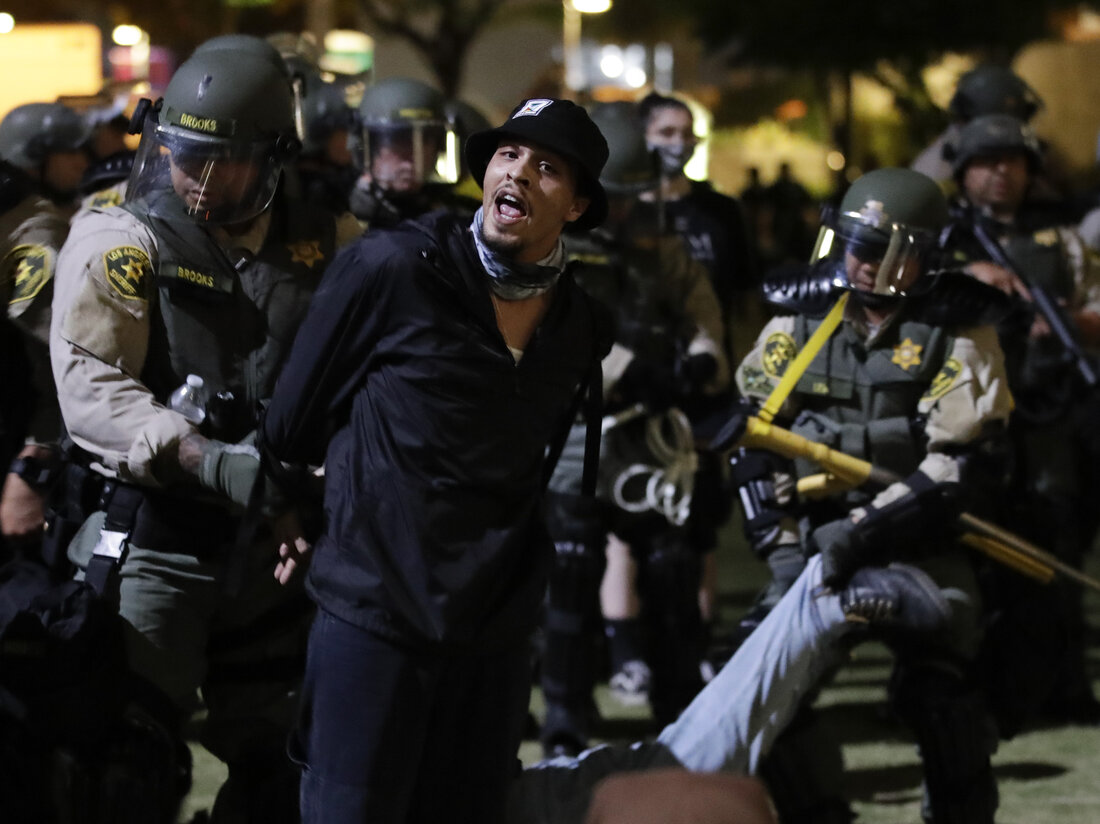
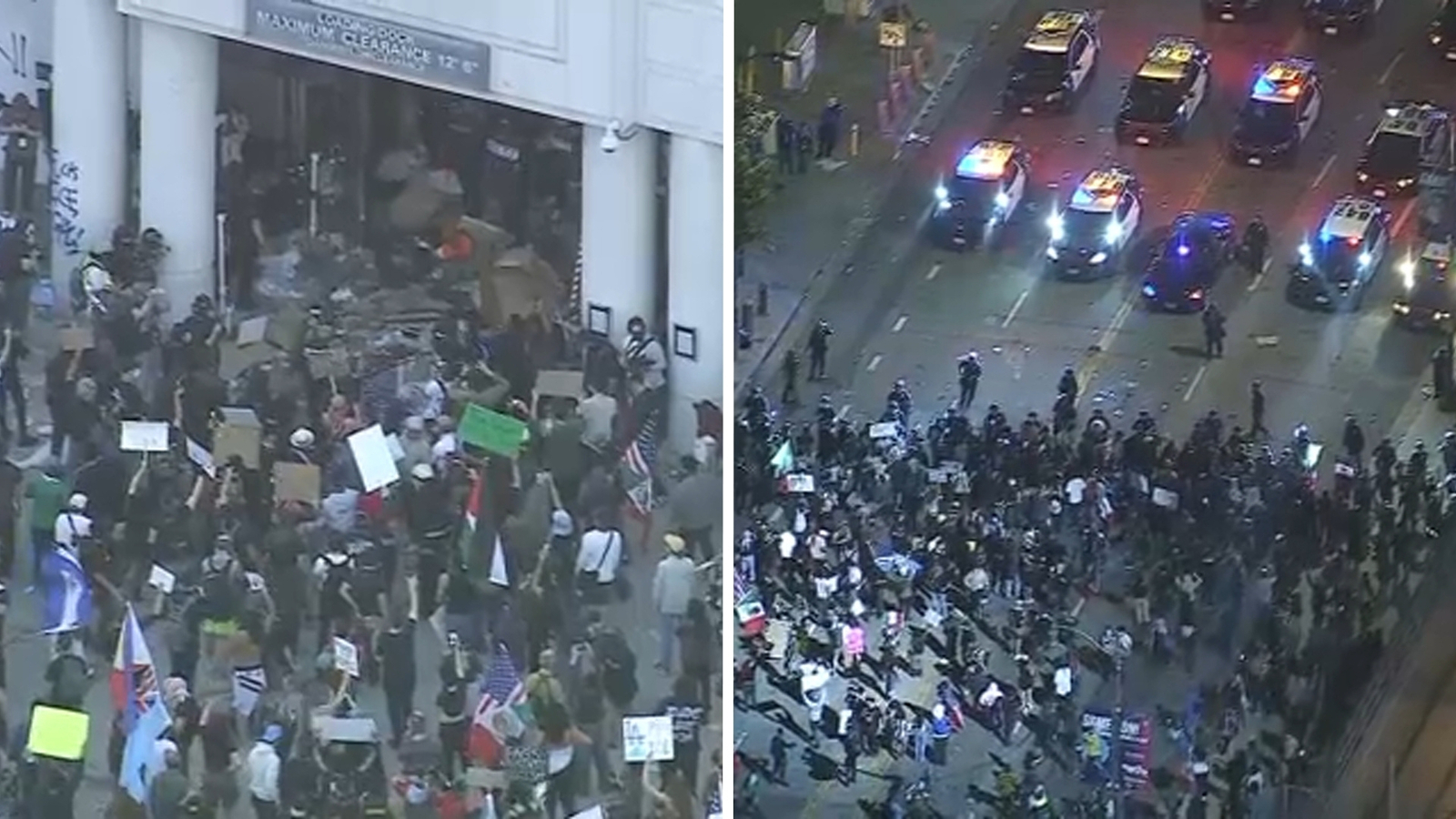
Thousands rallied in downtown Los Angeles Friday for the "ICE Out" demonstrations, demanding federal immigration agents withdraw amid outrage over fatal shootings in Minneapolis and deaths in ICE custody. Initially peaceful, the event turned chaotic as night fell, with protesters hurling objects at officers guarding the detention center. LAPD issued a dispersal order around 6 p.m. on Alameda Street, citing violent agitators, leading to arrests after less-lethal munitions and chemical sprays were deployed.[1][2][7]
Arrests and Escalation Details
By 7 p.m., authorities confirmed multiple detentions for failure to disperse, assault, and curfew violations, with eight arrests reported Saturday morning including one for assaulting an officer. Federal agents used pepper balls and irritants as crowds refused to budge, even with Rep. Maxine Waters chanting "ICE out of LA" in solidarity. Streets like Spring closed amid tactical alerts, echoing national fury against perceived overreach.[2][6][7]
Ongoing Impact and Solidarity
Saturday saw hundreds more at City Hall with signs like "ICE Out of LA" and playful jabs, maintaining a festive yet firm tone before renewed clashes. Protests linked to a "national shutdown" call—no school, work, or shopping—to defund ICE, highlighting deep community fears of raids and racial profiling. Businesses shuttered in support as LA braces for Sunday's events.[3][5][7]
About the Organizations Mentioned
Los Angeles Police Department
The **Los Angeles Police Department (LAPD)** is one of the largest and most storied law enforcement agencies in the United States, serving the city of Los Angeles. Established in 1869, the LAPD has evolved significantly over its 150-year history, transforming from a small volunteer force to a professional organization known for both its accomplishments and controversies. ## History and Evolution - **Early Years**: The LAPD began as a volunteer force, transitioning to a paid department in 1869. Chief John Glass played a pivotal role in its early organizational development[1][3]. - **Reform and Corruption**: The department faced periods of corruption, particularly in the early 20th century. However, reforms under leaders like Chief William Parker from 1950 to 1966 helped professionalize the force[1][3]. - **Notable Events**: The LAPD has been involved in significant historical events, including the Black Dahlia murder, the Watts riots, and the 1992 Los Angeles riots[3]. ## Key Achievements - **Professionalization**: Under Chief Parker, the LAPD became a model of professionalism, introducing modern management systems and racial desegregation[1]. - **Motto and Mission**: The department adopted the motto "To Protect and to Serve" in 1963, reflecting its mission to safeguard lives and property while enhancing public safety[5]. ## Current Status and Notable Aspects - **Structure**: The LAPD is divided into four bureaus, each with multiple divisions, ensuring comprehensive coverage of the city[8]. - **Controversies and Reforms**: Despite past controversies like the Rodney King incident and the Rampart scandal, the LAPD continues to evolve, implementing new accountability systems[1][3]. - **Technology and Innovation**: The department has been integrating technology into its operations, such as using data analytics to improve crime prevention and community engagement. Today, the LAPD remains a complex and dynamic organization, balancing tradition
Immigration and Customs Enforcement
**Immigration and Customs Enforcement (ICE)** is a federal law enforcement agency under the U.S. Department of Homeland Security (DHS). Established by the Homeland Security Act of 2002, ICE was created in response to the 9/11 attacks to enhance national security and protect public safety. The agency's primary mission is to enforce federal laws related to customs, trade, and immigration, focusing on cross-border crime and illegal immigration[1][2][3]. **History and Structure:** ICE was formed by merging the U.S. Customs Service and the Immigration and Naturalization Service. It operates with over 20,000 staff across more than 400 global offices, with an annual budget of approximately $8 billion[3]. The agency is structured into several key directorates, including **Enforcement and Removal Operations (ERO)**, which handles immigrant detention and deportation, and **Homeland Security Investigations (HSI)**, which investigates transnational crimes[1][2]. **Key Functions and Achievements:** ICE is known for its immigration enforcement efforts, particularly in interior regions of the U.S. It conducts investigations into human trafficking, terrorism, and other transnational crimes. Despite controversy over policies like family separation and detention conditions, ICE has made significant strides in combating illegal activities and protecting national security[4][6]. **Current Status and Notable Aspects:** Today, ICE continues to face challenges and controversy, particularly regarding its enforcement practices and impact on immigrant communities. The agency's actions can have profound effects on local economies and social services, as fear of ICE may deter undocumented immigrants from accessing essential services[6]. Despite these challenges, ICE remains a crucial component of U.S. immigration policy, working to balance enforcement with humanitarian concerns.