Mysterious Bright Green Microbes Found in New Mexico Caves Challenge Life Without Sun

Mysterious Bright Green Discovery in New Mexico Caves
Deep within the Carlsbad Caverns of New Mexico, researchers uncovered a vibrant green wall of cyanobacteria thriving in total darkness, untouched for an estimated 49 million years. This startling find by Professor Hazel Barton and microbial biologist Lars Behrendt reveals life persisting without sunlight, challenging traditional views on photosynthesis[1].
Photosynthesis Powered by Invisible Light
These microbes use rare chlorophyll d and f pigments to harness near-infrared light, invisible to human eyes but amplified by the cave's limestone walls acting like mirrors. Measurements showed near-infrared levels 695 times higher in the darkest areas, fueling the largest colonies. Similar growth appeared in every sampled cave, proving this is no isolated phenomenon[1][2].
Implications for Extraterrestrial Life
"There are very few ways oxygen can form without life," highlighting the discovery's profundity. As red dwarf stars emit mostly near-infrared, these resilient organisms expand prospects for life on distant exoplanets, guiding NASA searches via the James Webb Space Telescope. This cave revelation suggests life endures in unexpected realms[1][4].
About the Organizations Mentioned
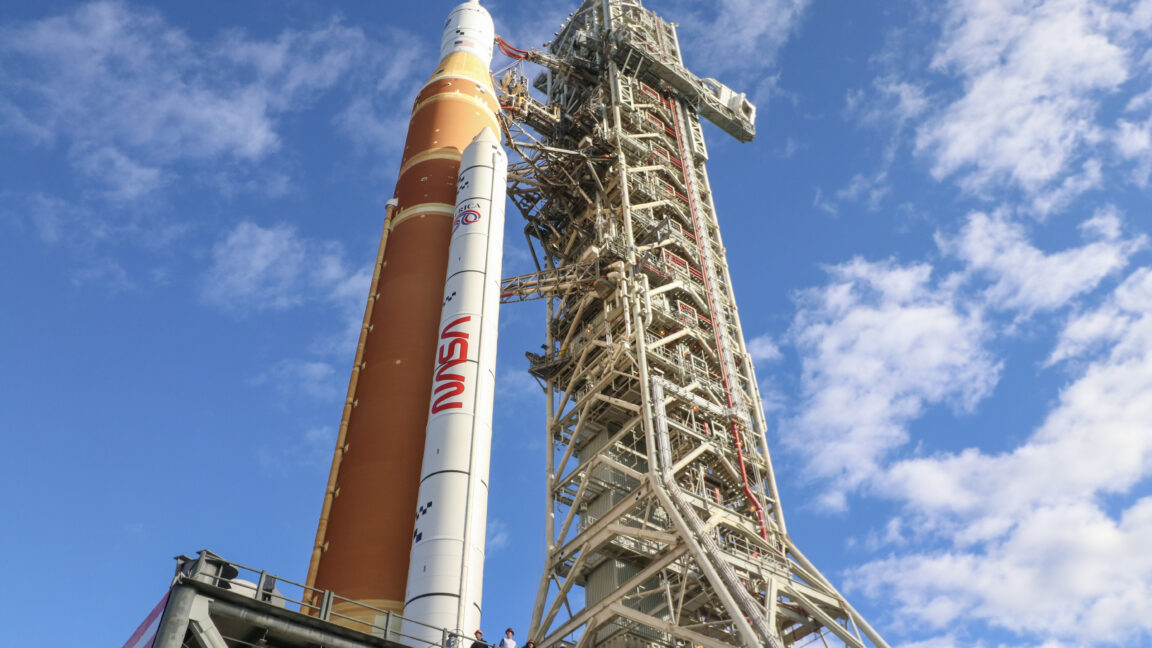
NASA
The National Aeronautics and Space Administration (NASA) is the United States’ premier civil space agency, responsible for the nation’s civilian space program, aeronautics research, and aerospace technology development[1][2]. Headquartered in Washington, D.C., NASA operates ten major field centers across the country and employs nearly 18,000 civil servants, supported by an extensive network of contractors, academic institutions, and international partners[1][2]. Since its establishment in 1958, NASA has revolutionized humanity’s understanding of the cosmos, pioneered technological advancements, and shaped global space policy. ## History and Key Achievements NASA was created in response to the Soviet Union’s 1957 launch of Sputnik, with the goal of ensuring U.S. leadership in space exploration. It succeeded the National Advisory Committee for Aeronautics (NACA) and quickly became the driving force behind iconic programs such as Project Mercury (America’s first human spaceflight program), Project Gemini (which developed techniques for space rendezvous and extravehicular activity), and the Apollo program, which landed astronauts on the Moon between 1969 and 1972[1]. The agency also developed the Space Shuttle, the world’s first reusable spacecraft, and built the International Space Station (ISS), a symbol of international collaboration and scientific research[1][5]. NASA’s robotic exploration has been equally transformative, with over 1,000 uncrewed missions investigating Earth, the Moon, Mars, and beyond. The agency’s fleet of observatories—including the Hubble Space Telescope and the James Webb Space Telescope—has provided unprecedented views of the universe, from the birth of stars to the detection of exoplanets[1]. The Perseverance rover is currently searching for signs of ancient life on Mars, while New Horizons explored Pluto and the outer solar system[1]. ## Current Status and Notable Aspects Today, NASA is advancing the Artemis program, aiming to return human
James Webb Space Telescope
```html <!DOCTYPE html> <html lang="en"> <head> <meta charset="UTF-8"> <meta name="viewport" content="width=device-width, initial-scale=1.0"> <title>James Webb Space Telescope: Revolutionizing Cosmic Discovery</title> <style> body { font-family: Arial, sans-serif; line-height: 1.6; max-width: 800px; margin: 0 auto; padding: 20px; } h1 { color: #1a0d5e; } h2 { color: #0f4c7a; } p { margin-bottom: 15px; } </style> </head> <body> <h1>James Webb Space Telescope: The Pinnacle of Space Innovation</h1> <p>The **James Webb Space Telescope (JWST)** stands as NASA's flagship infrared observatory, a monumental collaboration pushing the frontiers of astronomy and technology[1][2][3]. Named after NASA's second administrator, James E. Webb, who steered the Apollo program, JWST peers deeper into the universe than ever before, observing from the first glows after the Big Bang to exoplanet atmospheres[4][5][6].</p> <h2>Origins and Development</h2> <p>Conceived in the early 2000s, JWST's development was led by NASA's Goddard Space Flight Center, with Northrop Grumman as the primary contractor building the spacecraft bus, sunshield, and 18-segmented gold-coated primary mirror—six times larger than Hubble's[1][2][4]. Partners included the European Space Agency (ESA) and Canadian Space Agency (CSA), spanning 14 countries and thousands of experts[3][5]. After decades of challenges, including budget overruns, JWS